

-
Hello ES! We could use some help to get us past the finish line on building the new knowledgebase for the forum.
Can you donate? Please see our fundraising page. Thank you!
Knowledgebase
 02/11/26
 neptronix
Required ingredients:
Something that can display watts and amps, for example:| Cheap and functional RC meter that you insert between the battery and controller: |
Deluxe option - Cycle Analyst power meter |
 |
 |
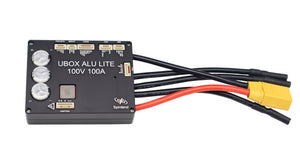
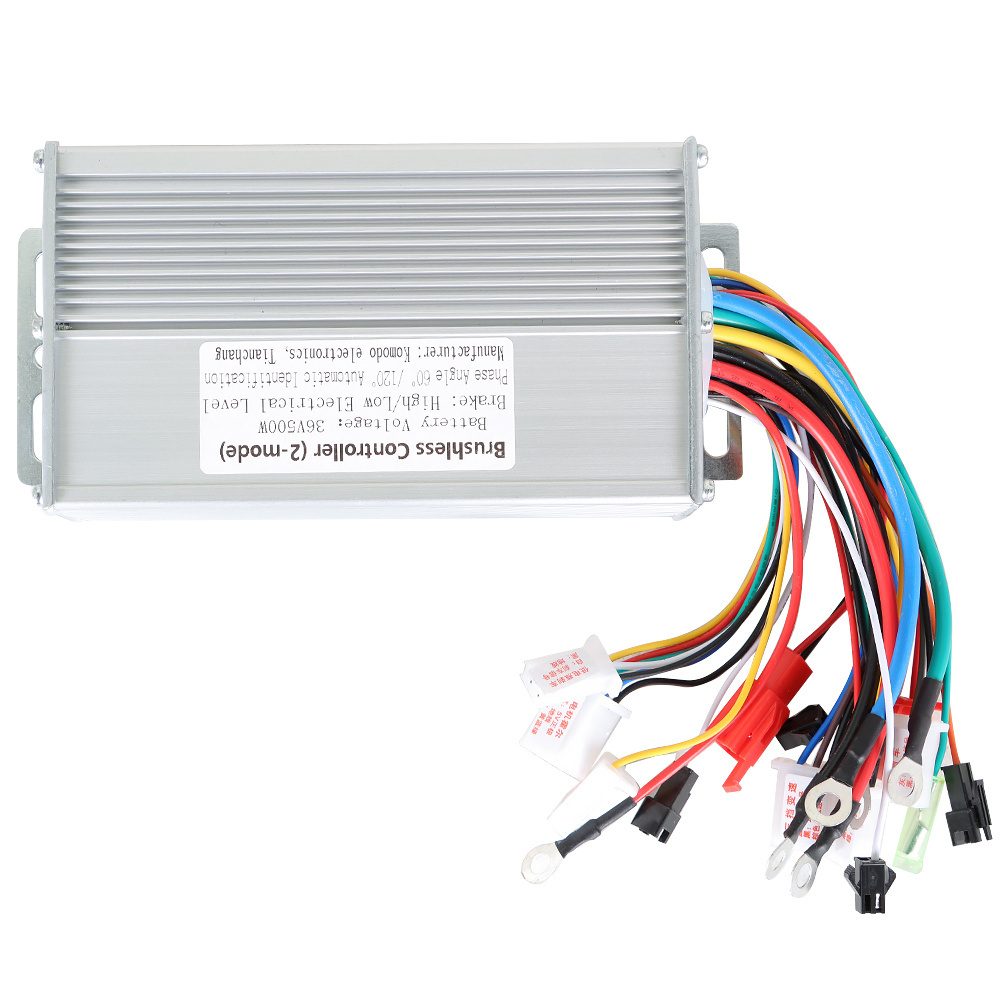
A programmable controller, for example:
| Ebikes.ca phaserunner | VESC with ebike control conversion board | Random low to mid quality programmable controller |
 |
 |
 |
The last thing you need is two hands and a brain.
Motor tuning basics:
First, we must think about mechanical limits before we start increasing power.If you have a direct drive motor, your weakest link is the frame and torque arms.
if you have a mid drive or geared hub motor, your gears are your weakest link.
In the case of having gears and a clutch, it's a good idea to both exercise caution when increasing power, but also remove some of the 0rpm torque by chosing a lower battery to phase amp ratio, since high low RPM torque can destroy a clutch. And your gears may be unhappy about it as well.
Your next limit is thermal limits.
Electric motors will accept power well beyond their nominal watt rating for good periods of time. Higher voltage can lead to increased continuous power also. The question is if the motor can handle the heat.
We recommend when you do power tuning, that you do it in small increments and test in the most difficult riding situation you can think of.
You can assess heat on the motor using your hand after you flog the motor with the increased amps.
80C on the outside can be 110C on the inside, so that should be our absolute limit for the hottest part of the outside of the motor motor.
At 80C you cannot hold your hand on the motor for more than a second even if you are a masochist.
We should consider that 'too hot' and the power should be turned down.
What about controllers?
Since we are talking about putting more amps/volts into a motor you should also apply this same test to your controller.
Controllers usually shed heat well so they can run hotter than motors.
But ideally yours is not scorching to the touch. If so, you may have too small a controller.
If a controller is thermally stressed, it should reduce power or cut out. But not all controllers do this, so don't assume you have this safety feature.
Most controllers live up to their amps rating. RC type controllers are typically rated by phase amps instead of battery amps though, so compared to an ebike controller you must be much more conservative with exceeding their ratings.
Do not exceed the rated voltage by much. controllers are not at all tolerant to that. Controllers can blow at 1 volt below their absolute maximum rating. I recommend leaving a ~5V safety buffer.
Batteries - this part is critical!
Batteries are very bad at shedding heat.
Warm is almost too hot when we consider that the cells in the middle of the pack are surrounded by a blanket of hotter cells.
A battery can produce a death metal band pyrotechnics show at as low as 70C. If your battery pack doesn't have a temperature sensor, it is easy to exceed this if you push the battery too hard.
A battery that produces more than a 5% voltage drop from the time the vehicle is idle to full throttle at ~0rpm is producing too much heat in the battery and if you do this contnuously in the summer, the pack may go kaboom.
Do occasionally measure this as you are increasing this. Significantly warm on the outside, is actually pushing it on the inside. And don't trust any results you take in winter, it will be different in summer. ( ignore this if you live on the equator )
Connectors and wiring.
If you have substantially increased the power of a motor, the phase wires and connectors may not be big enough anymore. A small amount of loss makes an incredible amount of heat. A little more loss tan that, and you could have melted / scorched conectors.
Some people would go through the effort of replacing all of the phase wire with something thicker. I personally like to cheat and replace all the phase wire 1 inch out of the motor exit instead.
Your last limit is physics and ride quality.
The faster a vehicle moves, the better suspension the vehicle needs since the forces imperfections in the road put on it become more intense as the speed increases.
Vibration is annoying and fatiguing to the body. But also, wheels can hop in the air and land in a place you don't expect if their motion is not properly controlled by suspension. And this is unsafe.
I would not run a suspensionless vehicle above 25mph / 42kph unless you have awesome roads.
I would start thinking about full suspension beyond 30mph / 48kph.
Phsyics is the final boss in achieving maximum power. If the vehicle is rear wheel drive and the power is not well controlled, power wheelies are possible. Most bicycles sit the rider barely ahead of the wheel. To exceed this limit, you must have an extended swingarm / longer rear so that your body can do a better job keeping the front end on the ground.
If you ever reach this power level, it's advisable to use a FOC controller and program the power to slowly roll on, lest this happens:

More tips
- A normal battery amp to phase amp ratio is 1:2.5. For example, 10 battery amps and 25 phase amps. This ratio will adjust the low to mid range torque curve. 1:1.5 is more like a gas engine ( weak initial torque ) and 1:3 and above is more like being shot out of a cannon.
- Again, if you have a mid drive motor or geared motor, it's recommended you not run a battery amp to phase amp ratio beyond 1:2.25. We do not want to slam that clutch with tons of torque.
- Adding external motor fins have limited results. Forcing air into them is more successful.
- Ferrofluid works great in DD hub motors and can approximately double their heat capacity.
- Oil cooling is great but if the motor is not designed for it, it will drip a lot.
- Most direct drive hub motors run at increased continuous wattage and torque if you use a smaller than usual wheel and add volts to make up for it. Gear down, volt up is a classic recipe for more power. The same applies to gas engines ( rpm up, fuel up )
- Electric motors make the most heat at 0rpm since this is their lowest efficiency point.
- If you remove an internal controller out of a motor and use an external controller instead, that motor now has more thermal headroom and can probably be pushed harder.
- More voltage = more power
- More amps = more torque
- 'turn count' indicates the amount of wire wrappings per stator tooth in the motor. This will determine if the motor needs more amps or more volts to make the desired amount of speed. If you see '8 Turn winding' or '8T', that's the turn count.
- Slow windings are not more efficient than fast windings once you thicken the power bus / battery / controller to account for more amps versus more volts. Any efficiency/power differences in windings is a few % and arbitrary, dependent on what gauge of copper wire the manufacturer picked for that turn count.
- The ebikes.ca simulator is a great way to assess a hub motor's performance. In my long experience using it, it is accurate to real world conditions