

What is your greatest concern? Worst case, you go to turn the light off and it stays on or you try to turn it on, and it doesn’t go on. Try the 80cent toggle switch, and if it fails, go spend the big bucks, or just use another 80cent switch. Or, for backup protection, put a second switch in parallel, so if one fails, just “switch” to the other. That way you’re never stuck without a light.I could have the light permanently live
Although fitting a 24v switch isn't a problem after the step down converter to turn the light on and off if needed I could do that
But would it be a problem to have a 48v step down converter to 24v if the light itself also has a step down converter built inside of it?
I'm guessing not??

-
Hello ES! We could use some help to get us past the finish line on building the new knowledgebase for the forum.
Can you donate? Please see our fundraising page. Thank you!
You are using an out of date browser. It may not display this or other websites correctly.
You should upgrade or use an alternative browser.
You should upgrade or use an alternative browser.
48v best way to wire lights in?
- Thread starter AC-EUV
- Start date

Check out ebay etc for 2nd use m/cycle moped/quad switch sets with light switches designed to carry a load and are weatherproof.
i took a punt on a similar ali express switch set for my handlebars but it was fitted with wires so thin you could sew with them, and they would probably melt like a fuse carrying more than 1/2 an amp.
i took a punt on a similar ali express switch set for my handlebars but it was fitted with wires so thin you could sew with them, and they would probably melt like a fuse carrying more than 1/2 an amp.
If they are for regular gas motorcycles, then it's a 12V system. He's concerned about the low voltage rating.Check out ebay etc for 2nd use m/cycle moped/quad switch sets with light switches designed to carry a load and are weatherproof.
i took a punt on a similar ali express switch set for my handlebars but it was fitted with wires so thin you could sew with them, and they would probably melt like a fuse carrying more than 1/2 an amp.
For peace of mind I would rather have a switch rated for the volts and amps I am using.
What is your greatest concern? Worst case, you go to turn the light off and it stays on or you try to turn it on, and it doesn’t go on. Try the 80cent toggle switch, and if it fails, go spend the big bucks, or just use another 80cent switch. Or, for backup protection, put a second switch in parallel, so if one fails, just “switch” to the other. That way you’re never stuck without a light.
My greatest concern is fire risk
And from research I have done using an improper rated switches and electrics (especially with DC) causes fires that's why switches and fuses are volt rated and Amp rated
Otherwise they wouldn't rate them at all they would all just be called generic switches and generic fuses ect
I'm sure in the real world some 12v/24v switches would be absolutely fine at 48v for years and never be a problem but I just want confidence in my build knowing I have done everything correct my end
If there are options I was missing to do it correctly then that's what I want to do
Thats why I ask these questions on this forum for experts to chime in and tell me the correct way
Im thinking the step down converter may be the right way unless anyone knows of a reason not to?
My original concerns for the convertor was just that it would drain the battery more but seems like it is only a small amount and not worth worrying about
Or at 48v, 0.55A.Current wise specs say at 12v it uses 2.2amps
and at 24v uses 1.1amps
So you’re riding around and you flip the switch on or off and the bike catches on fire? Seems like something that should be addressed. This could also be a fun DIY project, to solve the safety concern.My greatest concern is fire risk
On the west coast, we have a 500 kv DC transmission line, the Pacific DC intertie. It transmits electricity from Canada to LA. The breakers and switching systems had to be designed especially for it. AC breakers typically used oil or sf6 gas to manage the arc, but for DC, they needed to use a circuit of capacitors and resistors to dissipate the arc energy. It might be fun to try to replicate something like that on a smaller scale. Would take some research.
(Side note, I once got to watch a 500kv AC motor operated disconnect open. Humidity was moderately high, but no fog, but the arc was several yards long, really loud and you could literally feel it, until it finally extinguished itself).
Alternatively you could try squirting a few drops of oil into the switch which might do the trick, since at that current level, it’s hard enough to maintain an arc, so it probably wouldn’t take much; it’s a less techy approach, but cheap. The capacitors and resistors approach is a bit nerdy, but cooler
 . Buying a big switch is boring and expensive.
Edit: I found this example of a 500kv arc:
Last edited:
I would rather just use components which are rated for my voltage and amp draw for this buildAlternatively you could try squirting a few drops of oil into the switch which might do the trick, since at that current level, it’s hard enough to maintain an arc, so it probably wouldn’t take much; it’s a less techy approach, but cheap. The capacitors and resistors approach is a bit nerdy, but cooler
I know that there is very little current draw through the switch for a light but still i'd rather be safe than sorry
If that just means using a step down converter then I will just do that

Unless anyone knows of a reason not to?
Most of the wuxing ebike switches, like I pasted into post #15, are “rated” up to 72v. A lot of the listings will include a spec sheet, and some even have manuals in case seeing the words makes you more confident.I would rather just use components which are rated for my voltage and amp draw for this build
I know that there is very little current draw through the switch for a light but still i'd rather be safe than sorry
If that just means using a step down converter then I will just do that
Unless anyone knows of a reason not to?
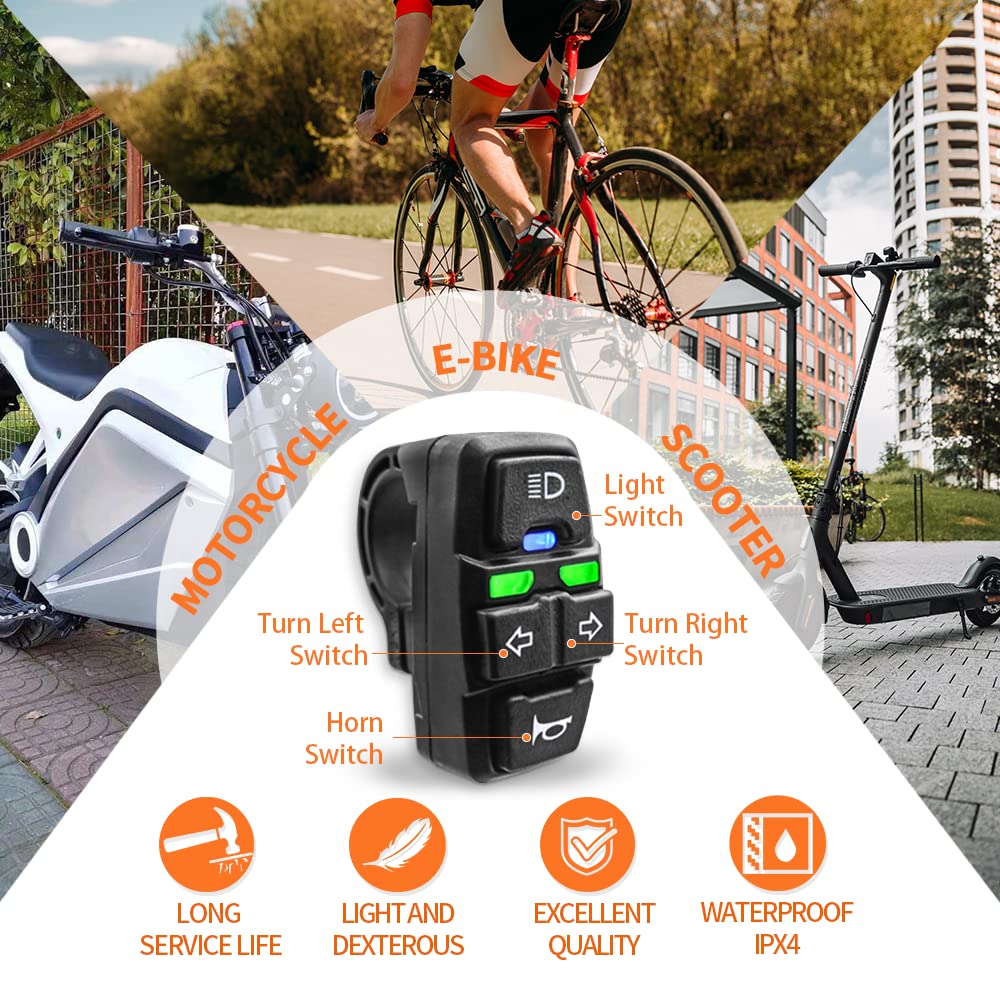
WUXING DK336 Electric Bike/Scooter Multi-Function Switch User Manual
Instruction manual for the WUXING DK336 Electric Bike Scooter Light Switch, covering installation, operation, and specifications for 12V-72V e-bikes and motorcycles.
manuals.plus
$5 for the one from my earlier post. Spend more if you want.
Thanks that's cool but I'm not after a handlebar mount switch for this build as the switch will be in the body of the quad and I don't want all the extra horn and signal buttons eitherMost of the wuxing ebike switches, like I pasted into post #15, are “rated” up to 72v. A lot of the listings will include a spec sheet, and some even have manuals in case seeing the words makes you more confident.
WUXING DK336 Electric Bike/Scooter Multi-Function Switch User Manual
Instruction manual for the WUXING DK336 Electric Bike Scooter Light Switch, covering installation, operation, and specifications for 12V-72V e-bikes and motorcycles.manuals.plus
$5 for the one from my earlier post. Spend more if you want.
just a simple toggle like switch is what I would ideally want.
So thinking I might just do the step down converter to 24v and use a 24v toggle switch unless anyone can tell me a reason not to?
Sounds like you have your mind made up; it should do what you need.Thanks that's cool but I'm not after a handlebar mount switch for this build as the switch will be in the body of the quad and I don't want all the extra horn and signal buttons either
just a simple toggle like switch is what I would ideally want.
So thinking I might just do the step down converter to 24v and use a 24v toggle switch unless anyone can tell me a reason not to?
FYI, when I took apart the pushbutton switch in post #15, it only had one screw necessary to open the housing and remove the switch from the housing, so a couple minute later it was a simple toggle, and already wired up. YMMV.
Or at 48v, 0.55A
I've just realised as you said earlier at 48v the current draw is less so I don't actually need a 5 amp or higher switch
I've found a few 48vdc 2amp switches on Mouser.com which should work
Im guessing these will be fine at 54v (when fully charged)
Ok so I now have my 48v light, 48v switch and inline fuse but now not sure about how to split the 48v to supply it power.
Am I ok to split/branch a secondary smaller lighting power cable from the main fuse and run my lights positive cable from there even if it is the same positive from the battery the controller is using? (See pic attached)
Or will this draw too many amps up that second smaller fuse as it is on the same circuit that the controller is using?
Should it somehow have it's own circuit?
Or am I just having a silly moment as it's all using the same battery/circuit
Am I ok to split/branch a secondary smaller lighting power cable from the main fuse and run my lights positive cable from there even if it is the same positive from the battery the controller is using? (See pic attached)
Or will this draw too many amps up that second smaller fuse as it is on the same circuit that the controller is using?
Should it somehow have it's own circuit?
Or am I just having a silly moment as it's all using the same battery/circuit
Attachments
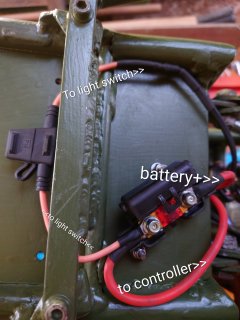
Ok so I now have my 48v light, 48v switch and inline fuse but now not sure about how to split the 48v to supply it power.
Am I ok to split/branch a secondary smaller lighting power cable from the main fuse and run my lights positive cable from there even if it is the same positive from the battery the controller is using? (See pic attached)
Or will this draw too many amps up that second smaller fuse as it is on the same circuit that the controller is using?
Should it somehow have it's own circuit?
Or am I just having a silly moment as it's all using the same battery/circuit
good work! Now go ride that thing.Sorry what I meant was I need to know if what I have done here with the power cable is ok? To branch it like I have?
Or if the cable can't be split like that for the lights circuit for any reason?
All good. Now go ride that thing.Sorry what I meant was I need to know if what I have done here with the power cable is ok? To branch it like I have?
Or if the cable can't be split like that for the lights circuit for any reason?
Thanks
So the 20/30amp draw from the controller couldn't travel up the smaller lighting cable then?
Just trying to get my head around how it works
I take it then it's like the controller is pulling amps from the battery only in the direction of the controller so it wouldn't go up the smaller lighting cable is that right?
So the 20/30amp draw from the controller couldn't travel up the smaller lighting cable then?
Just trying to get my head around how it works
I take it then it's like the controller is pulling amps from the battery only in the direction of the controller so it wouldn't go up the smaller lighting cable is that right?
No. Both the controller and light circuit see the same voltage, and ohms law takes care of the rest.So the 20/30amp draw from the controller couldn't travel up the smaller lighting cable then?
Right.I take it then it's like the controller is pulling amps from the battery only in the direction of the controller so it wouldn't go up the smaller lighting cable is that right?
Looks like a 12V fuse. You bike is about to blow up.and inline fuse

Haha it is actually a 32-58v rated one by the brand LittelfuseLooks like a 12V fuse. You bike is about to blow up.


This is a little late but here is some information on rerating 125VAC switches to different applications
Rerating 125VAC switches
Rerating 125VAC switches

Hey, that chart is useful in general for other applications, thanks.This is a little late but here is some information on rerating 125VAC switches to different applications
Rerating 125VAC switches
That is a great chart to use going forward thanksThis is a little late but here is some information on rerating 125VAC switches to different applications
Rerating 125VAC switches


docw009
🏍️ Giga poster
DC can fuse the contacts on switches not rated for the working voltage. So the worse problem you will have is the light won't turn off. You're using an inline fuse anyway, no? Anyway, here's a Wuxing, Rated 12-72V, but they don't know,I'm guessing not??
Similar threads
- Replies
- 2
- Views
- 1,537
- Replies
- 0
- Views
- 356

- Replies
- 0
- Views
- 841