• Hello ES! We could use some help to get us past the finish line on building the new knowledgebase for the forum.
    Can you donate? Please see our fundraising page. Thank you!

The world's smallest charger

SamIsHere

🔌 New-ish
Joined
Feb 12, 2026
Messages
20
Location
EU
View attachment TW Top.jpg

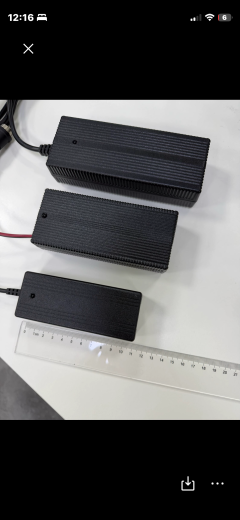
I want to thank everyone who has helped and made this project a reality with their advice, support and testing. Together we made the smallest charger in the world, capable of charging electric bikes, scooters, skates and more.

Thank you!

For anyone who is interested, but was not part of the project, here is a short summary:

Around 6 months ago we discussed the idea of using the USBC adapters that everyone has for charging phones and laptos to charge our eBikes/eScooters. Since USBC adapters are now already capable of supplying up to 240W this makes them more powerful than most stock chargers you get with your ride, so the question was obvious - why not use that to charge our rides?

This lead us on a journey of developing a charger that is capable of using the USBC adapter's output and transform it into the correct voltage and current to charge the batteries. We made two versions of the and did extensive testing to prove functionality and safety.

The end result is a charger that is smaller than your phone, fits inside your pocket, and charges just as fast as any other charger you might use.

This project proves that communities like this are capable of having great ideas and bringing them to life.

Happy riding!
 

Attachments

  • TW size comparison.jpg
    3.3 MB · Views: 31
  • TW Top.jpg
    3.2 MB · Views: 16
  • TW Case Front.jpg
    2.9 MB · Views: 13
  • TW Case Side.jpg
    2.9 MB · Views: 14
  • TW Case Open.jpg
    3.2 MB · Views: 19
  • TW USBC.jpg
    2.9 MB · Views: 15
  • TW XT30.jpg
    3 MB · Views: 18
  • TW in use.jpg
    7 MB · Views: 24
Well done!

What voltage/current range does it support? Can you configure it? Do you plan on selling it or releasing the technical details/schematics for it? Because it is so small, you could integrate it as an "onboard" charger inside the battery housing. My scooter has a little space that this might fit into.

Unfortunately you still need a bulky USB-C charger to get the full 240w (Power Adapter - 240W).. But the fact it can work with any USB-C charger is awesome.
 
The charger is available on this website


At the moment it has a fixed voltage output so you have to select the correct model for you battery. You can also select the appropriate connector.

If you are interested in integrating it you can easily take it out of the enclosure and screw the bare PCB to a metal part that will act as a heatsink. Let me know if you get around to do something like this and I can help you.
 
The charger is available on this website


At the moment it has a fixed voltage output so you have to select the correct model for you battery. You can also select the appropriate connector.

If you are interested in integrating it you can easily take it out of the enclosure and screw the bare PCB to a metal part that will act as a heatsink. Let me know if you get around to do something like this and I can help you.
Can it charge to 50%, 70%, 80%?
 
Seems limited to 100 watts, unfortunately:
Screenshot_20260824-093620.png

Even the charger brick that came standard with my MacBook is more than that. So I imagine this will be very slow. My ebike battery charges at 58.8V, so 100 watt would be less than 1A. Meanwhile it's a 20Ah battery. 20Ah / 1.7A = 11.7 hours. So it couldn't even fully charge my battery while I'm at work...
 
Any plans for higher voltages?

Is there a thread showing the development of this charger and I’d like to learn electronics building one?

I recently got a manufacturer on alibaba to custom make a couple silent and small 82v and 124v supplies doing .5 and 1.0 amps. (So charging to around 4.1 or 4.15v with 20s and 30s). Write me if interested and were like 30$ each with shipping. Not as small but otherwise unavailable
 

Attachments

  • IMG_6945.png
    IMG_6945.png
    1.4 MB · Views: 8
Last edited:
Seems limited to 100 watts, unfortunately:
View attachment 392030

Even the charger brick that came standard with my MacBook is more than that. So I imagine this will be very slow. My ebike battery charges at 58.8V, so 100 watt would be less than 1A. Meanwhile it's a 20Ah battery. 20Ah / 1.7A = 11.7 hours. So it couldn't even fully charge my battery while I'm at work...
The 100W limit is thermally imposed because of the small package. Many users mounted the charger inside their battery packs on a metal chassis which worked as a big heatsink. In that case they are able to charge the at full 240W
 
Any plans for higher voltages?

Is there a thread showing the development of this charger and I’d like to learn electronics building one?

I recently got a manufacturer on alibaba to custom make a couple silent and small 82v and 124v supplies doing .5 and 1.0 amps. (So charging to around 4.1 or 4.15v with 20s and 30s). Write me if interested and were like 30$ each with shipping. Not as small but otherwise unavailable
Yes, there are plans for higher voltages, but at the moment we tried to get a working version out as fast as possible.

Thanks for sharing your chargers.

What kind of vehicle do you have that has 124v battery pack?
 
Yes, there are plans for higher voltages, but at the moment we tried to get a working version out as fast as possible.

Thanks for sharing your chargers.

What kind of vehicle do you have that has 124v battery pack?
It’s 126v full charge. 30s. It’s set a bit lower anticipating leaving it on.

Any guide anyone knows of for building own charger?
 
Last edited:
Too bad it's not programmable ( multi-voltage, able to finely set voltage, etc ), otherwise i'd consider one
 
Yes, there are plans for higher voltages, but at the moment we tried to get a working version out as fast as possible.

Thanks for sharing your chargers.

What kind of vehicle do you have that has 124v battery pack?
So if it supports higher voltages, will the current rating decrease, if the power is capped at 240W?

Seems like a good option to carry around for emergencies. How warm does the charging cable get?
 
Unfortunately you still need a bulky USB-C charger to get the full 240w (Power Adapter - 240W).. But the fact it can work with any USB-C charger is awesome.
Fair point. The size comparison pic should include the adapter and cables as well. It’s a bit less attractive option once you’re dealing with separate components.
I might consider a car accessory adapter model, as a good option for charging while driving or via a motorhome, etc., for folks that bring their e-bikes places (camping, etc.). That way no adapter or extra cable is needed.
 
So if it supports higher voltages, will the current rating decrease, if the power is capped at 240W?

Seems like a good option to carry around for emergencies. How warm does the charging cable get?
Yes, the current decrease however the charging power will stay the same, like you said.

The charging cable stays cool, the enclosure gets warm to the touch.
 
View attachment 392022

I want to thank everyone who has helped and made this project a reality with their advice, support and testing. Together we made the smallest charger in the world, capable of charging electric bikes, scooters, skates and more.

Thank you!

For anyone who is interested, but was not part of the project, here is a short summary:

Around 6 months ago we discussed the idea of using the USBC adapters that everyone has for charging phones and laptos to charge our eBikes/eScooters. Since USBC adapters are now already capable of supplying up to 240W this makes them more powerful than most stock chargers you get with your ride, so the question was obvious - why not use that to charge our rides?

This lead us on a journey of developing a charger that is capable of using the USBC adapter's output and transform it into the correct voltage and current to charge the batteries. We made two versions of the and did extensive testing to prove functionality and safety.

The end result is a charger that is smaller than your phone, fits inside your pocket, and charges just as fast as any other charger you might use.

This project proves that communities like this are capable of having great ideas and bringing them to life.

Happy riding!
this makes it sound like it does 240w charging which would be pretty nice. but saying charging just as fast as any charger you might use is just wrong. 140w chargers are very common with macbooks and other laptops and 180 and 240w charger also also availible on the market now and some people already have them (mostly framework 16 users).

don't get me wrong i love the idea but find your description misleading considering it does 100w
 
I see your point. What i meant to say is that it will work with any USBC chager, even if it is rated for a higher power, as the adapter will still draw the 100W it is capable of.
 
Kind of unfortunate they didn't put a metal case on it. Maybe even a magnet for holding it on to something metal to dump heat. Or add a fan. Feels like a case of the visual design team winning over the engineers/users here.
 
I see your point. What i meant to say is that it will work with any USBC chager, even if it is rated for a higher power, as the adapter will still draw the 100W it is capable of.
So to be accurate, it's not so much a charger as a DC-DC inverter capable of working in any country? The accompanying USB unit being the charger. I wasn't in on the development but I'd hazard a suggestion, you could shop around for a module that accepts the 5V but also 12~14V Then you could use the inverter off a cigarette socket in cars too. Lot's of places don't have mains power but there always typically a car around hey.

Temu is full of cheap ideas, you could even get one with a display, that would be cool, and practical. You'd have to put a window in the boxes you're making but that shouldn't be a problem.

INVERTER-2-s.png
 
Last edited:
Its the opposite, actually, the USBC charger that you have for your phone is not a charger at all, it is an AC/DC converter. The actual charger that charges the phones battery is inside the phone. So what we built is an actual charger, capable of CC/CV charging profiles at higher powers and higher voltages.
 
Back
Top