

You are using an out of date browser. It may not display this or other websites correctly.
You should upgrade or use an alternative browser.
You should upgrade or use an alternative browser.
Tabless design cylindrical cells tests
- Thread starter Pajda
- Start date


BlueSwordM
🚴♂️ Mega poster
- Joined
- Jul 23, 2018
- Messages
- 612
Man, I should have ordered some EVE 30PL samples in my 50PL order 

BatteryMooch
🚴♂️ Mega poster
They’re pretty incredible cells, essentially equal to the JP30 until extreme power levels (I did 100A testing for my Patreon supporters) where one cell has a slight edge. But the 30PL has no manufacturer rating for pulses above its continuous rating.Man, I should have ordered some EVE 30PL samples in my 50PL order

Kas.becellbattery
🔌 New-ish
This morning, we conducted tests on our 30PL sample. Its performance under a 60A discharge was much worse than that of JP30. The 30PL could only achieve less than 2000mAh at 60A, while JP30 could reach over 3000mAh.They’re pretty incredible cells, essentially equal to the JP30 until extreme power levels (I did 100A testing for my Patreon supporters) where one cell has a slight edge. But the 30PL has no manufacturer rating for pulses above its continuous rating.
However, this is not the final version of 30PL. We won't know its performance until it actually goes into mass production. I think the technology of 30PL might not be fully mature yet.
If you have any battery-related needs, please feel free to contact me.
adam.trzaskowski87
🧲 New user
Are you sure there no error in this statement?The 30PL could only achieve less than 2000mAh at 60A, while JP30 could reach over 3000mAh.
"JP30 can deliver over 3000mAh at 60A?" - reference capacity, normally measured at 1C or less, delivered at top discharge?
In Mooch's test at 40A JP40 delivered 2,75Ah, Eve30pl with CCC logo somewhat more
Kas.becellbattery
🔌 New-ish
Continue discharging (while also providing charging) under the 60A condition until the temperature becomes too high. This indicates that JP30 can fully support a discharge of 60A.Are you sure there no error in this statement?
"JP30 can deliver over 3000mAh at 60A?" - reference capacity, normally measured at 1C or less, delivered at top discharge?
In Mooch's test at 40A JP40 delivered 2,75Ah, Eve30pl with CCC logo somewhat more
However, the data of JP30 is relatively old. Our engineers conducted a comparison of the military-grade products 30HR and 30PL at 10A and 60A this morning.
We have saved the 10A test data. However, the 60A 30PL is unable to complete the full test.
Attachments
Last edited:
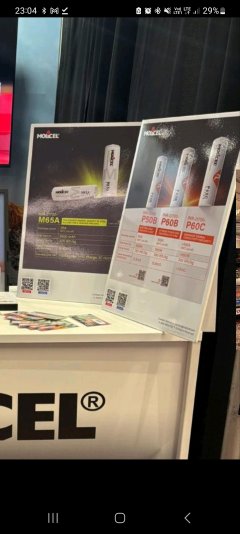
Does someone knows anything about the Molicel P60C ? We can't see well on their latest linkedin post but I never seen it before. I wonder how it differs from the M65A and P60B.
I also wonder when will we have a decent 6Ah+ cell available to order this year (Vapcell F60 not included since garbage tbh). Many company teased some but not one official test yet.
I also wonder when will we have a decent 6Ah+ cell available to order this year (Vapcell F60 not included since garbage tbh). Many company teased some but not one official test yet.
BlueSwordM
🚴♂️ Mega poster
- Joined
- Jul 23, 2018
- Messages
- 612
Enhanced thermal conductivity and capacity = they're 100% using an aluminium casing instead of nickel plated steel.Does someone knows anything about the Molicel P60C ? We can't see well on their latest linkedin post but I never seen it before. I wonder how it differs from the M65A and P60B.
I also wonder when will we have a decent 6Ah+ cell available to order this year (Vapcell F60 not included since garbage tbh). Many company teased some but not one official test yet.
View attachment 377172
Last edited:
BatteryMooch
🚴♂️ Mega poster
No one knows anything yet, just what the placard says.Does someone knows anything about the Molicel P60C ?

Looks like a typical evolutionary step beyond its predecessor the P60B. Its “enhanced thermal conductivity for safety” can mean a lot of things. Hopefully we get more info in a few months and samples in maybe a year. Hopefully we can buy them in a couple of years.
BatteryMooch
🚴♂️ Mega poster
But...but…no one uses stainless steel.Enhanced thermal conductivity and capacity = they're 100% using an aluminium casing instead of stainless steel.

BlueSwordM
🚴♂️ Mega poster
- Joined
- Jul 23, 2018
- Messages
- 612
Oops, thank you for catching my mistake.But...but…no one uses stainless steel.
Aluminium is still lighter, 4x more thermally conductive and 6x more electrically conductive, so I am not surprised that Molicel is offering a more difficult to weld, higher performance version of the P60B.
BatteryMooch
🚴♂️ Mega poster
“Military grade” is a useless marketing term that means nothing.Our engineers conducted a comparison of the military-grade products 30HR and 30PL at 10A and 60A this morning.
The Lithonic 30HR and EVE 30PL are standard commercial cells. Please list the military standards that these cells comply with as I am sure you’d never stoop to using the term “military grade” unless they passed the testing for those standards.
Last edited:
BatteryMooch
🚴♂️ Mega poster
Just curious…where did you see that aluminum was being used? Especially since it would have to be thicker (leaving less room for the jellyroll) to equal the strength of a (nickel-plated) steel can.Aluminium is still lighter, 4x more thermally conductive and 6x more electrically conductive, so I am not surprised that Molicel is offering a more difficult to weld, higher performance version of the P60B.
It would be quite a step for Moli but they might be getting their cans from a different source if true.
Last edited:
BatteryMooch
🚴♂️ Mega poster
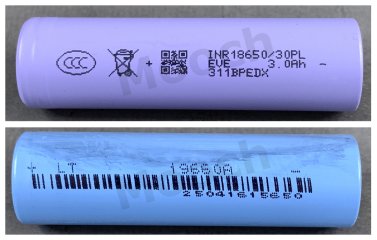
This is completely different from my test results. And I tested the unknown grade LT 19660A version of the EVE JP30P1 too and the same 30PL batch that you show on your web site.This morning, we conducted tests on our 30PL sample. Its performance under a 60A discharge was much worse than that of JP30. The 30PL could only achieve less than 2000mAh at 60A, while JP30 could reach over 3000mAh.
You have the 30PL on pre-order but show the JP30 in stock. Do you have a large stock of JP30?

Attachments
BlueSwordM
🚴♂️ Mega poster
- Joined
- Jul 23, 2018
- Messages
- 612
Well, considering they say it has enhanced thermal conductivity (for more safety since thermal gradients are greatly reduced with Al), a more thermally conductive casing would be my first bet as to how they achieved it, and it would explain also why gravimetric energy density increases; aluminium, even with a thicker casing, is so much lighter than steel that it can increase that figure by 5%.Just curious…where did you see that aluminum was being used? Especially since it would have to be thicker (leaving less room for the jellyroll) to equal the strength of a (nickel-plated) steel can.
It would be quite a step for Moli but they might be getting their cans from a different source if true.
Also IR is lower, so that's the thrid clue.
As for volumetric energy and casing strength, there do exist new manufacturers that utilize special aluminium alloys to make those casings much stronger while not increasing thickness as much. I'll have to look it up before saying anything definitive about the specific properties.
BatteryMooch
🚴♂️ Mega poster
Ahhh….thanks. You were 100% sure so I thought you had seen confirmation from Moli or a tester. Yea, it will be interesting to learn all the details about this cell!Well, considering they say it has enhanced thermal conductivity (for more safety since thermal gradients are greatly reduced with Al), a more thermally conductive casing would be my first bet as to how they achieved it
Kas.becellbattery
🔌 New-ish
We learned from the internal channels of EVE that the official start of mass production for EVE 30PL is not that imminent. Additionally, regarding the test results of EVE 30PL, I suspect that some of them might not have started mass production due to this reason. In fact, I'm not sure. If you have specific data that you can provide to me, I will inquire with our engineers at an appropriate time.This is completely different from my test results. And I tested the unknown grade LT 19660A version of the EVE JP30P1 too and the same 30PL batch that you show on your web site.
You have the 30PL on pre-order but show the JP30 in stock. Do you have a large stock of JP30?

Kas.becellbattery
🔌 New-ish
At present, there is no information about it. I think it is still in the development stage? 6000mAh battery I know have FEB INR21700 6000Does someone knows anything about the Molicel P60C ? We can't see well on their latest linkedin post but I never seen it before. I wonder how it differs from the M65A and P60B.
I also wonder when will we have a decent 6Ah+ cell available to order this year (Vapcell F60 not included since garbage tbh). Many company teased some but not one official test yet.
View attachment 377172
Attachments
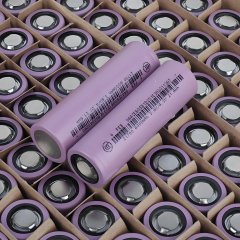

I also have completely different results. Both cells perform very similar withe 30PL with small better numbers.Are you sure there no error in this statement?
"JP30 can deliver over 3000mAh at 60A?" - reference capacity, normally measured at 1C or less, delivered at top discharge?
In Mooch's test at 40A JP40 delivered 2,75Ah, Eve30pl with CCC logo somewhat more
Isn't the FEB 6AH battery the same as the Vapcell F60 ? From what I heard, this battery is not rated for it's 100% DOD (4.2-2.5V) and is not very stable. It can barely handle 13AAt present, there is no information about it. I think it is still in the development stage? 6000mAh battery I know have FEB INR21700 6000
BatteryMooch
🚴♂️ Mega poster
Just curious…what are you referring to when you say the F60 is “garbage”, “not very stable”, and “can barely handle 13A”?Isn't the FEB 6AH battery the same as the Vapcell F60 ? From what I heard, this battery is not rated for it's 100% DOD (4.2-2.5V) and is not very stable. It can barely handle 13A
The FEB 6000mAh 21700 does indeed have a 4.20V to 2.75V range for its cycle life spec but FEB’s discharge graphs for it go down to 2.5V. I couldn’t find a full datasheet. The F60 is rated down to 2.5V too but that’s Vapcell’s rating.
Last edited:
BlueSwordM
🚴♂️ Mega poster
- Joined
- Jul 23, 2018
- Messages
- 612
PDF dump:
JP50 is coming.
Also IR graph at -10C is what's most interesting for the JP40.
JP50 is coming.
Also IR graph at -10C is what's most interesting for the JP40.
BlueSwordM
🚴♂️ Mega poster
- Joined
- Jul 23, 2018
- Messages
- 612
@BatteryMooch When you have the time, do you think you could measure the DC IR for the Molicel P50B and EVE 40PL at -10C? That would certaintly be very interesting to compare about the JP40.
BatteryMooch
🚴♂️ Mega poster
Hmm…would be interesting indeed. I can get them to about -11°C to -16°C in my freezer.@BatteryMooch When you have the time, do you think you could measure the DC IR for the Molicel P50B and EVE 40PL at -10C? That would certaintly be very interesting to compare about the JP40.
Prettty swamped with patron requests but will see if I can, might take a while. I’m thinking 30PL, P30B, and JP30 instead though, since I have all three here.
I can replicate Ampace’s stated test conditions, and hope we can compare results from the P50B and 40PL fairly, but it would be a lot better IMO if all cells were tested here under the same conditions.

Pajda
🚴♂️ Mega poster
I think those unpleasant words were directed at FEB, not Vapcell. I have heard similar things about FEB production from two sellers. But unlike Vapcell's production, I haven't had a chance to test FEB yet.Just curious…what are you referring to when you say the F60 is “garbage”, “not very stable”, and “can barely handle 13A”?
The FEB 6000mAh 21700 does indeed have a 4.20V to 2.75V range for its cycle life spec but FEB’s discharge graphs for it go down to 2.5V. I couldn’t find a full datasheet. The F60 is rated down to 2.5V too but that’s Vapcell’s rating.
Similar threads


- Replies
- 37
- Views
- 12,850


- Replies
- 5
- Views
- 1,261
- Replies
- 280
- Views
- 124,584