• Hello ES! We could use some help to get us past the finish line on building the new knowledgebase for the forum.
    Can you donate? Please see our fundraising page. Thank you!

First time e-bike build questions need help!

BikeNsurf310

New here
Joined
Jul 24, 2025
Messages
4
Location
Venice
Hi this is my first e-bike build. I’ve been lurking and reading some new build posts however I would like to get some more detailed input.

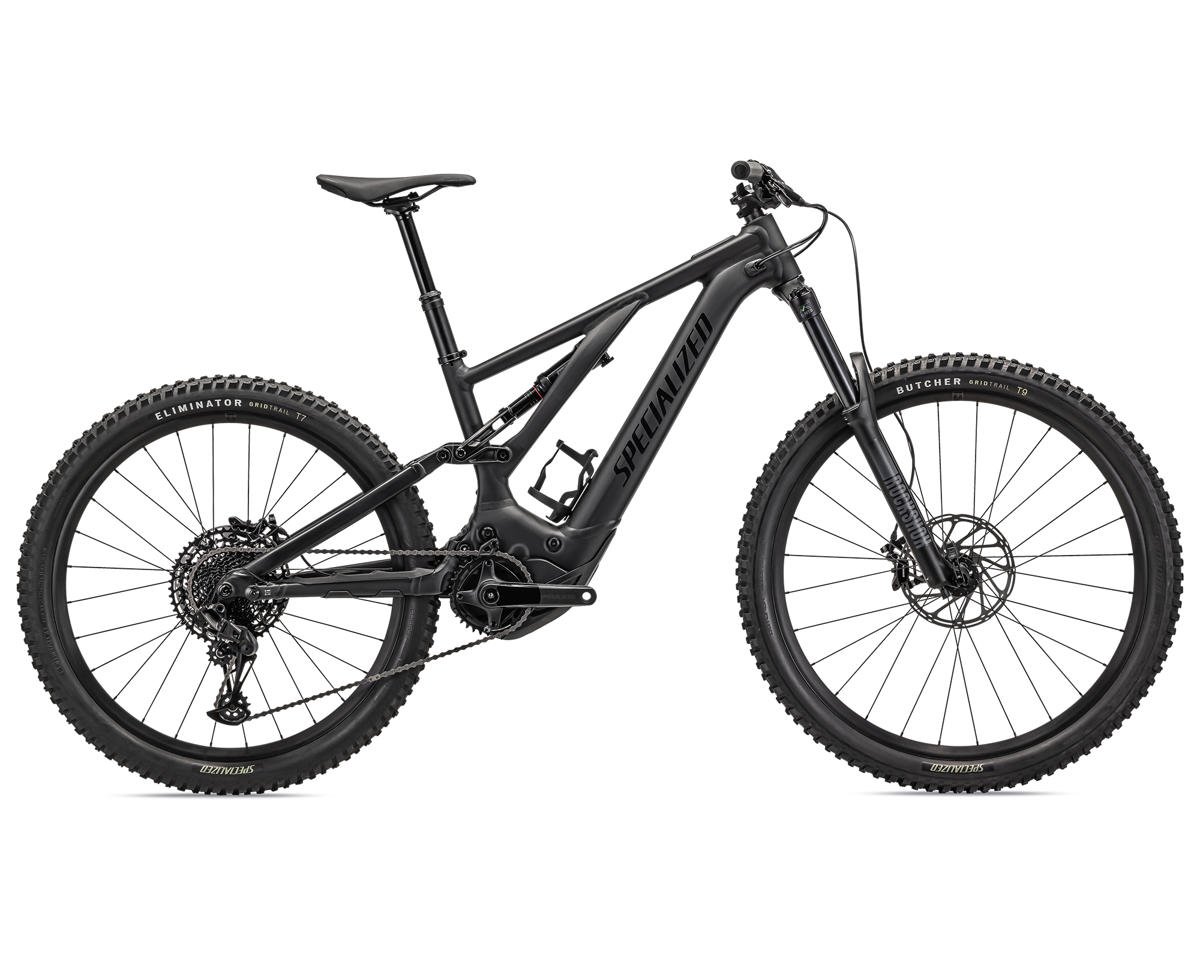
I have a budget of about 2000$ for a project and I would to emulate the Specialized turbo levo.

These are some of my requirements,

Off road capabilities including tires to be used on trails, single tracks and beach use.

Max speed 25-30 mph

Range of 20+ miles

Motor and battery needs enough wattage to get me up steep hills consistently

Any component suggestions are welcomed and thank you for your help!!

As a side note, I have a friend on here who goes by
“e-beach” who is willing to help me but is encouraging me to get up to speed because he hasn’t been too active lately.
 
Off road capabilities including tires to be used on trails, single tracks and beach use.

Max speed 25-30 mph

Range of 20+ miles

Motor and battery needs enough wattage to get me up steep hills consistently
What are the actual slopes of the hills? If you're not sure, round up any estimates you have from googlemaps, etc.

What is the estimated total weight of you, the bike, the motor/battery/etc system, and anything you will ever carry, worst case?

It takes a certain minimum amoutn of power to go a certain speed up a certain slope with a certain weight, and surface conditions (road, beach, trail, etc) also each need different amounts of power to overcome.

If there are headwinds, it takes more power by the amount of speed difference that makes from the speed you are actually going (as if you were going the total speed of you plus the headwind).

Beach use is different from other uses, because it takes power to plow thru the sand in ways it doesn't for regualr roads at the low speeds you'd probably be going. So you need a system that can provide that power at those low speeds, vs a system that can provide that power at the higher speeds you want for hte road and hill climbing.

Tires taht are good at one thing are not good at the ohters. Trail use probably requires knobby tires, but road use is better with smooth treads. Beaches usually need big fat wide tires that can eat up more power than narrower ones.


A hubmotor will have to be chosen for a specific range of conditions for optimal use, if it's capabilities are too far biased towards one of the usages then it may perform poorly or even overheat in the other extreme. But its more likely to remain reliable, and be cheap to replace in the event of failure, than more complicated options. Controlling such a motor is easy and there are as many user-control system choices as you can imagine (and probably some you might not have).

A middrive can use your pedal gears to perform better at different things. But it will require more maintenance of it and the drivetrain it powers, and be more expensive. Most have integrated control systems that you can't get around or modify without basiclaly rebuilding it, so you'd pick one that already operates the way you want it to, from the relativley limited choices that exist. (torque PAS, Cadence PAS, on/off PAS, throttle if it's an option, displays, etc etc). Or build a middrive "from scratch" to do what you want, which is even more complicated and probably more expensive.


For range.....At a guesstimate for road use with no hills, it might take up to 1500w to maintian 30mph. Assuming 20 miles of that riding, at 30mph that's 2/3 of an hour, so 0.67h x 1500w means needing a minimum of around 1000Wh of battery. If it's a 52v system (common) then that's 1000Wh / 52V = about 20Ah, which is a largish (not huge) battery. At a guess you might need up to twice that much battery to really get that kind of range, because it will probably take more than 1500w to do some of the things you want to do.


You can use the simulators at ebikes.ca (trip and motor) to see how all this stuff works, and use your specific conditions to find out what kind of system might better work for your purposes.
 
When you say trails, single track, etc, what difficultly levels are we talking? Like are you riding a lot of blue, black, double black trails or more green at most. The reason I ask is that can change the choices quite a bit, and change the bike you start with a tremendous amount. You need to start with a bike that is capable of those trails and then add a motor. Similarly higher difficultly starts to make things like hub motors not viable, torque sensing more useful (but not required), and of course torque a concern for steep and technical ascents.
 
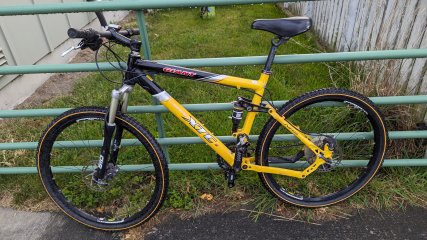
Buy a used full suspension mountain bike that you can fit a battery into and a motor on.
This is my $50 bike, though the electric part was $1,400 plus:
PXL_20240615_034125508.jpg PXL_20240720_043216038-EDIT (2).jpg
 
What are the actual slopes of the hills? If you're not sure, round up any estimates you have from googlemaps, etc.

What is the estimated total weight of you, the bike, the motor/battery/etc system, and anything you will ever carry, worst case?

It takes a certain minimum amoutn of power to go a certain speed up a certain slope with a certain weight, and surface conditions (road, beach, trail, etc) also each need different amounts of power to overcome.

If there are headwinds, it takes more power by the amount of speed difference that makes from the speed you are actually going (as if you were going the total speed of you plus the headwind).

Beach use is different from other uses, because it takes power to plow thru the sand in ways it doesn't for regualr roads at the low speeds you'd probably be going. So you need a system that can provide that power at those low speeds, vs a system that can provide that power at the higher speeds you want for hte road and hill climbing.

Tires taht are good at one thing are not good at the ohters. Trail use probably requires knobby tires, but road use is better with smooth treads. Beaches usually need big fat wide tires that can eat up more power than narrower ones.


A hubmotor will have to be chosen for a specific range of conditions for optimal use, if it's capabilities are too far biased towards one of the usages then it may perform poorly or even overheat in the other extreme. But its more likely to remain reliable, and be cheap to replace in the event of failure, than more complicated options. Controlling such a motor is easy and there are as many user-control system choices as you can imagine (and probably some you might not have).

A middrive can use your pedal gears to perform better at different things. But it will require more maintenance of it and the drivetrain it powers, and be more expensive. Most have integrated control systems that you can't get around or modify without basiclaly rebuilding it, so you'd pick one that already operates the way you want it to, from the relativley limited choices that exist. (torque PAS, Cadence PAS, on/off PAS, throttle if it's an option, displays, etc etc). Or build a middrive "from scratch" to do what you want, which is even more complicated and probably more expensive.


For range.....At a guesstimate for road use with no hills, it might take up to 1500w to maintian 30mph. Assuming 20 miles of that riding, at 30mph that's 2/3 of an hour, so 0.67h x 1500w means needing a minimum of around 1000Wh of battery. If it's a 52v system (common) then that's 1000Wh / 52V = about 20Ah, which is a largish (not huge) battery. At a guess you might need up to twice that much battery to really get that kind of range, because it will probably take more than 1500w to do some of the things you want to do.


You can use the simulators at ebikes.ca (trip and motor) to see how all this stuff works, and use your specific conditions to find out what kind of system might better work for your purposes.
Slope of hills would be 15-20% or higher

the estimated total weight of me, the bike, the motor/battery/etc system, and anything you will ever carry, worst case would be about 200 pounds


For tires I would prioritize trail and road use over beach use if I had to choose
What are the actual slopes of the hills? If you're not sure, round up any estimates you have from googlemaps, etc.

What is the estimated total weight of you, the bike, the motor/battery/etc system, and anything you will ever carry, worst case?

It takes a certain minimum amoutn of power to go a certain speed up a certain slope with a certain weight, and surface conditions (road, beach, trail, etc) also each need different amounts of power to overcome.

If there are headwinds, it takes more power by the amount of speed difference that makes from the speed you are actually going (as if you were going the total speed of you plus the headwind).

Beach use is different from other uses, because it takes power to plow thru the sand in ways it doesn't for regualr roads at the low speeds you'd probably be going. So you need a system that can provide that power at those low speeds, vs a system that can provide that power at the higher speeds you want for hte road and hill climbing.

Tires taht are good at one thing are not good at the ohters. Trail use probably requires knobby tires, but road use is better with smooth treads. Beaches usually need big fat wide tires that can eat up more power than narrower ones.


A hubmotor will have to be chosen for a specific range of conditions for optimal use, if it's capabilities are too far biased towards one of the usages then it may perform poorly or even overheat in the other extreme. But its more likely to remain reliable, and be cheap to replace in the event of failure, than more complicated options. Controlling such a motor is easy and there are as many user-control system choices as you can imagine (and probably some you might not have).

A middrive can use your pedal gears to perform better at different things. But it will require more maintenance of it and the drivetrain it powers, and be more expensive. Most have integrated control systems that you can't get around or modify without basiclaly rebuilding it, so you'd pick one that already operates the way you want it to, from the relativley limited choices that exist. (torque PAS, Cadence PAS, on/off PAS, throttle if it's an option, displays, etc etc). Or build a middrive "from scratch" to do what you want, which is even more complicated and probably more expensive.


For range.....At a guesstimate for road use with no hills, it might take up to 1500w to maintian 30mph. Assuming 20 miles of that riding, at 30mph that's 2/3 of an hour, so 0.67h x 1500w means needing a minimum of around 1000Wh of battery. If it's a 52v system (common) then that's 1000Wh / 52V = about 20Ah, which is a largish (not huge) battery. At a guess you might need up to twice that much battery to really get that kind of range, because it will probably take more than 1500w to do some of the things you want to do.


You can use the simulators at ebikes.ca (trip and motor) to see how all this stuff works, and use your specific conditions to find out what kind of system might better work for your purposes.
What are the actual slopes of the hills? If you're not sure, round up any estimates you have from googlemaps, etc.

What is the estimated total weight of you, the bike, the motor/battery/etc system, and anything you will ever carry, worst case?

It takes a certain minimum amoutn of power to go a certain speed up a certain slope with a certain weight, and surface conditions (road, beach, trail, etc) also each need different amounts of power to overcome.

If there are headwinds, it takes more power by the amount of speed difference that makes from the speed you are actually going (as if you were going the total speed of you plus the headwind).

Beach use is different from other uses, because it takes power to plow thru the sand in ways it doesn't for regualr roads at the low speeds you'd probably be going. So you need a system that can provide that power at those low speeds, vs a system that can provide that power at the higher speeds you want for hte road and hill climbing.

Tires taht are good at one thing are not good at the ohters. Trail use probably requires knobby tires, but road use is better with smooth treads. Beaches usually need big fat wide tires that can eat up more power than narrower ones.


A hubmotor will have to be chosen for a specific range of conditions for optimal use, if it's capabilities are too far biased towards one of the usages then it may perform poorly or even overheat in the other extreme. But its more likely to remain reliable, and be cheap to replace in the event of failure, than more complicated options. Controlling such a motor is easy and there are as many user-control system choices as you can imagine (and probably some you might not have).

A middrive can use your pedal gears to perform better at different things. But it will require more maintenance of it and the drivetrain it powers, and be more expensive. Most have integrated control systems that you can't get around or modify without basiclaly rebuilding it, so you'd pick one that already operates the way you want it to, from the relativley limited choices that exist. (torque PAS, Cadence PAS, on/off PAS, throttle if it's an option, displays, etc etc). Or build a middrive "from scratch" to do what you want, which is even more complicated and probably more expensive.


For range.....At a guesstimate for road use with no hills, it might take up to 1500w to maintian 30mph. Assuming 20 miles of that riding, at 30mph that's 2/3 of an hour, so 0.67h x 1500w means needing a minimum of around 1000Wh of battery. If it's a 52v system (common) then that's 1000Wh / 52V = about 20Ah, which is a largish (not huge) battery. At a guess you might need up to twice that much battery to really get that kind of range, because it will probably take more than 1500w to do some of the things you want to do.


You can use the simulators at ebikes.ca (trip and motor) to see how all this stuff works, and use your specific conditions to find out what kind of system might better work for your purposes.
Slope of hills would be 15-20% potentially higher

the estimated total weight of me, the bike, the motor/battery/etc system, and anything you will ever carry, worst case? 230 pounds

For tires I would prioritize trail and road use over beach use if I had to choose
 
When you say trails, single track, etc, what difficultly levels are we talking? Like are you riding a lot of blue, black, double black trails or more green at most. The reason I ask is that can change the choices quite a bit, and change the bike you start with a tremendous amount. You need to start with a bike that is capable of those trails and then add a motor. Similarly higher difficultly starts to make things like hub motors not viable, torque sensing more useful (but not required), and of course torque a concern for steep and technical ascents.

I think in a perfect world it would be able to function at a high intermediate “blue” or low black diamond difficult level but a blue would be fine also
 
Slope of hills would be 15-20% or higher

You probably want a mid drive with >1500w peak and a big battery.
I would spend as little as possible on the bike to stay within budget and pay the most for a quality battery.

ebay, classifieds, or bikeisland for the bike. em3ev battery. mid drive unit is your choice, something 1000w rated or higher is recommended to keep speed up while climbing and also sustain up to 30mph.
 
Indeed, but looks like all they have is size S6 for riders between 6'2" and 6'8". What is the battery voltage and Wh?

Edit: they have a higher spec version in S5. A little more $ but still on sale. I might be tempted if one could get parts and repair documentation, which I am certain Specialized will not allow.


Whoa! That bike is now on sale! That might be as much as you might spend trying to emulate it.
 
Hi this is my first e-bike build. I’ve been lurking and reading some new build posts however I would like to get some more detailed input.

I have a budget of about 2000$ for a project and I would to emulate the Specialized turbo levo.


These are some of my requirements,

Off road capabilities including tires to be used on trails, single tracks and beach use.

Max speed 25-30 mph

Range of 20+ miles

Motor and battery needs enough wattage to get me up steep hills consistently

Any component suggestions are welcomed and thank you for your help!!

As a side note, I have a friend on here who goes by
“e-beach” who is willing to help me but is encouraging me to get up to speed because he hasn’t been too active lately.
So it sounds like you want a torque sensing mid drive that’s faster than the turbo Levo for $2000. Does that include the donor bike?
The list of motors is short. Maybe a CYC mid drive, but it will be noisy. You didn’t mention sound, but it will be louder than the Levo. If you can weld, then there are other motor options, like possibly the Bafang motors with torque sensors.
 
Back
Top