
• Hello ES! We could use some help to get us past the finish line on building the new knowledgebase for the forum.
    Can you donate? Please see our fundraising page. Thank you!

400W DIY charger using PSU and Boost converter

cloudy

⚡ Regular
Joined
Nov 24, 2020
Messages
100
Location
Australia
I've been using cheap 67.2V 2A chargers for my 16s9p battery, in series with a circuit that allows a programmable voltage cutoff that I usually set at some lower voltage to avoid fully charging the battery. The battery uses a JBD SMART BMS.

I've been thinking of ways to make a faster charger using a 500W PC supply and an adjustable boost converter:
Boost Converter In DC10-60V Out 12-83V 1200W 20A

I was then planning to put this setup in series with the cutoff relay I already have to give me the same functions to control top of charge.

Will this work and what am I missing?

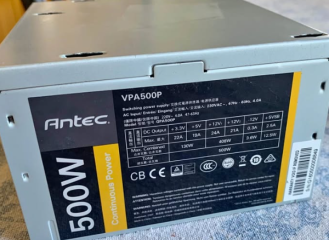
With these PC power supplies, is it possible to connect the two larger 12V outputs in parallel going into the Boost converter to get the full 408W capacity?

Is there any way to make it a 24V supply, or do these PC PSU units have a common ground on the outputs?
1761026308514.png
 
The label on the side of the PSU gives you the capabilities. Are there two separate +12v supplies? Or just two separately wired outputs? Antec used to supply good manuals for thier stuff, dunno how they are now. The manual may tell you whether those can be directly paralleled or not.

Otherwise, you can check that with a voltmeter with it on to see if their voltages are *identical*, and with an ohmmeter with the PSU off (and discharged) measuring between the two 12v positives (the grounds are almost certainly identical, there's no way I'm aware of to use a single PSU as a split supply to double the voltage). If there is directly zero ohm continuity between the two, then they rae already internally paralleled, and just on separate wires to provide enough current via the size of wire provided. Or you can open it up and visually trace out the separate 12v lines.


Rewgarding the boost converter--if it is not a constant-current constant-voltage CC/CV device, then it probably can't be used as a charger, as most of those that aren't use the same kind of current liming that PSU does--crowbar, meaning it shuts off (or fails) when the limit is exceeded, instead of dropping the output voltage as a constant (not pulsed) voltage until the volts / the load resistance = the current that was set (or built) as the limit.
 
I would connect more than 1 12V wire together, going into the boost converter, to avoid over heating 1 of them:
That's a lot of amps to be sending over 1 PSU wire.
Server (12V only) PSUs gang many (similar thickness to yours) 12V and neutral wires together to share the amps.
I would gang all the 12V together.


AFAIK the ground is common.
There used to be ...er... dual something or other PSUs years ago, but those fell out of favor for causing confusion and issues IIRC.

You get different ratings for PSU efficiency:
IIRC bronse, silver, gold, platinum.
They get their max efficiency att around 70% load IIRC.

Only way to get 24V or higher would be to rewind the transformer coil/s IMHO.

IIRC the Antecs are pretty good, with overload etc protections.
Cheap PSus are just plain dangerous for computers.
 
At 12V the boost converter is limited by the 20A - 25A input current. So at max. you are getting 300W power input.
I recommend a 67.2V 5A charger from aliexpress instead, got mine for 22€. Acoording to my BMS it outputs 4.5A / almost 300W.

In my understanding you cannot directly wire 2 PSUs in parallel because the voltages of 2 PSUs will be slightly different and current could flow between them.
If they are galvanically isolated maybe you could put them in series to get 24V. And then step up to 67V.
 
Last edited:
I use CC/CV boost converters exclusively, to charge my 10S Esk8 battery.

Mostly I charge from some 12V lead acid AGM batteries that I keep at their recommended float voltage of 13.6v via an adjustable voltage 100 amp power supply.

I have several different voltage boosters, and while many will say 400 watt, or 600 or 1200 or 1800 watt, these outputs are only possible if it is fed a high voltage near the maximum rated input voltage and outputting just a little bit more voltage than they are getting from the source.

So a 12vdc nominal input is very limiting. I have the 1800 watt version of the Voltage booster linked in the first post. Ihas a fatter heatsink with 50mm fan attached, and fatter double stack wire wound toroid. At 12.6v input, output set to 42v, the most I can get out of it is 9 amps or ~400 watts.

So ~400 watts max, from a 1800 watt rated red booster.

That is good enough for me, and the unit otherwise seems to work well. The potentiometers are not overly sensitive, and the current limiting, does work, down to 0.7 amps anyway. My other smaller cc/cv boosters will allow me to throttle charge current to 0.1 amps or so. The third potentiometer is for a minimum voltage, when battery to battery charging and so as to not overdischarge input battery, but I have not played with that much.

I have no oscilliscope and thus have no idea of the amount of ripple.

I'd urge you to look at the max input amperage, if listed, perhaps look at other listings of the same product to find more details, and do some math on the max expected output. with that input number in mind, as well as voltage drop on the wires from power supply to the booster.

Your computer power supply will probably not be a happy power supply if maxed out feeding a booster, and if it is only 19.5vdc output, that can be a limiting factor as well. Might have to increase the heatsinking and install a better fan if asking it to work at or near its maximum rating.
 
110-120V is realy bad.

I searched a long time for a adjustable 70-80V supply with 1kW and more which works all aroundt the world.

The only thing I found and also have are modified telecom rectifiers.
Like the Huawai R4850g2 (3kW) or the R4875G1 (4kW) , they are 180-280USD or the cheaper 1-100V 30A Delta rectifiers (2,7kW) 110-150USD.
They have half the rated power at 110-120V.
There also exist modified R4830 but they are more expensive.
 
Thanks all for the information in these great posts. I think I've decided to go with the store bought chargers linked by Dominik, they seem pretty neat and a bit less fiddly than what I initially proposed. Hopefully the Ali chargers work well.
 
thanks @dominik h , for the smaller 42-88v 15A charger, can this also be used as an adjustable DC power supply? In other words, will it still output a voltage with no battery connected? Some chargers shut down the output if they detect no battery. You mention in your review there was still voltage when sitting "idle", I just wanted to confirm that this was the case.

There is a 10-93 V version of the charger which could be quite useful as a benchtop power supply as a second application.
Adjustable chargers
 
Sorry, did not test this. And I own it not anymore.
It definitly puts out voltage if your plug it in the AC socket, but I never tested it for mire than a few seconds.
If charging was finished it turnt of the fan, but I did not check if it turnded also of the dc output.
 
Back
Top