• Hello ES! We could use some help to get us past the finish line on building the new knowledgebase for the forum.
    Can you donate? Please see our fundraising page. Thank you!

Avoiding Mechanical Brakes - E brakes only?

Concorde

🧲 New user
Joined
Dec 15, 2025
Messages
8
Location
UK
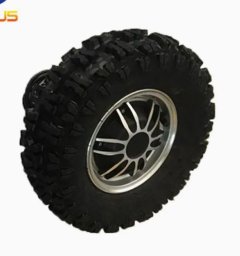
I am planning an off road kart build using two Flipsky mini pro dual VESC based esc's running 4 (hoverboard type) hub motors.

For simplicity, I would like to avoid disc brakes entirely. I realise there are safety issues with BMS suddenly cutting regen current flowing into a fully charged battery etc. However, I also know that it is possible to ebrake not by regen but by reverse driving the motors. I also hear it is potentially possible to use large braking resistors to dump the brake energy if the battery is full.

Has anyone experience of implementing such a setup? Is it practical to have a highish performance vehicle that has no mechanical brakes?
hub.JPG
 
Practical? Possibly.

Safe? No. (in several scenarios easily envisioned, and probably a lot more)

If you have no mechanical method of slowing or stopping when the inevitable power loss or system failure occurs, you could kill someone or be killed yourself.

If you don't care about that, and want to do it anyway, you need to get
--a controller that supports variable regen
----- *and* can brake all the way down to zero speed and hold the wheel locked there
----- *and* can provide sufficient braking torque for your given motor and wheel size
--a battery that can repeatedly accept, at any state of charge, without damaging the cells, interconnects, wiring, BMS, etc.
-----*and* has a common-port BMS to ensure no overcharge occurs*****
-----*or* has no BMS and you never charge it anywhere near full, so it always has plenty of empty capacity to accept the regen braking charge
-----*or* a controller that doens't send the braking current to the controller but instead wastes it as heat in a radiative element of some type (I know of no available ones, as those on large mining/hauling equipment are too large for your usage).

***** note that if the BMS does have to turn off during a regen event, voltage can spike so fast in the controller that it blows up. Never charging anywhere near full can help with that but the risk exists in any condition that could trigger the BMS shutoff during regen.


For controllers, I don't know of any for certain.

Sevcon can in theory do what you'll need, depneding on the model, but youll have ot figure out how to wire it and program it on your own (or pay an expert to do it; they're not even remotely easy to set up).

VESC is open source so if you don't find a model to do it, then you might find someone (if you can't) rewrite it's code to do it.

There was one version of the Lebowski brain firmware that worked this way; I don't know if it's posted in any of hte Lebowski threads here or not--but it's just a brain board, so even if you buy a premade / flashed board from someone (like Kiwifiat) then you still have to build or buy a powerstage for it to control and then wire it up (there are several threads here about that).

You can't use (or at least, wouldn't want to) use any controller that does not support full variable regen. If it only supports on/off regen, you only get one level of braking force, activated by a switch.

You probably won't want to use one that only allows throttle ocntrol of the braking force--it is not as instinctive to use as a brake lever for experienced riders. If you have no experience using brake levers then it doesn't matter which way you go, but you would want one that does *not* use brake-switch-engage+throttle-vary-force type control, only one that uses one of the several throttle-only control methods.

The two major ones of that are that any reduction of throttle causes braking until that speed is reached, or a split-mode throttoel where forward of the "off" position is traction, and backward of it is braking--farther from off in either direction, greater force applied.


Regarding safety:

If the controller *or battery* *or any connection between them* fails during a regen event and you're in a critical situation, you now have either no braking at all, or you have locked up wheels (like if hte ocntroller FETs fail shorted, not uncommon). Either one, depending on the situation, could be fatal; probably hazardous, certainly undesirable.

If you have multiple motor wheels, you'll have multiple controllers. If one fails but not the other(s), you'll have normal braking on the unfailed side, and locked wheel or no braking on the other; if you're experienced enough you might be able to control that situation.


You cannot park on a slant with the controller-only braking. It would require the controller to be powered and on and held in braking mode continuously, and it would have to expend battery power to hold the vehicle in place. This will heat up the controller and motor and wiring, and drain your battery. Would suck to park on a slightly non level surface, get out, and have it roll downhill away from you and either get away or roll into something or someone. :/


Having a mechanical braking setup that activates when you pull the lever far enough back past full regen would give you the emergency option, without having ot ever use them under normal circumstances. Also lets you use a locking brake lever as a parking brake.

Using a dual-pull ATV brake lever on each side means you can use a cable-oeprated mechanical brake from each one, *and* a variable-regen-controlling cable-oeprated throttle body that feeds the controller's brake input.
 
I ran this on an ebike and it was great.
Single brake lever controlled the regen and also

I used a super strong brake up front for the rare case that regen failed.
It never failed.
That front brake had very little wear on it
The bike also had no BMS. Those cells were balanced periodically with a RC charger ( 20C RC Lipo ).

A prerequisite is an extremely powerful battery ( my regen could be 1kw+ on a bike ) that can charge at that rate and also charging the battery to 95-90% instead of 100% so that you have some overhead on going over voltage, if for example, you live at the top of a hill. ( maybe this % needs to be reduced further, depending on your local topography :) )

Braking currents can be very strong so you also need a beefy controller. Phase currents can be stronger than forward power.
 
Seconding amberwolf here. It is definitely possible, but why not have at least one physical backup?

Since you seem to be aiming for simplicity, I think regen braking + physical brakes will be simplest and safest.
 
OK. Yes it does seem like there is a strong argument to retain disk brakes,

Since I have a motor on each wheel it would still make sense to utilise them as much ebrake effect as possible. I am thinking I could set a reasonalbe amount of off-throttle drag brake, and the remaining available ebrake blended into the hydraulic brake.

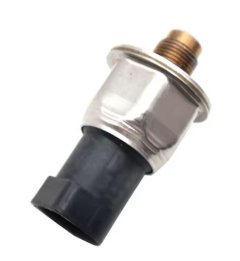
Has anyone tried using a hydraulic pressure transducer as a sensor to trigger ebrake? Perhaps I could use an arduino with lookup table to blend ebrake effect with hydraulic pressure.
sense.JPG
 
In fact ABS pressure sensors are 3 wire 0-5v. THis could be mapped straight into the vesc. Could you customise non-linear curves to help blend the ebrake effect??
 
I plan to use two the flipsky 6.7 mini pro dual escs to run 4 motors at 12s. Is there any advice if this setup is suitable?
 
For simplicity, I would like to avoid disc brakes entirely.
Something to think about: Automakers are also constantly trying to omit unnecessary equipment to keep down costs. They love to ditch additional weight and complexity. Current EVs omit cigarette lighters, ashtrays, HVAC (and other) control knobs and switches, spare tires, jacks, etc. but still retain friction brakes (even while incorporating regenerative braking). Why?
 
Something to think about: Automakers are also constantly trying to omit unnecessary equipment to keep down costs. They love to ditch additional weight and complexity. Current EVs omit cigarette lighters, ashtrays, HVAC (and other) control knobs and switches, spare tires, jacks, etc. but still retain friction brakes (even while incorporating regenerative braking). Why?
I suspect they are obeying a legal requirement, rather than a logical safety concern. ;)

But, your point still stands. :p
 
I plan to use two the flipsky 6.7 mini pro dual escs to run 4 motors at 12s. Is there any advice if this setup is suitable?

I'd think about a Spintend since it's a higher quality VESC, flipsky might be it's quality opposite.
 
Something to think about: Automakers are also constantly trying to omit unnecessary equipment to keep down costs. They love to ditch additional weight and complexity. Current EVs omit cigarette lighters, ashtrays, HVAC (and other) control knobs and switches, spare tires, jacks, etc. but still retain friction brakes (even while incorporating regenerative braking). Why?

Legal requirements
 
On a 4 wheeler, regen brakes on independently driven wheels are pretty awesome.

The braking traction is next level as it is independent to each wheel. Can fly down gravel hills with a ton of grip. This is where the hub motor can shine as the un-sprung weight factor works great for low cg and tires to the gravel grip. I've tested my setup for around 1500km's on some treacherous very hilly tracks out bush here in the Perth hills, W. Australia and it performs better than most anything. Goes anywhere, climbs hills at speed. Very compelling experience and I much prefer it over mechanical brakes.

BUT, you got to have the mechanical E-brake.

I had no mechanical ebrake awhile back, and my old red Daly BMS shat itself. I stupidly didn't secure my 120ah 48V battery down and over time it hammered the BMS that I had bolted to the top of the battery casing (no room inside). It then developed a random "I'm not accepting any regen right now" issue which triggered the Kelly Controllers to set off an alarm, disabling the regen circuit and sending me coasting!

That'll put the fear into you.

I eventually found out the BMS was the issue when driving it one time and I hadn't put the seat on as I was testing something and just had a cushion sitting on the BMS and sat on that. That would cause the intermittent fault every time. Crazy. So if I put pressure on the BMS, it would fail.
Other than as a safety backup, I would never need to use a mechanical brake.

But now I have moved to Fardriver and everything is different and I think I found out that you cannot get regen from just rolling down a hill with no prior throttle press. For example, you approach a steep decline and you are rolling (throttle not engaged), on the Kelly controllers the regen would activate. Fardriver seems like it wont, but still lots to learn. I have to have this feature. What makes it harder is that most builds for Fardriver (on youtube etc) are 2 wheelers and they don't tend to like regen so never go into depth about it.

Would like to be able to get a few vesc controllers as they sound good, but on the high-end of price compared to the others.
 
On a 4 wheeler, regen brakes on independently driven wheels are pretty awesome.

The braking traction is next level as it is independent to each wheel. Can fly down gravel hills with a ton of grip. This is where the hub motor can shine as the un-sprung weight factor works great for low cg and tires to the gravel grip. I've tested my setup for around 1500km's on some treacherous very hilly tracks out bush here in the Perth hills, W. Australia and it performs better than most anything. Goes anywhere, climbs hills at speed. Very compelling experience and I much prefer it over mechanical brakes.

BUT, you got to have the mechanical E-brake.

I had no mechanical ebrake awhile back, and my old red Daly BMS shat itself. I stupidly didn't secure my 120ah 48V battery down and over time it hammered the BMS that I had bolted to the top of the battery casing (no room inside). It then developed a random "I'm not accepting any regen right now" issue which triggered the Kelly Controllers to set off an alarm, disabling the regen circuit and sending me coasting!

That'll put the fear into you.

I eventually found out the BMS was the issue when driving it one time and I hadn't put the seat on as I was testing something and just had a cushion sitting on the BMS and sat on that. That would cause the intermittent fault every time. Crazy. So if I put pressure on the BMS, it would fail.
Other than as a safety backup, I would never need to use a mechanical brake.

But now I have moved to Fardriver and everything is different and I think I found out that you cannot get regen from just rolling down a hill with no prior throttle press. For example, you approach a steep decline and you are rolling (throttle not engaged), on the Kelly controllers the regen would activate. Fardriver seems like it wont, but still lots to learn. I have to have this feature. What makes it harder is that most builds for Fardriver (on youtube etc) are 2 wheelers and they don't tend to like regen so never go into depth about it.

Would like to be able to get a few vesc controllers as they sound good, but on the high-end of price compared to the others.
That's interesting hearing about your experience. Yes, I can imagine braking with four hub motors to be excellent on loose terrain. I plan to have four long travel fully independent suspension to create a true go-anywhere machine. Do you have any photos?
 
But now I have moved to Fardriver and everything is different and I think I found out that you cannot get regen from just rolling down a hill with no prior throttle press. For example, you approach a steep decline and you are rolling (throttle not engaged), on the Kelly controllers the regen would activate. Fardriver seems like it wont, but still lots to learn. I have to have this feature. What makes it harder is that most builds for Fardriver (on youtube etc) are 2 wheelers and they don't tend to like regen so never go into depth about it.
If you can't get the FDs to regen as desired, you could "lebowski" them, effectively replacing the FD brain with the Lebowski brain, using the FD powerstage.

(you could actually do this with any brain and any powerstage, more or less, but the lebowski is *just* a brain meant to be used with other powerstages (DIY or zombified)). There's some threads here about doing this with various controllers, including mine and another member's HondaIMA inverter conversion. (I didnt' finish mine, but there is a lot of info in it anyway).
 
That's interesting hearing about your experience. Yes, I can imagine braking with four hub motors to be excellent on loose terrain. I plan to have four long travel fully independent suspension to create a true go-anywhere machine. Do you have any photos?

When I said 4 wheeler, I should have mentioned that it is only 2WD at the rear. True 2WD though, not with a diff or locked diff as is the case for almost everything else. Its what also makes it compelling when braking. In the future I would like to put some smaller AC induction hub motors on the front, as they freewheel better with no magnets when not in use. I saw a company MadJax used to sell a kit as a golf cart front conversion.

I'd imagine 4 driven wheels would have epic grip off road! And your project sounds like an interesting one, especially with the adaptive suspension. It's tough with the unsprung weight issue but I find that anything up to 40km (on dirt tracks feels quick enough) isn't effected too much and there are suspension optimizations and seat dampening etc. to help improve.
Managing all those controllers though will be fun though lol one throttle controlling 4 controllers, wiring etc. I envy those with just one controller to deal with.

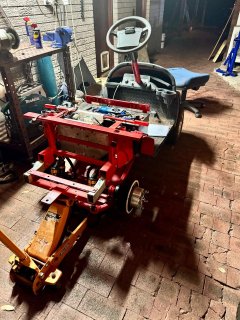
Just took a few quick pics of our current setup which is a platform I had laying around that is also a similar size to a quadbike and does well for testing, but not so cool in the looks department lol.
I'm now in the process of swapping back to Kelly controllers again as Fardriver is geared up for two wheel machines. No 'neutral regen' as Kelly controllers called it and no analogue braking. The main reason for going Fardriver was the hope to get rid of some starting crunch, but no matter what I try I cannot get rid of it, and starting to think its my hub motors. Twin 2KW 48V rated from QS. I'm going to miss not having an iOS app as Fardriver was so much easier making changes.
Looking now into vesc based controllers and will probably avoid the Flipsky as mentioned earlier in the thread.
 

Attachments

  • front.jpeg
    front.jpeg
    331.2 KB · Views: 5
  • back.jpeg
    back.jpeg
    372 KB · Views: 5
If you can't get the FDs to regen as desired, you could "lebowski" them, effectively replacing the FD brain with the Lebowski brain, using the FD powerstage.

(you could actually do this with any brain and any powerstage, more or less, but the lebowski is *just* a brain meant to be used with other powerstages (DIY or zombified)). There's some threads here about doing this with various controllers, including mine and another member's HondaIMA inverter conversion. (I didnt' finish mine, but there is a lot of info in it anyway).
Man that sounds like a lot of technical work! So you hack the Fardriver and replace the brain with another, keeping the powerstage as you mentioned? This sound like something that you can do with any controller, but has it been done with Fardriver?

As mentioned in above post I've come to the conclusion that Fardriver is not the best fit for our application. Made for motor bikes etc. So just starting to swap the Kelly controllers back. I'm glad I made the decision to adapt the FD to the existing harness. Had to pull a few pins here and there but much easier to go back. It's been offline for well over a month and I miss driving it, usually taking it out daily in the bush for 5-10-km runs.
 
When I said 4 wheeler, I should have mentioned that it is only 2WD at the rear. True 2WD though, not with a diff or locked diff as is the case for almost everything else. Its what also makes it compelling when braking. In the future I would like to put some smaller AC induction hub motors on the front, as they freewheel better with no magnets when not in use. I saw a company MadJax used to sell a kit as a golf cart front conversion.

I'd imagine 4 driven wheels would have epic grip off road! And your project sounds like an interesting one, especially with the adaptive suspension. It's tough with the unsprung weight issue but I find that anything up to 40km (on dirt tracks feels quick enough) isn't effected too much and there are suspension optimizations and seat dampening etc. to help improve.
Managing all those controllers though will be fun though lol one throttle controlling 4 controllers, wiring etc. I envy those with just one controller to deal with.

Just took a few quick pics of our current setup which is a platform I had laying around that is also a similar size to a quadbike and does well for testing, but not so cool in the looks department lol.
I'm now in the process of swapping back to Kelly controllers again as Fardriver is geared up for two wheel machines. No 'neutral regen' as Kelly controllers called it and no analogue braking. The main reason for going Fardriver was the hope to get rid of some starting crunch, but no matter what I try I cannot get rid of it, and starting to think its my hub motors. Twin 2KW 48V rated from QS. I'm going to miss not having an iOS app as Fardriver was so much easier making changes.
Looking now into vesc based controllers and will probably avoid the Flipsky as mentioned earlier in the thread.
Are your hub motors geared or direct drive? Do you use FOC control? How does it perform at low RPM bound up situations? As I am trying to create an extreme off road vehicle I need performance at close-to-stall conditions. Think rock crawling scenarios.
 
Are your hub motors geared or direct drive? Do you use FOC control? How does it perform at low RPM bound up situations? As I am trying to create an extreme off road vehicle I need performance at close-to-stall conditions. Think rock crawling scenarios.


No gears, direct drive.

The Kelly controllers which I've used up until now and reverting back to, has FOC control as I understand and has really good low RPM control, as in, I can climb steep hills with good torque at low RPM, but for rock crawling I'm not sure as the motors I have experience very low rpm cogging or crunching which effects the power.

Like I can climb most anything, but if I'm stationary and have a log in front of my back wheels, there will be a grinding sound with very little power. Then when I push the throttle harder, the crunching sound gets louder until it eventually launches over the log in an unstable way. I think the issue is with my hub motors as I tried two controllers now and many adjustments and its still the same, I can't shake it. Happens also with no load on jack stands, and is not mechanical noise.

If you watch YouTube videos of larger hub motors, there is no crunch at near stall conditions so it is probably fine but can't help with that sorry.

Don't have experience with geared but that sounds like it might be the best method for your situation.
 
I see. It sounds like you are experiencing the limit of available stall torque on your setup. Others may be more expert than me, but the main ways to raise the stall torque, is increase phase current limit (including resistance bottlenecks in cables etc., increase battery voltage. Then there are hardware changes such as increasing number of winding turns and gearing down. You are using 48v which is low. Switching to 60v or even 72v would be transformative.
 
I see. It sounds like you are experiencing the limit of available stall torque on your setup. Others may be more expert than me, but the main ways to raise the stall torque, is increase phase current limit (including resistance bottlenecks in cables etc., increase battery voltage. Then there are hardware changes such as increasing number of winding turns and gearing down. You are using 48v which is low. Switching to 60v or even 72v would be transformative.
Thanks, some good stuff to think about there.

As I mentioned, I have tried making many changes on the software side including different phase offset and pid settings etc. both on the Kelly controller and the Fardriver and hasn't helped. Phase current maxed out, oversized cabling etc.
Chatgpt thinks its related to finding the hall sensors at stall and the algorithms it uses, but I have learnt not to lean too much into AI as it gets shit wrong a lot lol.
I had planned to get a 60V setup to see if it could help and have also thought about changing the windings as it seems QS motors can customize.
But yeah 48v is not so great and was just more of convenience at the time as I had that battery laying around and based it all off that. So yeah I think that will be my next upgrade for sure.

"I also hear it is potentially possible to use large braking resistors to dump the brake energy if the battery is full." - This is interesting as a safety feature (besides mech brakes ofcourse) and would like to know more about it. There is the well known issue that I've experience a few times where after a full charge, I go down our steepish driveway and it triggers the regen fault as the battery is full.
 
"I also hear it is potentially possible to use large braking resistors to dump the brake energy if the battery is full." - This is interesting as a safety feature (besides mech brakes ofcourse) and would like to know more about it. There is the well known issue that I've experience a few times where after a full charge, I go down our steepish driveway and it triggers the regen fault as the battery is full.
There are vairous posts in scattered threads about this, but to do it you require some switching mechanism to changeover from the battrery to the resistors only during braking events during the time you want to do this, and switch back *before* the braking event is over, so the controller doesn't shutdown from undervoltage.

So you need some external electronics to detect all the various conditions and control inputs, and a contactor or SSR that can swtich fast enough and handle all the current and voltage required.

Some of the posts if you can find them (probably most in threads about downhills with full batteries, but potentially in any discussion about plug regen or braking resistors) have more details.

You'd need to develop the system, as no one else has yet done so, or if they have they didn't bother to post about it.


Another potential system that has been posted about but probalby not tested is using a brushed controller paralleled with your regular controller to one pair of phase wires (or up to three of them each on it's own pair of phase wires). The LVPS (low voltage power supply) to the brain of the BC is disconnected from the battery bus, and connected to your regular traction battery. The batteyr bus of the BC is connected to the braking resistor. So the controller can never drive the motor, but it can apply a braking force. the BC must be configured to be in regen braking mode all the time (never in motor driving mode), and the variable braking control for it is then your brake control. (if it doesn't have variable braking it won't be much use).

Then you need a way for your brake control to detect that you are braking, and turn off the regular controller's motor output, but not turn on it's braking function (best to disable that entirely), and activate and control the BC's braking function

How to do all that will depend on your specific motor controller and your specific brushed controller(s) chosen, and your specific desired braking control method.
 
Back
Top