
Nix Liou
⚡ Regular
The premise:
I build custom battery packs, and recently I've been venturing into high discharge packs, small and big.
I have a 300w Atorch discharge tester, which I usually use to validate capacity of packs. I could combine it up to 600w, but I am building packs rated for upwards of 10kw CDR, and I need to be able to stress test and validate these custom designs for thermals, as that is the limiting factor usually.
The problem:
I haven't done super in depth research but I have looked into some ceramic load resistors, but at this level of power they are all hundreds of dollars, even if I trust the sparse spec sheets. I would like this system to be modular or scalable to allow me to test systems at 400A continuous. One battery I am currently building is capable of ~35kw CDR, theoretically. If I purchased ceramic load resistors capable of 40kw that would cost me ~$1000.
My solution:
I have come up with an alternative method, and I would like to hear some constructive criticism because frankly it is a somewhat dubious concept.
I have access to silicon carbide kiln shelving, and high refractory firebricks from several kilns. I also have a spool of 100ft of 22awg Nichrome A wire.
I found a data table online that gives a steady-state temperature of ~900°C for 22awg wire running 10A through it.
The concept is effectively a switch box with a number of nichrome resistive loops connected in parallel. This would allow me to step the resistance of the loop as the voltage drops, giving an approximately continuous discharge rate (importantly, I do not need to know the capacity, just the thermal situation, so approximately continuous is acceptable).
Each nichrome loop would be loosely coiled around a fire brick or similar, probably with a blower fan over them.
For a first test, I want to configure this tester to do a continuous discharge between 50-60A from a 72v nominal battery. My calculations give a total of 8 nichrome strands of 8.4 feet long (1ohm/ft at 22awg), starting with 6 in parallel at full charge, and ending with 8 in parallel by 3.15V.
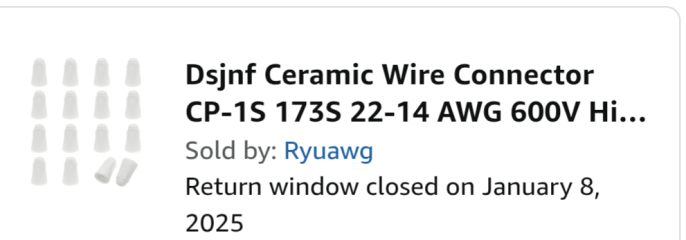
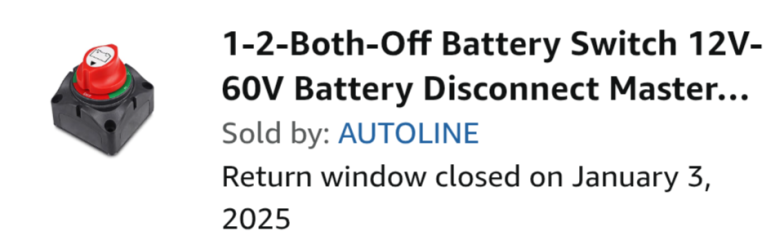
I haven't made Nichrome heating elements before, but my preliminary concept is to try using these ceramic wire nuts to attach the nichrome, the light switches to allow toggling (theoretically each would only be under 10A, and a standard circuit is 15A).
I got these multi block connectors to help configure this, but I may switch to proper crimped bullet connectors everywhere that's relevant. Each heating element would be wrapped around a brick, resting on a silicon carbide kiln shelf.

Safety:
I will be doing this outside, away from any dry grass or similar, and I will wet the ground nearby.
I have a full and certified CO2 fire extinguisher, and a hose will be at hand.
I will only be connecting fully discharge protected completed battery packs using a smart BMS, allowing me to concurrently monitor internal and external temps, discharge current, cell balance, etc. I will be able to cut off the discharge immediately via a physical switch, or the mosfet controls for the BMS, in case of any issues.
I will be using an IR thermometer to check interconnect and wire temperatures periodically, and I am aware of both the risk of burns and the risk of shocks at ~80V.
I have a welding apron, and a full face respirator, but I probably will forgo the respirator for safety glasses. I have some metal tongs and insulated gloves should I need to poke anything hot.
Am I missing anything? I think I've thought of most of the concerns, but I haven't done this kind of thing before. I would love to get feedback on if this idea seems viable, or too sketchy.
I will update this post with images as I assemble things and figure out the exact test setup.
P.S This is my first post here, go easy on me admins
I build custom battery packs, and recently I've been venturing into high discharge packs, small and big.
I have a 300w Atorch discharge tester, which I usually use to validate capacity of packs. I could combine it up to 600w, but I am building packs rated for upwards of 10kw CDR, and I need to be able to stress test and validate these custom designs for thermals, as that is the limiting factor usually.
The problem:
I haven't done super in depth research but I have looked into some ceramic load resistors, but at this level of power they are all hundreds of dollars, even if I trust the sparse spec sheets. I would like this system to be modular or scalable to allow me to test systems at 400A continuous. One battery I am currently building is capable of ~35kw CDR, theoretically. If I purchased ceramic load resistors capable of 40kw that would cost me ~$1000.
My solution:
I have come up with an alternative method, and I would like to hear some constructive criticism because frankly it is a somewhat dubious concept.
I have access to silicon carbide kiln shelving, and high refractory firebricks from several kilns. I also have a spool of 100ft of 22awg Nichrome A wire.
I found a data table online that gives a steady-state temperature of ~900°C for 22awg wire running 10A through it.
The concept is effectively a switch box with a number of nichrome resistive loops connected in parallel. This would allow me to step the resistance of the loop as the voltage drops, giving an approximately continuous discharge rate (importantly, I do not need to know the capacity, just the thermal situation, so approximately continuous is acceptable).
Each nichrome loop would be loosely coiled around a fire brick or similar, probably with a blower fan over them.
For a first test, I want to configure this tester to do a continuous discharge between 50-60A from a 72v nominal battery. My calculations give a total of 8 nichrome strands of 8.4 feet long (1ohm/ft at 22awg), starting with 6 in parallel at full charge, and ending with 8 in parallel by 3.15V.
I haven't made Nichrome heating elements before, but my preliminary concept is to try using these ceramic wire nuts to attach the nichrome, the light switches to allow toggling (theoretically each would only be under 10A, and a standard circuit is 15A).
I got these multi block connectors to help configure this, but I may switch to proper crimped bullet connectors everywhere that's relevant. Each heating element would be wrapped around a brick, resting on a silicon carbide kiln shelf.
Safety:
I will be doing this outside, away from any dry grass or similar, and I will wet the ground nearby.
I have a full and certified CO2 fire extinguisher, and a hose will be at hand.
I will only be connecting fully discharge protected completed battery packs using a smart BMS, allowing me to concurrently monitor internal and external temps, discharge current, cell balance, etc. I will be able to cut off the discharge immediately via a physical switch, or the mosfet controls for the BMS, in case of any issues.
I will be using an IR thermometer to check interconnect and wire temperatures periodically, and I am aware of both the risk of burns and the risk of shocks at ~80V.
I have a welding apron, and a full face respirator, but I probably will forgo the respirator for safety glasses. I have some metal tongs and insulated gloves should I need to poke anything hot.
Am I missing anything? I think I've thought of most of the concerns, but I haven't done this kind of thing before. I would love to get feedback on if this idea seems viable, or too sketchy.
I will update this post with images as I assemble things and figure out the exact test setup.
P.S This is my first post here, go easy on me admins