• Hello ES! We could use some help to get us past the finish line on building the new knowledgebase for the forum.
    Can you donate? Please see our fundraising page. Thank you!

Geely's 48% efficient hybrid engine

neptronix

Administrator
Staff member
Joined
Jun 15, 2010
Messages
22,765
Location
Utah, USA

From youtuber: Driving 4 answers

Interesting design. It's more hybrid-oriented than the Prius in that it has a deeper miller cycle, and the gas motor assists the electric motor, instead of the other way around.

I'm no fan of gas engines, but the powertrain as a whole seems impressive, and this looks like it might be an ideal design for a range extender, so thought i'd mention it anyway.
 
The algorithm has been trying to get me to watch this YT vid for weeks. I finally watched it. The vid talks about problems with hill climbing ability. The video also says Nissan and Toyota have hit similar efficiency numbers. So it is not a technology unique to any one brand.

My commuter for the past few years is a shallow Atkinson of large displacement. Its a great driving car with adequate low rpm power for hill climbs, and good fuel economy. Despite being a non-hybrid. I think the whole 'Atkinson' shortened intake cycle tech, its just going to be a feature included inside every modern ICE vehicle engine from here on out. As it should be. It is good tech. The question is if it is implemented well. Putting a too small displacement ICE inside a heavy hybrid will be a problem on long hill climbs regardless of what design the engine has. I don't think people realize what a huge change it is going from 1.5L to 2.0L to 2.5L, etc. The vehicle makers are being legislated into using engines which are too small IMO. This is the real problem.

Here is one example of a 3.3L Atkinson cycle 7 person vehicle which has class leading fuel efficiency and plenty of power.
 
Nice info, i didn't get too deep into it.
What's notable is that they beat Toyota a little!
Sounds like the drivetrain needs some refinement / the electric battery isn't big enough to be the primary driver in this version.
I'm sure they'll figure it out and hope they inspire other companies to do similar.

Of course the super high efficiency engine you mention is a Mazda one.
That is QUITE the spread on fuel economy though. Is this some aerodynamic wonder like my Mazda 2 that takes well to hypermiling, or what? The upper end of the average is quite good considering the size of the vehicle though.

What kind of fuel economy averages are you seeing in your engine from the future?
 
Yes that is notable that they beat the Giant. The video says they did it by running an extremely long stroke combined with a very small piston diameter. More extreme than I guess anybody tried.

Fuelly is just a user reported crowd sourced data site. But I don't think there is a better real world data source for fuel economy. EPA testing cycle does not always reflect real world use well. The wide variation shown is probably 80% down to driver technique and 20% down to vehicle use.

I'm not sure why "Atkinson" is used by Toyota and "Miller" is used by Mazda. May be some legal reason. Its all the same shortening the first half of the four cycles. I say intake, but I guess compression stroke shortening is the correct way to say it. Suck-Squish-Boom-Blow, so you short the 1st half and keep the longer Boom-Blow half.
 
I'm not sure why "Atkinson" is used by Toyota and "Miller" is used by Mazda. May be some legal reason. Its all the same shortening the first half of the four cycles.

My understanding is that Miller cycle by definition uses supercharging and Atkinson does not. For this reason Miller cycle engines are not always at a power disadvantage to Otto cycle engines, but Atkinson cycle engines are.
 
I have heard that also, but Mazda does have non-boosted shortened compression cycle engines that they still call "Miller cycle." All their current boosted Pseudo Miller cycle products use turbos and not superchargers. Unlike the 1990's Millenia engine which uses an IHI supercharger. All various car brands' modern Atkinson engines are Pseudo-Atkinson cycle anyway, as they all use variable valve timing to achieve the shortening of the compression cycle.

The non-boosted Mazda Miller/Atkinson have all the benefits that the boosted ones do BTW. Personally I would tend towards buying the normally aspirated cars for reliability and simplicity reasons. They seem to have 2L minimum on engine size, at least in the US market, so no worries about 1.5L lackluster performance with these. If you go back and look at the MPG figures in that switchover era in 2013-2015 for Mazda, its readily apparent the fuel efficiency benefits of their switch to the Atkinson engines. For one example their model "3" 2.5L gets 37mpg highway EPA.

Did not mean to belittle the Geely achievement, but the shallow Atkinson engines have been out on the world's roads for twelve years and seem extremely reliable. They pass Euro, Asia, and US emissions standards. In twelve years if this deep Atkinson tech proves to run as reliably and cleanly, at that point it will prove itself to me. I feel the same about the compression ignition gasoline engines. Or "Homogeneous charge compression ignition." An interesting idea, but so far an unproven track record.

Sorry for the Mazda nerd rant.
 
Last edited:
Sorry for the Mazda nerd rant.
You aren't alone. Love Mazda. The Skyactive-X (I think X) concept uses dynamic compression. Only company to make the Wankel work. Brilliant, small company that came out of the ashes of Hiroshima.

Miata/MX-5s : they made a common, commuter sports car their halo car and they put serious R&D into it. For the ND model (2016) they shaved aluminum from the transmission housing to save weight. I can't think of another company like Mazda except perhaps for the early days of Volkswagen.
 
I love the variable cam Atkinson, as much as one can do for an engine technology. I never had the desire to drive a Mazda before the Skyactiv G, but been driving them since 2014, and recommending them to anybody who will listen. In our family we have three 2500cc cars in fact, two atmospheric aspirated and one turbo. The 2500cc can lope along cruising under 1500rpm even in these modern over weight vehicles with no problems.

Cannot wait to see the Geely long stroke tech to make it to something I can drive. Or the X tech. I think for these long stroke and X cars, it will be even more important that the engine not be undersized!
 
Grew up in the malaise era with things like the Iron Duke engine, a boat anchor.

By mid-life my NC3 and ND1 Miatas would rev to ~7200 RPM. They don't get enough love. Smooth and refined. And the gearboxes are the best in their class.

I'm 6' tall, not super-tall, but barely fit in either of them. When I got married I had a first gen RX7, street-legal go-kart. Wife learned to drive stick on it on the honeymoon.

What Mazda still gets right is trying to keep the formula simple. Okay, thread hijack over (we need a Mazda love thread and maybe its a sacrilege on ES to praise internal combustion designs).
 
Most of the car people I came up with, and myself.. We began driving in various (well used) 80's four cylinder vehicles. Possibly is the reason I am able to geek out over the massive power of a Sky G. Now days a majority of them drive BEVs that get to sixty mph in four seconds. I think all our first cars took twelve!

Its a Miller Atkinson related thread, so I think its not really a true hijack. They are the premier Atkinson production engine so far.
 
One of the problems with the Mazda vehicles is that their efficiency is rather poor due to a lot of their choices.

If Mazda were to actually be confident, they'd have offered an efficiency focused version of the Mazda3 as a hybrid, with proper aero wheels, much more efficient engine and more aero design. Also going from a guzzling 2.5L engine to maybe 2.0L, 1.8L or even 1.4-1.6LW Atkinson/Deep Miller engine and a modern 3-5kWh pack.

It'd probably increase efficiency by so much it'd be worth the higher investment.
 
Mazda could make some amazing efficiency oriented cars if they wanted to.
They know from experience in the USA that nobody buys them, though :O

I've seen some fuel economy tests on the modern Mazda 3 with a stick shift and it seems like low to upper 40's is completely possible. That's not bad for a car with a 7.3 second 0-60 time that weighs 3000lbs.

Currently i like the recent generation Prius. It's the current power to MPG champ, and no longer looks goofy.

Apparently i spoke too soon though; they have an upcoming engine that is supposed to have > 50% efficiency and is designed to work in concert with a hybrid engine:
Everything We Know About Mazda's New Skyactiv-Z Engine (So Far) - Jalopnik

It runs at 14:1 compression and uses compression ignition.
Could be pretty nice.

It does seem sacrilegious to be discussing gasoline powertrains on ES 😅, however i am a fan of efficiency in all things and i'm not an all or nothing EV enjoyer.
 
Last edited:
This seems to be a topic of interest for some of us, so let us ramble on.. Production Sky G engines ALREADY run 14:1 compression on pump gas! This is only possible due to the pseudo Atkinson/Miller technology! It is what makes them perform, and I wish more people would appreciate this feat. Back in the bad days I used to oogle over 11:1 racing pistons for my bike and never did it because it wouldn't work with pump grade fuel.

I agree with you that Mazda should do, wish they would do, could have done, more. The fact remains they are the ones doing the most with this technology, unfortunately for us consumers. Hopefully Geely or somebody else can get something in to production to build some healthy competition.

The big problem with Mazda, is the same biggest problem every other car maker also has. SUV, CUV, *UVs sell. Small light weight aerodynamic cars do not sell. Hopefully this will change. There has been a recent rise in interest for Keicar type vehicles in the US. This shows a small glimmer of hope. Mazda still has the best production ICE designs around, but they are forced to stick them into *UVs by CAFE regulations and the consumer.

I came to Sky G from turbo diesels. I have run diesel cars on roadtrips, and Sky G cars on road trips. The economy of a high compression G is not that far off from a diesel as one may think. And with none of the high maintenance costs associated with most diesel options. End result is, the G makes the existence of diesel passenger cars a moot point for this guy right here. With diesel you end up spending twice your fuel savings on diesely issues.

I will admit, city driving in a non-hybrid heavy Sky G car kills a lot of the economy you can find out on the highway. But then no ICE will ever win this city economy comparo against something with regen.

BEV non hybrid versus G Atkinson car is whole different set of factors.. I have had BEVs too and still ended up at G. For now. There are alot of 75 to 100kwh packs aging away in garages of people who only drive a couple thousand miles per year. I know because I have friends and family members that fit this category. For me, this makes about as much sense as commuting 80 miles per day in a gas guzzler. Which plenty of people do also.

I have hated on Prius since the first ones, but I may end up with one soon. The newer ones do look better and better. Getting old is not for the faint of heart, is what they say. I mean, it is easier to justify that much smaller pack size when you don't do a lot of miles.
 
They Sky X and Sky D engines reached production vehicles years ago in non US markets.

They both seem to have issues. Hopefully they get those worked out.
 
I came to Sky G from turbo diesels. I have run diesel cars on roadtrips, and Sky G cars on road trips. The economy of a high compression G is not that far off from a diesel as one may think. And with none of the high maintenance costs associated with most diesel options
“High maintenance costs associated with diesels” ?
i have run turbo diesel cars for the past 15 years, of many manufacturers (Ford, GM, Hyundai, Mitsubishi, Fiat ) and other than tyres and battery changes, i have not experienced any excessive maintenance costs, beyond the $200 turbo hose replacement on the Mitsubishi 4x4.
Personally i dont believe you can ignor the low rpm Torque advantage of a 2 ltr TDiesel , which if mated with a good auto gearbox, results in a very satisfying, and economical, driving experience.
 
Power and weight solve most issues.

Our 94 Saturn only had 86 horsepower and got over 40 mpg with a backseat full of kids.

Big bloated mobility blobs today. Ginormous CAFE-defiant trucks.
 
Like CAFE issues, the diesel maintenance cost issues have also been legislated into existence. But like CAFE, they are real and impossible to ignore. A cracking exhaust particulate filter or fragged HPFP, they will destroy a normies bank account. If one is a vintage diesel enthusiast, these cost issues moderns ones have are avoidable. You do the work yourself, or buy cars old enough to not have the modern complexity. Let us not fool ourselves into thinking we are not in the 3% minority..

For the other 97% of normie car buyer who need a newer than vintage vehicle, the issues are no longer avoidable. The '2005 and older' low maintenance diesel cars you used to be able to buy as 5 or 10 year old cars, they are not 5 or 10 years old anymore. With each passing year they become more and more ancient. I am speaking as a USA based car shopper in a strict smog area. These older diesel gems are getting harder to find and over priced now.

The G X Z progression hopefully will lead to the point to where the efficiency gap between diesel and Sky gas engines is down even more as improvements are found. I remain cynical but hopeful.
 
CANBUS systems. Networked components. I just wanted an alternator. It gives incredible control over the combustion cycle but surpasses the value and durability threshold. They are simply too good to be any good. Complexity is the enemy of either durability or cost.

There aren't any new cars I want. I don't buy on features, I buy on value/maintainability, and then on features.

If anyone built a 1987 Toyota Pickup or 2000 Jeep TJ today I'd be in the dealership yesterday.

REO is a bright spark, Slate too. REO for the use-cases where EV isn't viable, but they have a much longer road ahead than Slate.
 
On second look, the base CX-90 models use some form of hybrid power also. I did not realize this. So maybe not a good example, other than for proving an Atkinson design can make big power. Another thread here at ES had called that into question. My intention using the 6 cylinder CX-90 example was to prove that claim wrong.

"The base powertrain in the Mazda CX-90 is a 3.3L inline-six cylinder with an 11-kW electric motor with a puny 0.33 kWh lithium-ion battery to give it some extra punch"

I think Toyota and other Brands also build in a little Atkinson-type cam timing magic into their newer engines. So the hybrid and Atkinson lines are getting blurry.


I thought this POV from a non-car person was interesting. The video is about modern complexity and is getting a lot of views for sure. 4x the views as the subscriber base of the channel so far. Must have struck a nerve with the topic.

 
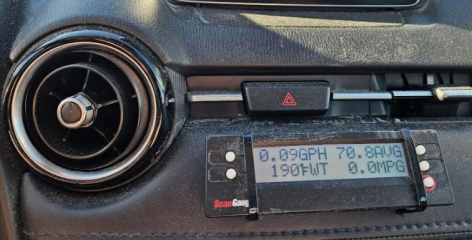
My solution for now is to have less car. Seeing upper 40's-low 60'smpg with regularity on my Mazda 2 makes me happy enough.
Sometimes we crack into the 70's on sundays when i can time the stoplights in suburban conditions.

I'm kinda glad i didn't spend the extra 7k for a hybrid. The only time it performs poorly is in city traffic ( which i drive in ~5% of the time ). That's usually when mpg can dive into the 30's.

HKgvvrDbsAE3vDd.png
 
While we're here..

Recently watched this about free piston engines designed specifically for electrical generation.


Interesting to see these reach into the 50% efficient range with such a simplistic design, with 65% being theoretically possible.
Even the form factor is ideal for a range generator; i wonder if they'll end up with a 4 or 6 piston design to cancel out vibration though.
 
My solution for now is to have less car. Seeing upper 40's-low 60'smpg with regularity on my Mazda 2 makes me happy enough.
Sometimes we crack into the 70's on sundays when i can time the stoplights in suburban conditions.
This is a great result, probably on the border of pure fantasy in the US :)
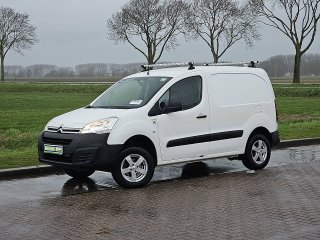
Here id like to point out that such numbers are realistic/practical with diesel engines - the one i'm driving now is a 1.6 liter Citroen van and the overall consumption is around 40mpg, reaching 70 when driving straight/moderate speed (and the car is pretty big for EU standards, almost 10 years old). Unfortunately it seems Europe did some harm to their finest diesel technology, which is bad because it works reliably and is very efficient even without trying too hard.
 
Last edited:
This is a great result, probably on the border of pure fantasy in the US :)

Yeah, the fuel economy numbers are usually Prius like-for me, but also my driving style is mostly centered around preserving precious momentum... since i have no battery to recoup energy with. So the results are as expected.

My lady ignores 100% of hypermiling advice, will unnecessarily coast in neutral when in-gear is much better, is usually doing 5mph over the speed limit, and still averages 44mpg. About 6mpg avg lower than me.

I'm thinking she could use a prius.

Unfortunately it seems Europe did some harm to their finest diesel technology, which is bad because it works reliably and is very efficient even without trying too hard.

That's a real shame. Europe seems to be dealing itself lots of blows in the energy arena. At a government level they seem to be unaware to the degree which modern civilization and cheap energy are interconnected.

I'm not sure if your country uses the UK gallon but i did a conversion from 70mpg UK to US and it's 58.29mpg.
If your vehicle looks approximately like this, such numbers are outstanding to me. Are you hypermiling such a vehicle or is this just an average day?

original.jpg

It's too bad our govt rejects the diesel here, cited as "environmental concerns", lol
Yes, i know, acid rain etc but we went overboard
 
Back
Top