• Hello ES! We could use some help to get us past the finish line on building the new knowledgebase for the forum.
    Can you donate? Please see our fundraising page. Thank you!

kWeld - "Next level" DIY battery spot welder

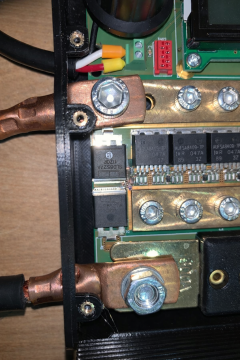
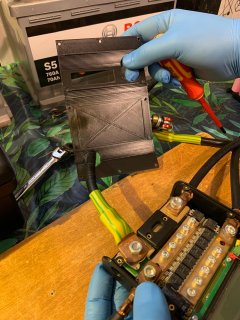
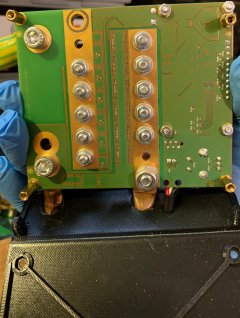
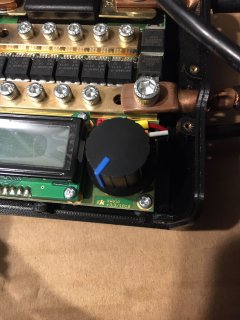
Anyone local to San Francisco who can fix these? I have two I’ve broken by contaminants getting in and shorting it. If u fix one u can keep the other.


I’m also desperate to borrow a welder to weld six cells to finish a battery.
 
Anyone local to San Francisco who can fix these? I have two I’ve broken by contaminants getting in and shorting it. If u fix one u can keep the other.


I’m also desperate to borrow a welder to weld six cells to finish a battery.
What kind of contaminants and under what circumstance did the short occur?

edit: If contaminant was water (salt water the worst), probably not worth trying to repair. If you shorted out the power FET's or diodes, those can be identified with a DVM and replaced (if you can source the same quality parts).
 
Last edited:
What kind of contaminants and under what circumstance did the short occur?

edit: If contaminant was water (salt water the worst), probably not worth trying to repair. If you shorted out the power FET's or diodes, those can be identified with a DVM and replaced (if you can source the same quality parts).
I’m not sure exactly what it was that did it but something slipped passed the kapton I had it wrapped in
 
Hi,
Can someone please explain to me why they’ve selected these particular Mosfets for kWeld?

So far I’ve seen in there:
1. Fairchild FDB0105N407L (discontinued now)
2. IOR AUIRFS8409-7P

There are 6 of them in parallel. People mainly seems to look at the max amp ratings in the datasheet BUT by looking at max SOA graphs, they BOTH should fail at given working conditions:
1. Drain to Source voltage = 12V (this is kWeld’s recommendation or 3s Lipo)
2. Welding time: usually the weld takes ~30-50ms (i know this device operates on joules rather then ms)

So: for a 30ms weld @ 12 volts we are looking at 2-3 Amps only if we want to operate within SOA even if there are 6 fets in parallel we’ve got ~20A max. Fairchild is a bit better as it indicates 6-7A but still we are light years from 2000A? They say in the datasheet 522A or 460A @ 10V BUT that’s for 10uS or 100uS ONLY not for times like 30ms+!!?? How does it even work without blowing the whole thing during the first shot? Could someone please explain this to me?


https://www.infineon.com/dgdl/auirfs8409-7p.pdf?fileId=5546d462533600a4015355b745e314f0
 

Attachments

  • D9E17665-02A1-4D18-B574-0D174BE5EB26.jpeg
    D9E17665-02A1-4D18-B574-0D174BE5EB26.jpeg
    473.8 KB · Views: 14
  • D407BF79-D440-45ED-8A50-698A6CED291A.jpeg
    D407BF79-D440-45ED-8A50-698A6CED291A.jpeg
    517 KB · Views: 15
Last edited:
Hi,
Can someone please explain to me why they’ve selected these particular Mosfets for kWeld?

So far I’ve seen in there:
1. Fairchild FDB0105N407L (discontinued now)
2. IOR AUIRFS8409-7P

There are 6 of them in parallel. People mainly seems to look at the max amp ratings in the datasheet BUT by looking at max SOA graphs, they BOTH should fail at given working conditions:
1. Drain to Source voltage = 12V (this is kWeld’s recommendation or 3s Lipo)
2. Welding time: usually the weld takes ~30-50ms (i know this device operates on joules rather then ms)

So: for a 30ms weld @ 12 volts we are looking at 2-3 Amps only if we want to operate within SOA even if there are 6 fets in parallel we’ve got ~20A max. Fairchild is a bit better as it indicates 6-7A but still we are light years from 2000A? They say in the datasheet 522A or 460A @ 10V BUT that’s for 10uS or 100uS ONLY not for times like 30ms+!!?? How does it even work without blowing the whole thing during the first shot? Could someone please explain this to me?


https://www.infineon.com/dgdl/auirfs8409-7p.pdf?fileId=5546d462533600a4015355b745e314f0

The Drain to Source voltage is not 12 V when the MOSFETS are fully on. They would measure about 0.183 V @ 2000 A (2000 A / 6 FETs * 0.00055 Ohms). You should be looking at the "limited by Rds(on)" part of the graph.
 
Last edited:
The Drain to Source voltage is not 12 V when the MOSFETS are fully on. They would measure about 0.183 V @ 2000 A (2000 A / 6 FETs * 0.00055 Ohms). You should be looking at the "limited by Rds(on)" part of the graph.
Thanks,
If that’s the case then why they say you can’t use more then 12V ? I wanted to use a 4s LiPo instead. Why input voltage doesn’t play any role in your equation? Thanks

PS. I don’t know about all these mosfets specs but someone was explaining to me these SOA graphs when i was trying to choose the new mosfet for my artificial load (atorch dl24p) - they were saying that the mosfet works there in a linear mode so DC part of the graph I should be looking at, so based on the above example of a FET at 10V input I could only put 2A max load on it if i wanted to drive it in constant mode, hence my thinking about reading this graph regarding spot welders but obviously spot welders are working only few ms as opposed to electonic loads which work constantly.
 
Last edited:
Thanks,
If that’s the case then why they say you can’t use more then 12V ? I wanted to use a 4s LiPo instead. Why input voltage doesn’t play any role in your equation? Thanks

PS. I don’t know about all these mosfets specs but someone was explaining to me these SOA graphs when i was trying to choose the new mosfet for my artificial load (atorch dl24p) - they were saying that the mosfet works there in a linear mode so DC part of the graph I should be looking at, so based on the above example of a FET at 10V input I could only put 2A max load on it if i wanted to drive it in constant mode, hence my thinking about reading this graph regarding spot welders but obviously spot welders are working only few ms as opposed to electonic loads which work constantly.
The kWeld will work with up to 30V but 12V is ideal. Here's a quote from the designer on this subject:

"Desired current is 1500A. The resistance of the kWeld system is roughly 3.2 milliOhms (stock cables). The weld spot itself contributes another 1 milliOhm typical. This gives 4.2 milliOhms total. To push 1500A through that, you need U = R*I = 6.3V from an ideal battery. For every milliOhm of battery’s internal resistance, you need another 1.5V accordingly. Or in other words, for every volt above 6.3V that the battery has, it needs to have 1 milliOhm of internal resistance to stay in the sweet spot for the current. A 3S battery therefore needs to have 12-6.3 = 5.7 mOhms. Then calculate the power loss in the battery: P = 0.5 * R * I^2 = 6412 W. That explains why they heat up quickly, even though the pulses are short. Now consider a 6S battery. That must have an internal resistance of 24-6.3 = 17.7 mOhms. Then P = 19912W. You see that the power loss in that battery is huge. This is why I recommend 2S to 3S batteries for the welder."

The operating manual has a deep dive into the theory of operation.
https://www.keenlab.de/wp-content/uploads/2018/07/kWeld-operation-manual-r3.0.pdf

Spot welders must switch past the linear operating region of a MOSFET as fast as possible to survive.
 
I got ultra caps bank connected it up to kweld, charged it to 12v, and did one pulse, some error like overcurrent, then stuck at CAL
screen.


I had this setup working in the past, but I think I had the voltage at 6-10v. now I try various voltages, 3-5v and CAL says undercurrent, and when i go past ~5v it just says overcurrent. Kinda stuck how to proceed next. Firmware version is 2.9.

1756643621320.png
 
Check all nuts and screws. What is the undercurrent settings and have you changed length of the leads / rods recently?
 
Has anybody managed to get the kSupply to work with the HP Common Slot PSUs. They can be picked-up really cheaply and they're smaller, quieter and more powerful that the recommended PSUs
 
I got a problem with my k-weld. It set it self to auto, I have always used it in manual.
When I try to change it back in the menu it makes a little sound and starts to show some statistics that I cant get out of after maybe 2 seconds, and I cant use the welder until I have disconnected and reconnected the battery.
When I disconnect and reconnect the battery it is back on Auto even if I had time to change to manual before the statistics started rolling.
Has anyone else had this problem, or any ideas how to solve it?
 
I got a problem with my k-weld. It set it self to auto, I have always used it in manual.
When I try to change it back in the menu it makes a little sound and starts to show some statistics that I cant get out of after maybe 2 seconds, and I cant use the welder until I have disconnected and reconnected the battery.
When I disconnect and reconnect the battery it is back on Auto even if I had time to change to manual before the statistics started rolling.
Has anyone else had this problem, or any ideas how to solve it?
Do another CAL. Calibration.

One time my welder was acting like a flamethrower puncturing holes in the welds I was making. That solved it. I had changed the rods around the same time as well and changed back to try to figure it out.

I use banana 4mm connectors and they get hot fast (yes I know). If you do to many spot welds in a row they will burn inside the contact areas so check that out as well for carbon deposits.
 
Sorry, I forgot to update here. There had been a short circuit between the wires to the pedal.
When I sorted that it was back to normal again.
 
Hi all,
I’m looking for help identifying the failed component and the root cause of a failure in my Kweld spot welder (r3.3/1810).

Failure description:

The welder was powered from two 12 V batteries in series (24 V).
I performed a first test weld at 10 J. The weld was unusually loud, but since I hadn’t used the welder in a long time, I assumed it might be normal and proceeded with a second weld.

During the second pulse, the welder caught fire with visible flame on the capacitor side.
After disassembly, I found that a TVS diode had failed. In addition, a PCB trace was damaged near a different TVS diode marked SLD8S27A, located in another section of the board.

Only afterwards, while reading forum posts, I found reports suggesting that such failures may be caused by incorrect calibration, especially wrong cable length compensation. The cables I am using are not the original ones, so this may be a contributing factor.

Previously, the welder worked on the same settings when powered from a single 12 V battery, without any issues.

Intended use and reason for switching to 24 V:
The welder is intended for welding 0.2 mm copper and 0.2 mm nickel, as well as spot welding A123 26650 cells. I switched from 12 V to 24 V to provide a larger energy margin that may be required for copper welding and for reliable cell tab welding.

Photos of the damage are attached below.

I would appreciate any input on:

- which components should be replaced or checked after this type of failure
- best practice for repairing a damaged PCB trace near the TVS diode SLD8S27A
- whether incorrect calibration or cable length settings could realistically cause this failure
- how to safely power up and recommission the welder after repair

Thanks in advance for any advice.
 

Attachments

  • Kweld fail (01).jpeg
    Kweld fail (01).jpeg
    307.6 KB · Views: 26
  • Kweld fail (02).png
    Kweld fail (02).png
    2.3 MB · Views: 25
  • Kweld fail (03).jpeg
    Kweld fail (03).jpeg
    601.4 KB · Views: 24
  • Kweld fail (04).png
    Kweld fail (04).png
    990.5 KB · Views: 21
  • Kweld fail (05).jpeg
    Kweld fail (05).jpeg
    278.3 KB · Views: 20
  • Kweld fail (06).jpeg
    Kweld fail (06).jpeg
    416.4 KB · Views: 18
  • Kweld version.jpeg
    Kweld version.jpeg
    436.4 KB · Views: 19
  • battery data.jpeg
    battery data.jpeg
    209.1 KB · Views: 18
24v is way too high. When you repair the welder, put the batteries in parallel instead to provide more amps.
I’ll most likely do that now. Running it at 24 V initially seemed reasonable because the spec states:
“Input voltage for welding: 4 V–30 V, enabling the use of ultracapacitors.”
That definitely lowered my caution, and I wasn’t fully aware at the time how critical wiring inductance and the stored magnetic energy become at these current levels.
 
Whenever you change something (length of cables, voltage,etc) You need to recalibrate the welder.
Later floyd
Yes, I understand that — any change in cable length, voltage, etc. requires recalibration.
That said, it still doesn’t seem normal to me that the TVS diode failed in such a spectacular way. There was actual flame involved, not just a spark or a typical electrical arc.

Additionally, I don’t know the exact TVS diode model used on the board, so it’s hard to judge its true ratings. However, somewhere earlier in this thread I came across information suggesting that the (larger) TVS diodes used are rated at 28 V, which is actually lower than the maximum input voltage stated by the manufacturer.

I’m not blaming the author — I fully acknowledge my own mistakes here. I simply want to repair my welder and get it working again. Even a partial PCB scan of the damaged area would be very helpful, as I have the option to laser-cut a replacement section on a thicker copper substrate.
 
Looks like kWeld has some competition:


IMO, capacitors are much better for use spot welding than batteries. I'm going the DIY route by re-powering my little mini spot welder with two 500F 2.7V supercap banks, charged with a 12VDC 100W power supply.
 
Looks like kWeld has some competition:


IMO, capacitors are much better for use spot welding than batteries. I'm going the DIY route by re-powering my little mini spot welder with two 500F 2.7V supercap banks, charged with a 12VDC 100W power supply.
Kweld has been obsolete for awhile, it can't compete with Awithz lineup. I'm surprised to see this thread still active 😂
 
Back
Top