• Hello ES! We could use some help to get us past the finish line on building the new knowledgebase for the forum.
    Can you donate? Please see our fundraising page. Thank you!

Launching new mid-drive ebike kit with 250/500w motors, TAV Systems

systems_tav

New here
Joined
Jul 27, 2025
Messages
6
Location
Adelaide
Hi everyone, I'm Nithesh, one of the co-founder of TAV systems - leading a group of passionate EV motor and controller engineers, we develop next generation electric motors with less permanent magents for EV applications. We are located in Adelaide, Australia and Chennai, India.
We designed and launced a ebike motor kit to be installed on standard bottom brackets(68/73mm). Developed this motor kit as a DIY user friendly with firmware tuning for b2b and end users. Our 250W kit is already loved by 100's of customers in Amazon India, we are looking forward to launch in other markets as well.
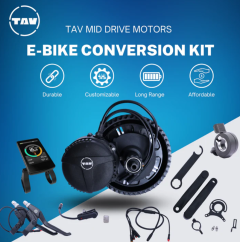
Would love to hear your feedbacks. Here are the some early images and specs below, happy to answer any technical questions or share learning from our motor development. Also, I'm here to learn from other DIY lovers to improve our products for future. Thank you in advance. tav_conversion kit_shopify.png
View attachment IMGP9669.jpg
 
I'm trying to find out what makes it special. Looks like one of the many bbs01 clones based on what you posted.

Could use a lot more information on this.
 
When you say the firmware is tunable do you mean you can change a few settings, lots of settings, or the firmware is open source. I would highly recommend you just make the firmware open source. This will give you an edge over the competition (assuming the hardware is decent) as there are no real other options that do that, there are aftermarket open source options here and there but most drives are just people complaining about how shit the software is and how the company won't fix it, about how they keep locking it down so you can't even try to fix it, etc.
 
Initial Feedback..
Au$825 for presumeably the kit without a battery (why ?) is not going to be competitive with the other (very similar) kits that are already established.
A 36v battery voltage limit is restrictive when other similar kits have more flexibility on that metric.
Untill a 3 party does a review/ strip down, it would be useful to seem some detail of the internal components , materials, etc to show any advantages or improvements over competitors kits.
 
@neptronix Thanks for your honest feedback..You are right..on outside we look same but we've made several changes/improvements in the electric motor architecture and drive and we are continue improving our systems. Our units are currently for sale in Indian market...
We also use comparatively less permanent magnet for the same power rating to reduce the use of rare-earth materials. I would love your inputs, what specific features you would value in a new mid-drive system if you build it today?
 
Is it made in india?

For me, i'd like high efficiency and low weight. I prefer more like 1000w power though, like most americans.

Do you know much about the efficiency of the motor?
What is the weight of the motor unit?
 
@neptronix Thanks for your honest feedback..You are right..on outside we look same but we've made several changes/improvements in the electric motor architecture and drive and we are continue improving our systems. Our units are currently for sale in Indian market...
We also use comparatively less permanent magnet for the same power rating to reduce the use of rare-earth materials. I would love your inputs, what specific features you would value in a new mid-drive system if you build it today?
I would add symmetrical and reduced q-factor in comparison to competition would be great. And robust torque sensors. Many affordable mid drive kits lack torque sensing and if they have it use fragile sensors.
 
@neptronix
Yes we manufacture our motors and gearboxed in-house at our faciltiy in Chennai, India.
Currently shipping the 250w version for the Indian market to comply with local road rules in India and Australia. However, We are also preparing to launch our 1000w version for off-roading and USA soon. Attached is our technical spec sheet of 250w.
 

Attachments

  • Technical Specification Sheet.pdf
    81.3 KB · Views: 14
Okay, here's my thoughts.
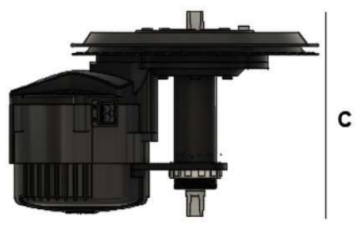
4.2kg for a 250w rated motor is bad, compared to a Bafang BBS01 (350w & 3.2kg)
What is the realistic power rating of this motor? it looks big, i would imagine it is much higher.
If this 250w unit is hiding some extra power then the weight can be justified.

Added pedal offset looks worse than most mid drives in this category

1753709000864.png

Most mid drives now have a torque sensor instead of PAS. This provides a more natural pedaling experience. People are starting to expect this.

I don't find this product appealing. I think you should aim for a product better than a bbs01.

There may be more interest here in the 1000w drive!
 
Last edited:
Okay, here's my thoughts.
4.2kg for a 250w rated motor is bad, compared to a Bafang BBS01 (350w & 3.2kg)
What is the realistic power rating of this motor? it looks big, i would imagine it is much higher.
If this 250w unit is hiding some extra power then the weight can be justified.

Added pedal offset looks worse than most mid drives in this category

View attachment 374231

Most mid drives now have a torque sensor instead of PAS. This provides a more natural pedaling experience. People are starting to expect this.

I don't find this product appealing. I think you should aim for a product better than a bbs01.

There may be more interest here in the 1000w drive!
the motor can output 500w, still we are overweight in that category.
Thank you for your thoughts, we will improve in our next generation gearbox. We have already considered some features like torque sensor, better overall design, shaving off more weight to make it lighter.
Pedal offset is now a great addition(thanks!) in our improvement backlogs.
 
Initial Feedback..
Au$825 for presumeably the kit without a battery (why ?) is not going to be competitive with the other (very similar) kits that are already established.
A 36v battery voltage limit is restrictive when other similar kits have more flexibility on that metric.
Untill a 3 party does a review/ strip down, it would be useful to seem some detail of the internal components , materials, etc to show any advantages or improvements over competitors kits.
hello @Hillhater Actually, Freight, duty, local gst and warehousing and transport cost drives the cost to $825 - we are also exploring to setup a global site to ship directly from our factory to reduce cost.
 
If you don't already, you should do something "no one else" does:

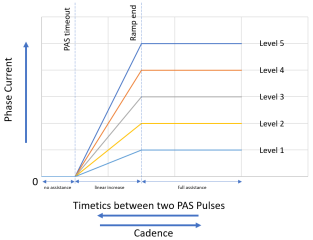
Have the PAS sensor actually control the system via the cadence of the rider.

"Every" system out there (without torque sensing) simply uses the PAS to determine if the rider is pedalling, then provides the full amount of assist for the chosen level, just an on or off control.

That's unhelpful, and causes problems for numerous riders who need finer control than that.

If you actually detect the rate at which the rider is pedalling (cadence) and then vary the assist based on that, perhaps as a percentage of the chosen assist level (with no pedalling meaning no assist, and a cadence of say, 100rpm as the full amount of assist for that chosen asisst level), a systme would be much more controllable.


Now is your chance to improve your system and grab some customers from other companies....take our advice to heart, and amaze everyone! :)
 
Have the PAS sensor actually control the system via the cadence of the rider.
There was the "PAS v5" in the very early days of the Ebikes, that had an analogue output, so you can feed the throttle input with it directly. My very first conversion kit in 2008 worked that way. The VESC PAS integration has a similar option. But I didn't like it, I prefer a system with torquesensor.
 
There's a number of DIY methods to do it.

However, what I am pointing out to them is that they could do this with what is already in their system, if they have a standard cadence sensor, and improve the controllability of their system this way.

Having this type of direct control via the pedals doesn't require a torque sensor, though that can certainly make a system more finely controllable in several different types of situations where simple cadence control isn't quite enough--it's still far better to have the cadence control than it is to just have the present common on/off pedal control at whatever assist level is chosen.

There's plenty of people, including some that have posted here on the forum, that have trouble being able to ride systems like this, for various reasons, some of them involving safety.

Having actual cadence control, with just a regular cadence PAS sensor, is enough to help most of those people...but they shouldn't have to learn everything about how to DIY their stuff just to get this, like I have. ;) They should be able to get bikes or at least kits that are easy to install and just go and ride, with this type of control.

I don't know why the industry in general seems so set against it. :(
 
Having actual cadence control, with just a regular cadence PAS sensor, is enough to help most of those people.
No, I don't think so. It's inconvenient to get full power only at high cadence. That's my personal experience. A normal cadence dependent ramp is implemented in the Kuntengs already.

1753777083330.png
 
Back
Top