LCF_Technics
🧲 New user
Greetings,
I've had some recent experience that I thought was worth sharing.
The Shimano BT-E6010 battery is not generally available anymore and I had a request from a customer to supply a battery to replace the BT-E6010 with an 8 series Shimano battery (BT-E8010). I checked the Shimano compatibility chart here: https://productinfo.shimano.com/en/compatibility/C-511?q=BTE6010 and interpreted the information as follows.
They both have a "Generation 1" BMS but the pin outs on the battery mounts are different. So, to replace the BT-E6010 with a BT-E8010, I will also have to replace the battery mount. However, it should be possible to replace the 'no longer available' 6 series battery with a 'still available' 8 series battery as long as I replace the battery mount electrical connector as well. The pins are physically different - 6 series has 4 vertical connectors in a horizontal row - 8 series has 1 vertical, then 2 smaller vertical ones, one above the other - and another vertical.
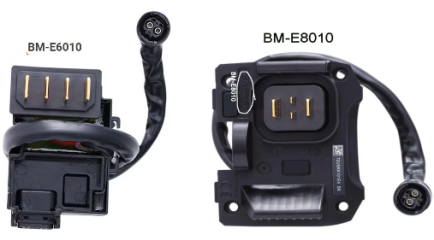
The round 4 pin connector to the motor is physically the same for both battery mounts. This is where it gets interesting.
In order to replace the 6 series battery mount with the 8 series, I had to cut the cables, as most of the wire ran through the bike frame. On both the old and the new battery mount, when I trimmed back the outer black plastic outer cover - I found 4 wires:
2 Heavy (maybe 20 Amp gauge) wires in Red and Black. Clearly red Positive and black Negative 36v.
2 thinner wires - Blue and Yellow. I figured they're signal or logic wires.
As puzzles go, it didn't seem too complicated. To connect the new battery mount to the old cabling through the frame - since the wire colours on the old cabling and the new battery mount were the same - just connect red to red, black to black, blue to blue and yellow to yellow.
I did that but when I installed the battery in the new mount, the system wouldn't work. Nada, no LCD screen info - nothing.
Now it just so happened that I was using a donor vehicle to supply the battery and mount. The donor bike also had a motor that worked quite happily with the BT-E8010 battery. Continuity checks using a multi-meter from the new battery mount pins to the existing round motor connection plug showed that all the cabling and connections were good. I thought that maybe I had misinterpreted the information in the Shimano compatibility chart.
To test that, I "hung in" the compatible motor from my donor vehicle to the customer bike and it didn't work either. Whiskey Tango Foxtrot!
After further checks and comparison between the donor bike and the customer bike cabling; here's what I found.
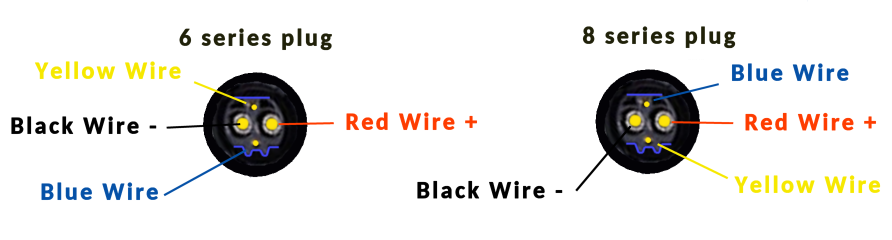
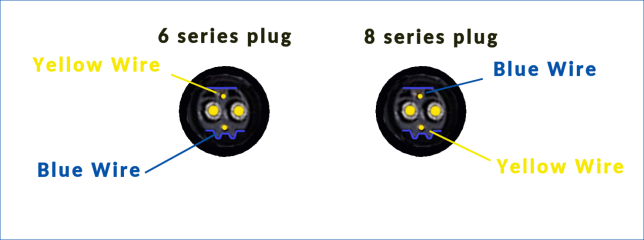
The plugs are what I call "Indexed". They're designed to be idiot proof and will only connect one way around. In the image above, the blue flat at the top and the blue teeth at the bottom prevent incorrect orientation.
The wiring colours of the manufacturers motor connection plugs were different between 6 series and 8 series motor assemblies. Is this always the case? I can't say. Maybe it's just a glitch in the manufacturing process. What I can say is that this information is true for the bike I was working on today.
Nothing in my 40+ years experience in Engineering has caused me to believe that it's a good idea to connect the blue wire to the yellow, and the yellow wire to the blue. But that's what I did today - and the system worked perfectly after that.
Key Learnings:
I incorrectly inverted the wiring of the signal / logic (by matching blue to blue and yellow to yellow) and it did not damage the system.
When I crossed the wires by mismatching one end of the signal / logic connections colours, (yellow to blue, blue to yellow) the system worked perfectly.
DO NOT CROSS THE RED POSITIVE WITH THE BLACK NEGATIVE -- THAT'S CERTAINLY NOT A GOOD IDEA. It will kill your system at best - Definitely DO NOT do that.
It is possible to replace a BT-E6010 with a BT-E8010 if you also replace the battery mount - it will actually work.
This was a most unusual situation from my perspective - it's for that reason that I'm sharing the information. What I've written here is true, based on recent actual real world experience.
I hope this information is useful, but I'm not recommending anything - feel free to interpret this or disregard it as you see fit.
Cheers,
M
I've had some recent experience that I thought was worth sharing.
The Shimano BT-E6010 battery is not generally available anymore and I had a request from a customer to supply a battery to replace the BT-E6010 with an 8 series Shimano battery (BT-E8010). I checked the Shimano compatibility chart here: https://productinfo.shimano.com/en/compatibility/C-511?q=BTE6010 and interpreted the information as follows.
They both have a "Generation 1" BMS but the pin outs on the battery mounts are different. So, to replace the BT-E6010 with a BT-E8010, I will also have to replace the battery mount. However, it should be possible to replace the 'no longer available' 6 series battery with a 'still available' 8 series battery as long as I replace the battery mount electrical connector as well. The pins are physically different - 6 series has 4 vertical connectors in a horizontal row - 8 series has 1 vertical, then 2 smaller vertical ones, one above the other - and another vertical.
The round 4 pin connector to the motor is physically the same for both battery mounts. This is where it gets interesting.
In order to replace the 6 series battery mount with the 8 series, I had to cut the cables, as most of the wire ran through the bike frame. On both the old and the new battery mount, when I trimmed back the outer black plastic outer cover - I found 4 wires:
2 Heavy (maybe 20 Amp gauge) wires in Red and Black. Clearly red Positive and black Negative 36v.
2 thinner wires - Blue and Yellow. I figured they're signal or logic wires.
As puzzles go, it didn't seem too complicated. To connect the new battery mount to the old cabling through the frame - since the wire colours on the old cabling and the new battery mount were the same - just connect red to red, black to black, blue to blue and yellow to yellow.
I did that but when I installed the battery in the new mount, the system wouldn't work. Nada, no LCD screen info - nothing.
Now it just so happened that I was using a donor vehicle to supply the battery and mount. The donor bike also had a motor that worked quite happily with the BT-E8010 battery. Continuity checks using a multi-meter from the new battery mount pins to the existing round motor connection plug showed that all the cabling and connections were good. I thought that maybe I had misinterpreted the information in the Shimano compatibility chart.
To test that, I "hung in" the compatible motor from my donor vehicle to the customer bike and it didn't work either. Whiskey Tango Foxtrot!
After further checks and comparison between the donor bike and the customer bike cabling; here's what I found.
The plugs are what I call "Indexed". They're designed to be idiot proof and will only connect one way around. In the image above, the blue flat at the top and the blue teeth at the bottom prevent incorrect orientation.
The wiring colours of the manufacturers motor connection plugs were different between 6 series and 8 series motor assemblies. Is this always the case? I can't say. Maybe it's just a glitch in the manufacturing process. What I can say is that this information is true for the bike I was working on today.
Nothing in my 40+ years experience in Engineering has caused me to believe that it's a good idea to connect the blue wire to the yellow, and the yellow wire to the blue. But that's what I did today - and the system worked perfectly after that.
Key Learnings:
I incorrectly inverted the wiring of the signal / logic (by matching blue to blue and yellow to yellow) and it did not damage the system.
When I crossed the wires by mismatching one end of the signal / logic connections colours, (yellow to blue, blue to yellow) the system worked perfectly.
DO NOT CROSS THE RED POSITIVE WITH THE BLACK NEGATIVE -- THAT'S CERTAINLY NOT A GOOD IDEA. It will kill your system at best - Definitely DO NOT do that.
It is possible to replace a BT-E6010 with a BT-E8010 if you also replace the battery mount - it will actually work.
This was a most unusual situation from my perspective - it's for that reason that I'm sharing the information. What I've written here is true, based on recent actual real world experience.
I hope this information is useful, but I'm not recommending anything - feel free to interpret this or disregard it as you see fit.
Cheers,
M