• Hello ES! We could use some help to get us past the finish line on building the new knowledgebase for the forum.
    Can you donate? Please see our fundraising page. Thank you!

Understand Battery Builds for Uphill vs Speed - standup scooters

escooterLover

🧲 New user
Joined
Oct 15, 2025
Messages
8
Location
İstanbul
Hello. New here. I'm so glad to see many healthy and up to date users here. It was difficult for me to find a forum on stand up escooters that had recent posts.

So I'm a proud of owner of 4 scooters; Vsett 10+, Vsett 9, and 2 modified Xiaomi Pro 2. They're all in my garage, and I mostly use the Vsett 10+ for daily use as its a reliable and powerful scooter. I modified it with a seat as I take my son to school etc.

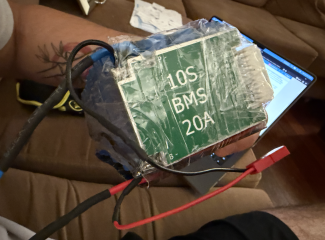
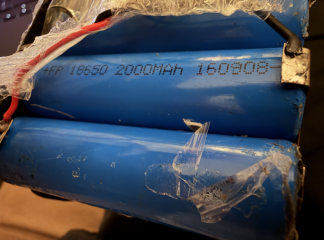
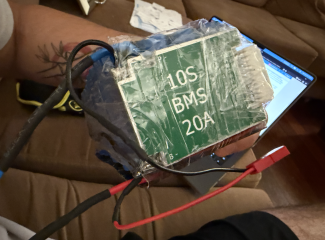
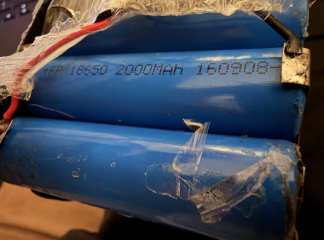
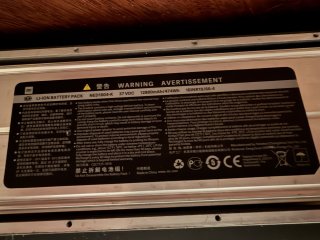
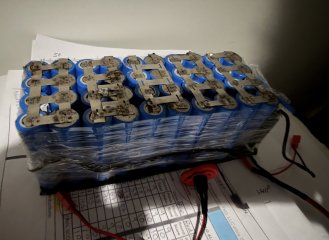
With one of my Xiaomi Pro 2 scooters, it's modified with a first gen Monorim front suspension, rear 3rd party rear suspension. It has a hack in which I can modify parameters etc that go against the factory build. Basically, as you guys know, it can go like 42kph blah blah. I haven't tinkered it with for so long, but maybe I will as I learn from this godsend forum. So, this particular Pro 2 model has an external battery pack. When I bought this scooter second hand about 2 years ago for an amazing price, it came with the extra battery pack. I understanding the wiring, routing and tutorials via vast Youtube videos, but what I didn't know was the voltage or how this battery was set up. I took apart the ''casing'' or rather ghetto tape that held the piece together and I learned that there are 40 cells. It states 3.7v 2000mah. I can't read the ''ampage'' since I don't want to mess with the tape, but I will reorganize the ''casing'' later on. The battery works fine I just need to find a male connector for the recharging port since I couldn't find it anywhere. This battery has the common 10S BMS 20A. So what is this battery? Any tools I should buy or need to check voltage? I assume this is a 36 or 37v battery? Possibly a 48V? From my understanding this Xiaomi is running in parallel to the original scooter, therefore the custom battery when made had to match the original battery under the base? I want to learn these things. The original owner had told me to unplug the battery from the scooter when charging it. Meaning, charge both the external battery and the scooter separately. So what would that mean? At any rate I am very happy because everything works and I've never had problems.

So my other question is. How do I know the state this battery is in? I know all batteries have shelf life for charge cycles etc, and I assure this Xiaomi is barely used. I am eagered to make a new one, but I need to learn voltages. For example, can I make a 48V battery with that common 10S BMS 20A controller?

I was thinking of maybe trying to make a 21700 Li-on battery instead of the 18650's. Isn't it same concept? The difference is that the bigger batteries have more ''juice.'' I plan to buy know brands like LG, Panasonic or Samsung etc. I would greatly appreciate any advice as I would love to dive into this nerdy-Warrior world escooter modding and be a part of your community. Thank you so much!
 

Attachments

  • IMG_3703.jpg
    IMG_3703.jpg
    291.3 KB · Views: 20
Hello. New here. I'm so glad to see many healthy and up to date users here. It was difficult for me to find a forum on stand up escooters that had recent posts.

So I'm a proud of owner of 4 scooters; Vsett 10+, Vsett 9, and 2 modified Xiaomi Pro 2. They're all in my garage, and I mostly use the Vsett 10+ for daily use as its a reliable and powerful scooter. I modified it with a seat as I take my son to school etc.

With one of my Xiaomi Pro 2 scooters, it's modified with a first gen Monorim front suspension, rear 3rd party rear suspension. It has a hack in which I can modify parameters etc that go against the factory build. Basically, as you guys know, it can go like 42kph blah blah. I haven't tinkered it with for so long, but maybe I will as I learn from this godsend forum. So, this particular Pro 2 model has an external battery pack. When I bought this scooter second hand about 2 years ago for an amazing price, it came with the extra battery pack. I understanding the wiring, routing and tutorials via vast Youtube videos, but what I didn't know was the voltage or how this battery was set up. I took apart the ''casing'' or rather ghetto tape that held the piece together and I learned that there are 40 cells. It states 3.7v 2000mah. I can't read the ''ampage'' since I don't want to mess with the tape, but I will reorganize the ''casing'' later on. The battery works fine I just need to find a male connector for the recharging port since I couldn't find it anywhere. This battery has the common 10S BMS 20A. So what is this battery? Any tools I should buy or need to check voltage? I assume this is a 36 or 37v battery? Possibly a 48V? From my understanding this Xiaomi is running in parallel to the original scooter, therefore the custom battery when made had to match the original battery under the base? I want to learn these things. The original owner had told me to unplug the battery from the scooter when charging it. Meaning, charge both the external battery and the scooter separately. So what would that mean? At any rate I am very happy because everything works and I've never had problems.

So my other question is. How do I know the state this battery is in? I know all batteries have shelf life for charge cycles etc, and I assure this Xiaomi is barely used. I am eagered to make a new one, but I need to learn voltages. For example, can I make a 48V battery with that common 10S BMS 20A controller?

I was thinking of maybe trying to make a 21700 Li-on battery instead of the 18650's. Isn't it same concept? The difference is that the bigger batteries have more ''juice.'' I plan to buy know brands like LG, Panasonic or Samsung etc. I would greatly appreciate any advice as I would love to dive into this nerdy-Warrior world escooter modding and be a part of your community. Thank you so much!
You might want to consider posting on the battery subforum, or maybe the standup scooter subforum.
 
I’m no battery builder, but I can clarify a few things.

If the cells are labeled as 2000mah and there are 4 in parallel, then the total capacity of the pack is 8ah.

10S tells me that this is a 36v pack.

If you were to make a new 48v battery, then you must use a 13S BMS. BMS are specific to the nominal voltage of the pack.

You can use a 20A controller, depending on what the pack can provide. I typically see 2C being a good starting point. An 8ah battery, at 2C would be 16ah. So you can use a 20A controller, but limit to 16ah or below. Harder to say, exactly, without knowing the actual cells used in the pack.

It’s ideal if you can monitor voltage while riding. The more voltage sag you experience, the harder you are beating the battery. 3-4 volts sag is what I usually (when going up hill) see for my 13S4P pack with 35Es.

The 2 batteries are likely connected to a “battery blender”. This is a device that lets you use the total capacity of both batteries. Charging the packs together is not a good idea because one pack can actually charge the other and that is not healthy. This is why you are directed to charge the batteries separately. Also, the voltages of each pack must match. You shouldn’t use a 48v pack with a 36v pack.

To find the health/age of a battery, the cells must be known/identified. I see most users measure the Internal Resistance of pack. I’m not familiar with that process so I can’t say much more about that.

Using a battery with 21700 cells may be a challenge due to the limited space inside the deck but, a 10s2p pack might be just fine.
 
A good explanation, Slaphappy, except the external pack may not be connected with a battery blender. Our poster from Istanbul needs to read up on parallel and series connection. His spare is a 36V8Ah battery connected in parallel with the battery in his scooter. When connected together without a blender, they must be at the same voltage. Otherwise, one battery will charge the other, and if the voltages are far apart, fires may happen. If the previous pwmer said these two batteries need to be separated and charged separately, then that must be done. Only batteries with compatible BMS can be charged connected together, Otherwise, fires may happen,

Our new poster should also be aware of the risks of fire from lithium batteries. Plenty of examples on youtube,

The 8AH battery is his photo is about 7 cm high, 7.4 cm wide and 19 cm long, If built with 3500 mah cells, it would be the same size and 14 AH. For about the same price, a 36V15AH battery can be built with 30 21700 5000ah cells, abd that size is 7.2 cm high, 6.5 cm wide and 20 cm long. However, a safer battery requires cell holders or better insulation between cells. That would increase the width and length on a replacement battery,

Getting into battery building requires buying a battery spot welder, test gear, and supplies. Not worth the cost for one or two batteries.
 
A good explanation, Slaphappy, except the external pack may not be connected with a battery blender. Our poster from Istanbul needs to read up on parallel and series connection. His spare is a 36V8Ah battery connected in parallel with the battery in his scooter. When connected together without a blender, they must be at the same voltage. Otherwise, one battery will charge the other, and if the voltages are far apart, fires may happen. If the previous pwmer said these two batteries need to be separated and charged separately, then that must be done. Only batteries with compatible BMS can be charged connected together, Otherwise, fires may happen,

Our new poster should also be aware of the risks of fire from lithium batteries. Plenty of examples on youtube,

The 8AH battery is his photo is about 7 cm high, 7.4 cm wide and 19 cm long, If built with 3500 mah cells, it would be the same size and 14 AH. For about the same price, a 36V15AH battery can be built with 30 21700 5000ah cells, abd that size is 7.2 cm high, 6.5 cm wide and 20 cm long. However, a safer battery requires cell holders or better insulation between cells. That would increase the width and length on a replacement battery,

Getting into battery building requires buying a battery spot welder, test gear, and supplies. Not worth the cost for one or two batteries.

Thank you so much for the replies. Should I post in the other areas? Sorry I had assumed these included standup scooters with hacks. But as you had stated, you're on point. I personally don't like the way this external battery was put together. It's like icky masking tape that did the job to stay in place, but they had done it excessively. I can't really complain because it works at least. I was able to cut out from the side of this 40 cell pack to find the battery description, but I'll post the pic. As you had stated as well and my assumption, they must be in parallel. Because when I charge both the main scooter port and the external batteries independently the charger clearly shows both batteries need charging. Preferably I would rather have those modified bigger compartment 3D prints where I can just add a bigger battery to the base with a higher voltage. I am now there yet, but that's my goal. I see this being done regularly to the Pro 2 series but as you and others had mentioned I should familiarize myself to some basic knowledge. And what I had planned to do, is that electrical technician spots are so common in İstanbul almost every big neighborhood has one, like a spot with just a technician fixing any motherboard for old tech you can think of. My goal was to just show him a youtube video of the basic soldering as the battery videos show and just provide him the parts needed for the build, simply because I don't prefer to buy or solder things myself, I rather have a pro do it. As a matter of fact the technician I recently used changed the cables and the headers for the external battery I showed. I really liked the part where you talked about the dimensions. The size doesn't bother me much because I can create a custom case/pouch etc, and I want to think about your solution for the 21700 option. I also need to learn about the pricing, because to me it sounds ''chinese'' my only gut assumption is to use name brands. From my experience using generic batteries from any industry I can see fast drawing and therefore customers complain about batteries.

So the battery shown it says +FP 18650 2000Mah 160908-

My thing is this. Can I give the technician new 21700 batteries with 3500-5000 MaH at 3.7v (be it good name brands), use the same 10S BMS 20A board shown, and do the same 40 cell build? I will get the copper nickel sheets to bond them together like the original, he has all those cables, etc... sorry for assuming, but shouldn't it all be plug and play when it's finished? I assume that BMS board shown doesn't discriminate against newer batteries with more juice while at the same voltage? I apologize for any assumptions. Thanks

ps. If I did use a new 21700 external battery pack, shouldn't I separate the parallel protocol from the main scooter brain and just run off the external battery? I rather the scooter just draw power from a new battery system. My distances are so short I don't need to worry about the main factory battery pack, and I don't want to damage the factory battery since I am using a new battery series.
 

Attachments

  • Screenshot 2025-10-15 at 20.56.11.png
    Screenshot 2025-10-15 at 20.56.11.png
    4.8 MB · Views: 8
  • Screenshot 2025-10-15 at 20.56.28.png
    Screenshot 2025-10-15 at 20.56.28.png
    4.8 MB · Views: 8
Last edited:
Hello. So I live in Istanbul. This is the city of ''7 hills'' as our history states, but there are a about thousand hills in random areas throughout lol. So I'm a happy owner of 4 scooters; Vsett 10+, Vsett 9, and 2 modded Xiaomi Pro 2. The Xiaomi's were mainly modded with dual suspension rear and front. The Vsett's are standardized for industrial or sport use so no mods were made for them. I do many picnics with friends and we let them use our Xiaomi's when we go in a group. The thing is that the Xiaomi's can't compete or catch up with our Vsett which is understandable, so at the very least the Xiaomi's have firmware hacks ready for better batteries etc as well as altering speed parameters.

Now, we are more casual users and we don't care for top speeds to be honest. HOWEVER, if you've ever lived in Istanbul it's like living in San Francisco x 50. So as you can imagine when going up very steep hills only my Vsett's can play the part whereas my Xiaomi riders behind us are barely trailing. So, I want to accomdoate this. I don't care for speed at all. I just want that torque power to easily go uphills like our Vsett's.

Usually what I see online is when increasing speed it relates to higher voltage. I get that. Can I just assume that going from a 36V to 48V battery environment will fix my solution going up hill? I don't care about speed. I just don't want deteriote acceleration or speed when going uphill or look lagged. I hope I'm explaining this correctly. So when I'm modifying I understand that I will require a BMS that can handle anything above a 36V if I plan to use 48V?

I want to migrate to 21700 batteries, but I see some mods at 48V for the Xiaomi's are still using 18600mah. I'm fine with that, I will just use bigger mah batteries. Also when I'm buying batteries I simply see voltage and mah, but what about ampers and those ''3C, 1C, 15C.'' thanks

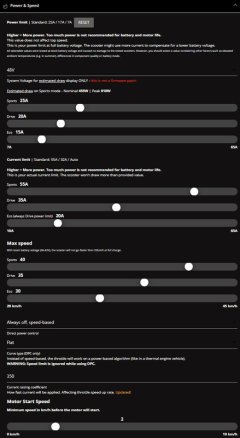
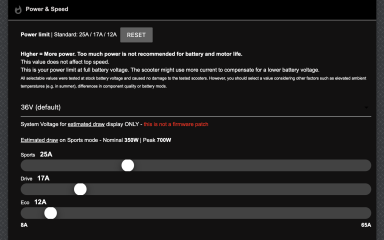
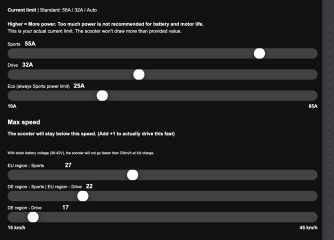
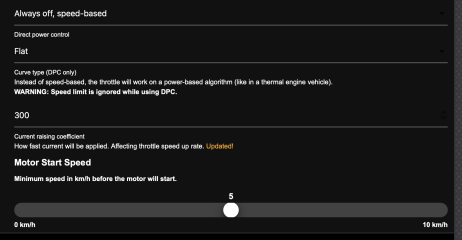
The Xiaomi hack software shown below is an example of how I can adjust the parameters. So basically I want to build a 48V battery using 21700 batteries and to increase performance going uphill for the most enjoyable ride to keep up with my other Vsett counterparts. Thanks so much.
 

Attachments

  • Screenshot 2025-10-15 at 20.56.11.png
    Screenshot 2025-10-15 at 20.56.11.png
    4.8 MB · Views: 5
  • Screenshot 2025-10-15 at 20.56.28.png
    Screenshot 2025-10-15 at 20.56.28.png
    4.8 MB · Views: 5
  • xiaomi-pro-botox.jpg
    xiaomi-pro-botox.jpg
    66.5 KB · Views: 5
And this is the hack software commonly used with Xiaomi Pro 2 enthusiasts. I want to build a battery and set optimized settings for a severely uphill environment aka Istanbul. lol thanks so much
 

Attachments

  • xiaomi-pro-botox.jpg
    xiaomi-pro-botox.jpg
    66.5 KB · Views: 7
First, increasing voltage won't help you climb up hill since the controller is usually current limited during that condition.
Unless the battery is worn out or very cheap, the bms should be designed to cut before exceeding battery capacity so increasing battery current alone if it doesn't cut under protection would not help either because the controller is the part limiting your up-hill speed.
What you would need is a controller allowing more current and a battery+bms that work with it at the same 36v.

1-3-5C rating is the capacity of the battery at delivering high current load. a 10ah battery at 1C is giving 10amp for 1 hour but at 5c it is giving 50a for less than 12min. Those numbers alone could be misleading because voltage drop occur at higher current. (sag) any battery can deliver high current but some will drop by 0.5v while other will drop by 1.5v for the same current load...the first one will provide more peak power than the second and generate much less heat because the first one has a lower internal resistance than the other...So you better look at discharge curve to figure out how much the voltage drop at the current needed or you can look at internal resistance.
You need high current to go up hill but you need it longer than someone just looking at accelerating fast....So you better look to calculate your pack at 1C or less, even if you use high drain battery both to limit heat. this way, you will also get range and more lifespan out of your pack. Higher is the discharge rate, lower is the lifespan or cycles.

Keep in mind that replacing the controller will discard programming and most chances that the factory display won't communicate with another controller so you may have to replace the display to get one that fit the controller you choose.

Some are also hawking factory controller to allow more current. you can read about shunt mod...you play with the shunt that read current scaling it down to let it think there is less current flowing so it allow more current to go out. For short acceleration, the fets would take it if you don't abuse but for riding uphill, i bet you will smoke your controller very soon if you go that route.

After doing battery, BMS and controller for more current....the motor will be the next step. Again some allow room to grow but in your case, going uphill is a constant load so you will have to be carefull not to overheat it and burn the winding isolation. For a small increase maybe but for more....look at motor option with it

At the end of the day, you will have replaced everything except the frame and maybe the frame won't like the extra torque and break... At some point, looking into a more powerful ride from the beginning could be a wise option.
 
Hello. So I live in Istanbul. This is the city of ''7 hills'' as our history states, but there are a about thousand hills in random areas throughout lol. So I'm a happy owner of 4 scooters; Vsett 10+, Vsett 9, and 2 modded Xiaomi Pro 2. The Xiaomi's were mainly modded with dual suspension rear and front. The Vsett's are standardized for industrial or sport use so no mods were made for them. I do many picnics with friends and we let them use our Xiaomi's when we go in a group. The thing is that the Xiaomi's can't compete or catch up with our Vsett which is understandable, so at the very least the Xiaomi's have firmware hacks ready for better batteries etc as well as altering speed parameters.

Now, we are more casual users and we don't care for top speeds to be honest. HOWEVER, if you've ever lived in Istanbul it's like living in San Francisco x 50. So as you can imagine when going up very steep hills only my Vsett's can play the part whereas my Xiaomi riders behind us are barely trailing. So, I want to accomdoate this. I don't care for speed at all. I just want that torque power to easily go uphills like our Vsett's.

Usually what I see online is when increasing speed it relates to higher voltage. I get that. Can I just assume that going from a 36V to 48V battery environment will fix my solution going up hill? I don't care about speed. I just don't want deteriote acceleration or speed when going uphill or look lagged. I hope I'm explaining this correctly. So when I'm modifying I understand that I will require a BMS that can handle anything above a 36V if I plan to use 48V?

I want to migrate to 21700 batteries, but I see some mods at 48V for the Xiaomi's are still using 18600mah. I'm fine with that, I will just use bigger mah batteries. Also when I'm buying batteries I simply see voltage and mah, but what about ampers and those ''3C, 1C, 15C.'' thanks

The Xiaomi hack software shown below is an example of how I can adjust the para meters. So basically I want to build a 48V battery using 21700 batteries and to increase performance going uphill for the most enjoyable ride to keep up with my other Vsett counterparts. Thanks so much.
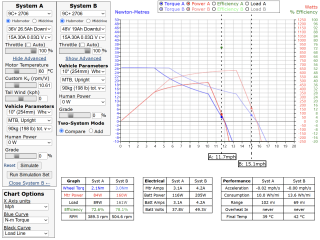
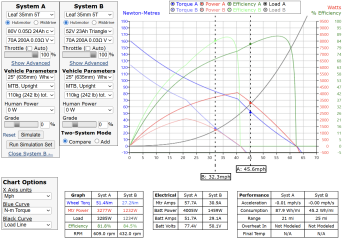
Raising the voltage will increase torque, but only where you don't need it. The blue line, for both system A and B, is the torque curve. The torque advantage only shows up in higher speeds, where the stock torque curve drops off.

1760562005665.png


With the same increase in power (48v-36v x15A= 540W vs 36V x, 25A-15A = 540W), but by increased current and keeping voltage the same, you have a huge increase in torque, where you need it in the speed range. In this case, the torque advantage is felt through almost the entire speed range.


1760562073184.png
 
Last edited:
I merged your threads about this into your most recent one, to keep all your info and all of the replies helping you together. Please just use the one thread so your project isn't scattered around and those helping you don't have to look for info in different threads....
Thank you I apologize. I know my area of questioning is more fisher price esque compared to more high sport mods / bikes etc. I appreciate your patience towards me. So many threads it was intimidating. ;)
 
A good explanation, Slaphappy, except the external pack may not be connected with a battery blender. Our poster from Istanbul needs to read up on parallel and series connection. His spare is a 36V8Ah battery connected in parallel with the battery in his scooter. When connected together without a blender, they must be at the same voltage. Otherwise, one battery will charge the other, and if the voltages are far apart, fires may happen. If the previous pwmer said these two batteries need to be separated and charged separately, then that must be done. Only batteries with compatible BMS can be charged connected together, Otherwise, fires may happen,

Our new poster should also be aware of the risks of fire from lithium batteries. Plenty of examples on youtube,

The 8AH battery is his photo is about 7 cm high, 7.4 cm wide and 19 cm long, If built with 3500 mah cells, it would be the same size and 14 AH. For about the same price, a 36V15AH battery can be built with 30 21700 5000ah cells, abd that size is 7.2 cm high, 6.5 cm wide and 20 cm long. However, a safer battery requires cell holders or better insulation between cells. That would increase the width and length on a replacement battery,

Getting into battery building requires buying a battery spot welder, test gear, and supplies. Not worth the cost for one or two batteries.

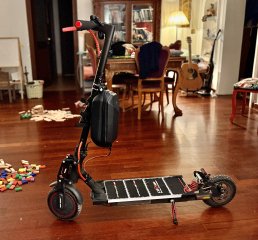
Hey Doc. I finally got the time to spice up the Xiaomi Pro 2. Was busy for a bit, but since then I added a 60x20cm base. I also did some maintanance on the cables and new safe tape etc. What I want to do is FLASH the current settings to my original uphill goals. I understand that MANY escooter users love SPEED increase etc, but my wife and I have no interest in those things. What we want is just performance uphill with better tweaking if possible. The Xiaomi Pro 2 I modded shown here (when in Sport Mode) has too much torque strength. My wife feels a bit uncomfortable because the jolt feels too strong. Keep in mind I own a Vsett 10+ ( a semi hyper scooter) and my wife had her Vsett 9 stolen. Her Vsett 9 was so smooth and a better escooter that she can see the difference.

The performance and quality from a Xiaomi and Vsett is day and night. For me these Xiaomi Pro scooters are like Fisher-Price compared to the Vsett it's a bit awkward. The PREMIUM request from me is performance uphill since Turks here know the lag of going uphill and rental prices are a bit costly for city scooters.

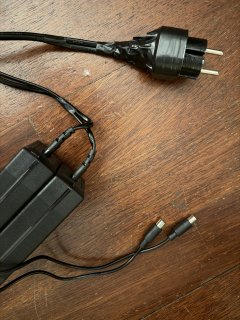
So what I gathered is that the original battery and the added external run in parallel. You had stated that the external was 36V and so therefore the original from Xiaomi is as well. I added a picture of the stock Xiaomi Pro 2 battery and you have the original pics of the external battery too. I have no idea what the original seller's settings were. I can't tell if they were conservative or for extreme sports mode. I've never had a problem with it. Oh by the way, I purchased another Power Supply and bonded them together for one outlet connection. I still have to charge both batteries separately but at least this kills to birds with one stone when looking for two outlets.

I just want a smooth and strong experience going uphill without any lag drag. Any settings you can recommend? I've attached pics of the default settings from the most popular Xiaomi Pro 2 mod hack app. These are the default parameters that users see when using the app, and of course Xiaomi Pro 2 users take it from there. I would appreciate any advice for the best settings (perhaps conservative to not strain the parallel system's battery) for going uphill in Istanbul. I don't care for long distances at all nor speed, and I don't want aggressive throttle. I mean I weigh 90kg and I myself feel a jolt whenever I press the throttle on its current Sport settings. Again the pictures attached from the app are in default settings.
 

Attachments

  • Screenshot 2025-12-07 at 22.22.39.png
    Screenshot 2025-12-07 at 22.22.39.png
    297.9 KB · Views: 8
  • Screenshot 2025-12-07 at 22.22.50.png
    Screenshot 2025-12-07 at 22.22.50.png
    279.6 KB · Views: 7
  • Screenshot 2025-12-07 at 22.22.59.png
    Screenshot 2025-12-07 at 22.22.59.png
    178.8 KB · Views: 9
  • IMG_4676.jpg
    IMG_4676.jpg
    5.1 MB · Views: 12
  • IMG_4678.jpg
    IMG_4678.jpg
    2.2 MB · Views: 12
  • IMG_4679.JPG
    IMG_4679.JPG
    2.3 MB · Views: 9
Raising the voltage will increase torque, but only where you don't need it. The blue line, for both system A and B, is the torque curve. The torque advantage only shows up in higher speeds, where the stock torque curve drops off.

View attachment 379179


With the same increase in power (48v-36v x15A= 540W vs 36V x, 25A-15A = 540W), but by increased current and keeping voltage the same, you have a huge increase in torque, where you need it in the speed range. In this case, the torque advantage is felt through almost the entire speed range.


View attachment 379180


Since now my Pro 2 scooter has one main (factory) 37VDC 12800mAh 7 474Wh battery, and an external battery pack that I was told is rated at 36V 40 cell (2000mAh) combo, am I able to draw power from both batteries combined and force it to a 48V profile?

Preferably I rather keep my system at 36V with both batteries combined in parallel since it would have longer longevity than a forced 48V system?
 
Raising the voltage will increase torque, but only where you don't need it
In other words an increase in voltage is usually more about an increase in speed than an increase in torque power force (Nm). Torque (Nm-Newton-meters) is the measurement of rotational or load capacity. It is the rotational equivalent or linear force.

Torque force measured in Newton-meters (Nm) has more to do with the motor windings, etc of a BLDC motor. I have two front hub 36v motors on an adult trike with 16" wheels. One hub motor is rated at 90 Nm with enuf torque force/power to spin the front hub wheel on loose gravel. The other front hub on an identical trike is rated at only 50-60 Nm. Its torque force/power is insufficient to even go up a mild incline without some pedal assist; whereas no problem for the 90 Nm front hub BLDC motor.

First-off better to have a BLDC motor rated at 90 Nm with enuf amps to get you where you're going and back again (including inclines) ... with reasonable power and speed.
 
Last edited:
In other words an increase in voltage is usually more about an increase in speed than an increase in torque power force (Nm). Torque (Nm-Newton-meters) is the measurement of rotational or load capacity. It is the rotational equivalent or linear force.

Torque force measured in Newton-meters (Nm) has more to do with the motor windings, etc of a BLDC motor. I have two front hub 36v motors on an adult trike with 16" wheels. One hub motor is rated at 90 Nm with enuf torque force/power to spin the front hub wheel on loose gravel. The other front hub on an identical trike is rated at only 50-60 Nm. Its torque force/power is insufficient to even go up a mild incline without some pedal assist; whereas no problem for the 90 Nm front hub BLDC motor.

First-off better to have a BLDC motor rated at 90 Nm with enuf amps to get you where you're going and back again (including inclines) ... with reasonable power and speed.
I'm assuming the existing controller is the cheap ebike/escooter type, that are somewhat weak in the phase current department.

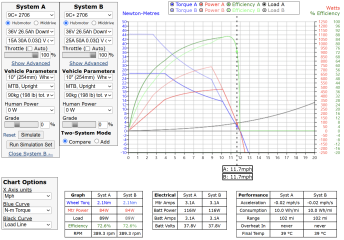
The change to the torque curve depends on the controller and it's ability to deliver phase amps. If the controller can only deliver phase amps 2x of the battery amps (like cheap controllers), there will be no gain in the flattened part of the torque curve, but the curve will start descending at a higher speed than the lower voltage system, (but the same torque in the flat part of the curve) like in the example in my earlier post.

If both controllers can deliver phase amps closer to 3X of the battery amps, there isn't a flat spot, so torque is increased over the entire curve (system A below represents my bike at 80V, and at 52V for system B), both using controllers that can deliver the same battery and phase amps. If the OP had a more capable controller, he'd have more torque everywhere running a higher voltage:

1765931169670.png
 
I'm assuming the existing controller is the cheap ebike/escooter type, that are somewhat weak in the phase current department.

The change to the torque curve depends on the controller and it's ability to deliver phase amps. If the controller can only deliver phase amps 2x of the battery amps (like cheap controllers), there will be no gain in the flattened part of the torque curve, but the curve will start descending at a higher speed than the lower voltage system, (but the same torque in the flat part of the curve) like in the example in my earlier post.

If both controllers can deliver phase amps closer to 3X of the battery amps, there isn't a flat spot, so torque is increased over the entire curve (system A below represents my bike at 80V, and at 52V for system B), both using controllers that can deliver the same battery and phase amps. If the OP had a more capable controller, he'd have more torque everywhere running a higher voltage:

View attachment 382197

btw. I had recently revamped one of my Xiaomi Pro 2 toys. I let my wife use it whenever she needs to, plus she uses it when traveling 1KM at most.

I have a question. I decided to remove that external battery pack I had. It has one of those generic 10S BMS 20A for my external battery. When wanting to know the health of the cells, how do I do this? Is there an easy way to patch into its current battery pack BMS by adding a bluetooth chip to that mini mainboard? I don't want to dismantlement all the counterpartments and test each cell just yet. I assume patching into a BMW or replacing it with a bluetooth BMS is best? There's usually an error from the scooter (when the factory battery is unplugged and instead boot solely from the external battery. It's obvious that Xiaomi's firmware or protocol tries to find manufacturer batteries, so anything different you get an error code and beeping sound.
 
Back
Top