
• Hello ES! We could use some help to get us past the finish line on building the new knowledgebase for the forum.
    Can you donate? Please see our fundraising page. Thank you!

thermal glue - does it work well for adding heatsinks?

Read it all!

Another downside to heatpipes is that they are typically designed such to prioritize surface area, which can come at the cost of strength. So they're not nessicarily ideal for use within a motor enclosure of a moving vehicle.

I'm wondering if this is really an issue in my instance. Inside the motor, there's no movement, and the heat pipe would be tucked into a metal channel that already exists in the motor. Given that the case is made of magnesium, i imagine it is not flexy, but even if it were, i could add some support to the case and eliminate the flex.

It is my personal opinion that liquid cooling e-bike motors is over-complicated and risky, and thus not for most people. You're bound to have a terrible, destructive failure or two along the way and one must be ready for it. But it can, of course, be fun and rewarding. And this forum is very DIY heavy, and so I don't want to discourage anybody who is down for an adventure.

I don't know, i think there's a lot of good prior art in the computer world, and that's well documented and a good starting point.

I'm willing to run a small chance of killing a fairly expensive motor in the name of finding another 100-200w on a stator that is otherwise quite efficient and only needs a little help thermally.

Here's the best options so far:

TechniqueProjected efficacyMotor Safety factorDownsides
Affix water block externally to hotspotMedium to HighHighAdded complexity:
Now need voltage convertor, pump, radiator, tubes
Stick bent heat tube in stator channel + big heatsink bolted on outside w/brace + high end thermal glueLow, but boost to thermal mass in weak spot extends time to overheat a bitMediumTechnically, we have liquid in the motor
Drill channels in key areas in case, tap for water outlets, run water through network of channelsVery HighMediumMost complex, hardware and time wise; could damage integrity of motor case because it doesn't have much extra metal to begin with.

Unnecessary amount of cooling - effective well beyond mechanical limits

Marginal gains zone:
- copper heatsink extensions
- create air channel
- create additional thermal bridge to frame

^-- in concert, might not be effective enough
 
Last edited:
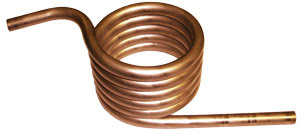
Maybe option D:
Copper tubes running in/out of the motor, wrapped around the stator channel, with some curly business at the end that would act like a heatsink for the water.

1753580046005.png
This could be very safe if you did it right, and it shouldn't require a pump i think. It's just that i'm not going for a steampunk aesthetic 😅
 
Read it all!


I'm wondering if this is really an issue in my instance. Inside the motor, there's no movement, and the heat pipe would be tucked into a metal channel that already exists in the motor. Given that the case is made of magnesium, i imagine it is not flexy, but even if it were, i could add some support to the case and eliminate the flex.


I don't know, i think there's a lot of good prior art in the computer world, and that's well documented and a good starting point.

I'm willing to run a small chance of killing a fairly expensive motor in the name of finding another 100-200w on a stator that is otherwise quite efficient and only needs a little help thermally.

Here's the best options so far:

TechniqueProjected efficacyMotor Safety factorDownsides
Affix water block externally to hotspotMedium to HighHighAdded complexity:
Now need voltage convertor, pump, radiator, tubes
Stick bent heat tube in stator channel + big heatsink bolted on outside w/brace + high end thermal glueLow, but boost to thermal mass in weak spot extends time to overheat a bitMediumTechnically, we have liquid in the motor
Drill channels in key areas in case, tap for water outlets, run water through network of channelsVery HighMediumMost complex, hardware and time wise; could damage integrity of motor case because it doesn't have much extra metal to begin with.

Unnecessary amount of cooling - effective well beyond mechanical limits

Marginal gains zone:
- copper heatsink extensions
- create air channel
- create additional thermal bridge to frame

^-- in concert, might not be effective enough

First, I'm apologize if I missed anything in the discussion before I replied. I got a little too into my response, and then my girlfriend was rushing me out the door to go Downtown, which rushed my response. I also *just* looked back and rephrased some of my post for clarity. Of course it's just my luck that I do this right when you responded to me!

____

After more carefully reading the thread, I don't think that there is anything fundamentally wrong with any of the top 3 solutions.

But I'm not 100% sold on option 1. If the motor already has an external hotspot, why not start with a heatsink, a brace/screws, and thermal glue? Maybe with a bridge to the frame (as you mentioned) to assist? It could work really well.

Whether using air cooling or water cooling, air will ultimately be whisking heat away from the system. Unless I'm missing something, water is only useful in two circumstances:

1) If you have to cool an area that air does not reach. In such cases, it's advantageous to use water to move energy between the heat source & cold side airflow. But you already have an external hotspot, so it doesn't seem necessary.

2) If your system is generating heat when you're not moving. An example is ICE car engines: they generate heat at idle, so coolant/water is needed to absorb heat until air can get flowing over the radiator. But with an e-bike, very little heat is generated while stopped.

Are you generating a lot of heat at idle for some reason? Or would the waterblock + radiator allow you more space for more cooling fins than just using a heatsink? If the latter, bridging heat to the frame might be able to make up for that difference.

I'd personally add heatsink fins & frame bridges from the external hotspot until all cooling issues go away. And then if I can't get satisfactory results, I'd move to a waterblock. But I already told you that I am generally opposed to water cooling, so I'm baised!

It could be super useful for the community to try both & post the resulting data: first, a heatsink on the external hotspot. Then a waterblock w/ radiator.
 
Maybe option D:
Copper tubes running in/out of the motor, wrapped around the stator channel, with some curly business at the end that would act like a heatsink for the water.

View attachment 374163
This could be very safe if you did it right, and it shouldn't require a pump i think. It's just that i'm not going for a steampunk aesthetic 😅

Ahahaha you don't understand - I literally made a coil just like this for my DIY hot tub. It's sitting in my garage.

Just connect to a cheap inflatable hot tub & put the copper coil over a gas burner. Boom: DIY hot tub.

It *should* work for cooling a motor!
 
Last edited:
It's a combination of plastic/nylon and metal.
I think i get what you're thinking - drawing more heat towards the heatsink might be a problem because the gear sits above it.
Unless you're just sitting there generating the heat, it doesn't matter--air willl carry away the heat from theheatsink, it won't have a chance to rise and heat anything above it. ;)

A heatsink cold side is part of a dynamic system, with airflow (or other coolant) past it, so unless your'e radiating a glowing heat off of it it's unlikely to affect the plastics surrounding it in normal operation. ;)
 
I'm wondering if this is really an issue in my instance. Inside the motor, there's no movement, and the heat pipe would be tucked into a metal channel that already exists in the motor. Given that the case is made of magnesium, i imagine it is not flexy, but even if it were, i could add some support to the case and eliminate the flex.

The issue isn't with anything internal--the problem of fragility is with the cold side (external) fins being so very very thin and plentiful to give the most possible surface area on all these premade CPU heatpipe systems. They are very easy to crush with almost any pressure...have you ever cleaned out a window-AC unit's heat-exchanger fins, either inside or outside? Just a finger press crushes them....

Same problem I pointed out with the Zalman flower and similar units, and why i suggested the cylindrical stub-farm ;) heatsink style; it's harder to damage those in a way that makes htem less heatsinky. (though they have less surface area to begin with, what they do have is more exposed to airflow, so that's yet another tradeoff you ahve to make with a passive cooling system).
 
Ahahaha you don't understand - I literally made a coil just like this for my DIY hot tub. It's sitting in my garage.
Just connect to a cheap inflatable hot tub & put the copper coil over a gas burner. Boom: DIY hot tub.
It *should* work for cooling a motor!

Really, does yours require a pump or is the natural motion of water in different temperature zones enough?

Apparently some of these flat heat pipes are bendable. The website says i could expect a 10-15% performance drop, but that's fine.

Bending Heat Pipes | Celsia.

My idea is to use it primarily as added thermal mass in an area where the case is very thin, but we have a convenient channel to wrap a heat tube around. This should also help carry some heat to the case.

lightest-jpg.367033


But yeah, i should probably do the conservative exterior modifications first.
 
So i have a lightest.bike mid drive and i finally found it's limit of about ~1200w continuous.
It's a super efficient motor, just has a super thin case, and i think a little heatsink slapped on the side where the stator conducts the best to the case might result in a noticeable bump to continuous wattage.
The only problem is that i don't have spare metal to add bolt holes to fix the heatsink on that side.

Was wondering if thermal glue was a thing and found a few on google shopping, such as:
https://www.amazon.com/GENNEL-Conductive-Silicone-Adhesive-Compound/dp/B072MSXHJD

I'm wondering how a thermal glue would compare to a thermal paste - in terms of heat transfer?
I'm noticing that they say not to use it on a CPU, so to some degree, i imagine it is not good as thermal paste.
Yeah, thermal glue works and is great when you don’t have mounting holes. It’s not as good as thermal paste but way better than nothing, and the GENNEL one you linked is solid. Just clean the surface, use a thin layer, and you’ll likely see a temp drop with even a small heatsink
 
Eh, the low price of water is a happy coincidence. It's really hard to beat water for heat transfer. It just so happens that we've got A LOT of water here on earth: water's heat/energy absorbing properties help make water such a necessity for life. Its abundance makes it cheap & plentiful.🙂

But once water gets saturated with heat, it needs to either:

1) Vaporize off and take the the energy it absorbed along for the ride. This type of evaporation cooling is how sweat cools us, and it's a broadly effective solution for many cooling applications. But the downside is that this solution uses water as a consumable, so it requires refills.

or

2) Use water in a closed loop with a "hot side" and "cold side", wherein water can absorb & discharge heat, respectively. This is where heatpipes come in. The upside to this approach is that water (or whatever coolant used) isn't used as a consumable, so maintenance is low. The downside is that heatpipes have to be designed carefully for a number of reasons...

One bigger downside of heatpipes is that they tend to be made out of thermally conductive metals w/ low specific heat. These metals can be corroded by water & electricity, and thus present a need for water used within heatpipes to be treated with additive packages. You can generally get around this by using automotive coolant or whatever coolants are being used to water-cool computers.

Another downside to heatpipes is that they are typically designed to prioritize cold side surface area, which can come at the cost of strength. I don't know if they're ideal for cooling the motor of moving vehicle unless great thought is put into protecting the cold side without inhibiting air flow.

I'm not sure what the state of "liquid metal coolants" is. I'll look into it - I could definitely be missing something. Last I checked - which was a while ago - most applications simply used a liquid gallium alloy to interface between a heat source & a heatpipe, thus taking the place of thermal paste. But air or water-based coolant would still be transferring heat within the heatpipe. Galium thermal paste pencils out to be a great solution compared to normal thermal paste, but gallium alloys are extremely destructive to PCBs and they melt aluminum on contact. You do not want a gallium thermal compound to end up between a heat source & a heat pipe, and you better hope that none of the mating surfaces are aluminum. Gallium alloys have more damage potential than water.
____

It is my personal opinion that liquid cooling e-bike motors is over-complicated and risky, and thus not worth it for most people. You're bound to have a terrible, destructive failure or two along the way and one must be ready for it. But it can, of course, be fun and rewarding. And this forum is very DIY focused, so I don't want to discourage anybody who is down for the adventure. Just be aware that you're in for an adventure!

Ok... but why are you replying to me with all this stuff I already know and that my post 'agrees' with!? :)
 
So i have a lightest.bike mid drive and i finally found it's limit of about ~1200w continuous.
It's a super efficient motor, just has a super thin case, and i think a little heatsink slapped on the side where the stator conducts the best to the case might result in a noticeable bump to continuous wattage.
The only problem is that i don't have spare metal to add bolt holes to fix the heatsink on that side.

Was wondering if thermal glue was a thing and found a few on google shopping, such as:
Amazon.com

I'm wondering how a thermal glue would compare to a thermal paste - in terms of heat transfer?
I'm noticing that they say not to use it on a CPU, so to some degree, i imagine it is not good as thermal paste.
Unless your casing is in direct thermal contact with the hot parts of your system, adding exterior heatsinks isn't going to be that effective. Get rid of air gaps between hot motor parts and the casing, *then* add exterior fins. Since you don't have pressurized air flow, those fins should be about twice as far apart as on most chip sinks.

A good test would be to run the motor up to high temperatures, measure casing temp, then pull it off and measure interior temp (with the same IR thermometer )

Edit: Oops. I should know by now to read the whole thread before adding my two cents.
 
Last edited:
It's in direct thermal contact with the stator, and it's an inrunner.

A good test would be to run the motor up to high temperatures, measure casing temp, then pull it off and measure interior temp (with the same IR thermometer )

That would be hard to do, disassembly of the mid drive is pretty time consuming. I'd rather just put a temp sensor on the stator to measure the internal temp since i'd like to ride the ~90C limit and have the VESC make sure i don't blow the motor up.
 
It's in direct thermal contact with the stator, and it's an inrunner.


That would be hard to do, disassembly of the mid drive is pretty time consuming. I'd rather just put a temp sensor on the stator to measure the internal temp since i'd like to ride the ~90C limit and have the VESC make sure i don't blow the motor up.
Yeah, it looks like you've already identified a hot spot, but knowing relative interior and exterior temperatures seems like it should give you an idea where the biggest gains in heat shedding are hiding.

I was thinking yours had architecture similar to a TSDZ2, where the whole system is full of air gaps, and the casing is easy to pull. That's also an inrunner, but with multiple air gaps in the heat paths to the outside.
 
Ok... but why are you replying to me with all this stuff I already know and that my post 'agrees' with!? :)

My post started w/ a friendly nitpick about the properties & cost of water, then turned into a broader response about the topic.

It didn't respond to you in a vacuum. This is a public forum. If I wanted to reply to just you, I'd have DM'd you.
 
Back
Top