
To make it fit in the car? Isn't that a lot of work? How about finding a car that fits the scooter?Solutions I am thinking of:
1. Cut the frame at the middle to make the length shorter (and with soldering reinforcements)

-
Hello ES! We could use some help to get us past the finish line on building the new knowledgebase for the forum.
Can you donate? Please see our fundraising page. Thank you!
You are using an out of date browser. It may not display this or other websites correctly.
You should upgrade or use an alternative browser.
You should upgrade or use an alternative browser.
MOD seated scooters up to 72V 5kW dual motor: VESC + modular DIY OpenSource electronics and software
- Thread starter casainho
- Start date

casainho
Legend
- Joined
- Feb 14, 2011
- Messages
- 6,117
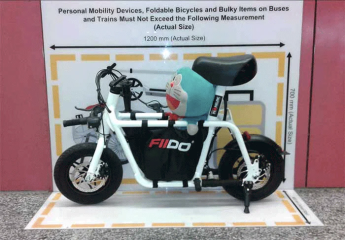
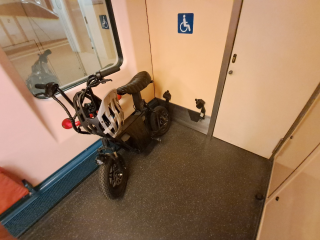
Fiido was made to fit inside cars and easy to carry on public transports:To make it fit in the car? Isn't that a lot of work? How about finding a car that fits the scooter?
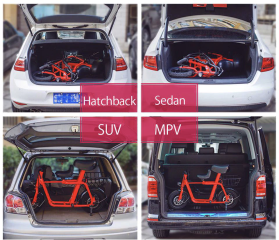
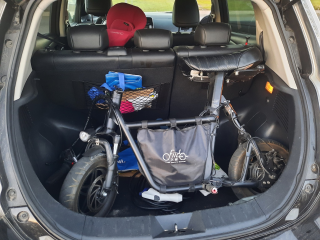
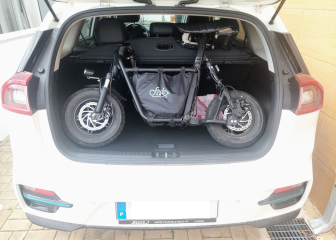
Inside my cars:
Inside the train:
I've read a DD rear hub motor can easily run at some percentage higher power than spec (50%)?Yes, I think the must upgrades are adding foot pegs and more powerful motor(s) and battery. I think the frame is good.
Can I change to a different controller as a start to get more power? I just need it to go around 20 mph, not bog down on 10% grade hills.
casainho
Legend
- Joined
- Feb 14, 2011
- Messages
- 6,117
I've read a DD rear hub motor can easily run at some percentage higher power than spec (50%)?
Can I change to a different controller as a start to get more power? I just need it to go around 20 mph, not bog down on 10% grade hills.
Yes, I think the original motor can run at a bit more power, but on that case the temperature control is a must!
I would go with the VESC 75100 that costs about 60€ only.
Here a tutorial how to install the VESC on EScooter:
VESC will have a big learning curve for me. I also do not have Windows.Yes, I think the original motor can run at a bit more power, but on that case the temperature control is a must!
I would go with the VESC 75100 that costs about 60€ only.
Here a tutorial how to install the VESC on EScooter:
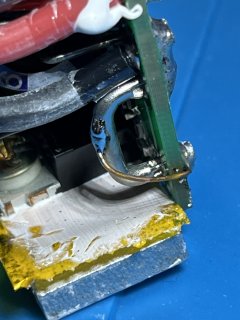
iScooter sent me a replacement controller that did not help with uphill power so now I have a spare. What do you think of a shunt mod? I have never done one.
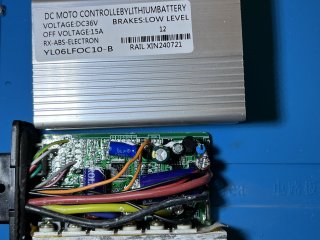
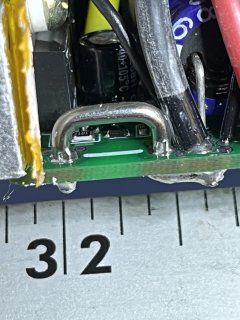
The shunt is 2 mm in diameter
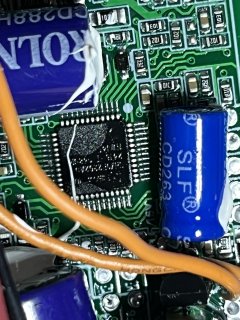
Best photo I can get of the chip. Can anyone make out the p/n?
casainho
Legend
- Joined
- Feb 14, 2011
- Messages
- 6,117
I am using Linux, for instance, no Windows.VESC will have a big learning curve for me. I also do not have Windows.
VESC supports Windows, Linux, MAC and mobile.
VESC is kind of a standard, but yes it will take time to lear but it is something you can reuse in future. On the other side, using specific controller from the manufacturer, mean will be harder because there is no documentation/community as there is for VESC.
I only have experience with VESC.

The shunt looks easy enough to get to. The problem is its hard test what the new current limit will be without running it. If the limit is too high, something will fail. But that's always the case with shunt mods.
If I was going to mod that one, I'd take a small piece of copper wire and solder it between one end where it attaches to the board and the other end somewhere near the middle. That should give you a little less than 2x the original current limit.
If I was going to mod that one, I'd take a small piece of copper wire and solder it between one end where it attaches to the board and the other end somewhere near the middle. That should give you a little less than 2x the original current limit.
Thanks for the tips on how to add a shunt. Can you explain the theory behind it? With the stock controller, I saw 15A max on my clamp on ammeter. After shunt mod, should I see higher current draw?The shunt looks easy enough to get to. The problem is its hard test what the new current limit will be without running it. If the limit is too high, something will fail. But that's always the case with shunt mods.
If I was going to mod that one, I'd take a small piece of copper wire and solder it between one end where it attaches to the board and the other end somewhere near the middle. That should give you a little less than 2x the original current limit.
The controller has a 15 mph speed limit. Is there an easy way to defeat that?
mrmojorising
Established
@Zambam flipsky also sell their own non-vesc controllers which are basically a dumbed down version of vesc. I recently completed a fiido build using their ft85bd dual motor controller, it was very easy to setup and significantly improves performance and customization without the increased complexity of vesc (Fiido Q1S Modded with Flipsky FT85BD and custom 46950 72V battery)
Just throwing it out there as a cheap alternative for a customizable controller
Just throwing it out there as a cheap alternative for a customizable controller
The controller senses the current by measuring the voltage across the shunt. When the voltage gets up to the preset limit, it backs off on the throttle to keep it from going over. By lowering the resistance of the shunt, it takes more current to hit the limit.
Yes you would see the current goes higher after the mod. Acceleration and hill climbing will be better.
There are a few ways the speed limiter might work. The controller has to get a speed signal from somewhere. It might be from the motor hall sensors or there might be a separate speed sensor on the wheel.
Spoofing the signal would be one way. Changing the gearing or wheel size might be another.
I’m sure there’s a way to change it in the programming but you would need the right software.
If you’re really lucky there might be a jumper on the board somewhere that you either connect or disconnect to remove the limit.
Yes you would see the current goes higher after the mod. Acceleration and hill climbing will be better.
There are a few ways the speed limiter might work. The controller has to get a speed signal from somewhere. It might be from the motor hall sensors or there might be a separate speed sensor on the wheel.
Spoofing the signal would be one way. Changing the gearing or wheel size might be another.
I’m sure there’s a way to change it in the programming but you would need the right software.
If you’re really lucky there might be a jumper on the board somewhere that you either connect or disconnect to remove the limit.
Found an interesting alibaba article on the iScooter i12. Don't know how accurate or credible it is?
@mrmojorising Can you post a link to a non-vesc controller? Is that what you used in your Fiido Q1S video?@Zambam flipsky also sell their own non-vesc controllers which are basically a dumbed down version of vesc. I recently completed a fiido build using their ft85bd dual motor controller, it was very easy to setup and significantly improves performance and customization without the increased complexity of vesc (Fiido Q1S Modded with Flipsky FT85BD and custom 46950 72V battery)
Just throwing it out there as a cheap alternative for a customizable controller
Looks good. Try it. You could adjust it by moving the spot where the wire attaches. Problem is if you go too high, something will blow up.
mrmojorising
Established
This is the one I have for dual motors: Flipsky FT85BD Dual ESC 84V 200A With Aluminum Case NON-VESC For Electric Skateboard / Electric Scooter / Ebike Speed Controller / Electric Motorcycle / Robotics@mrmojorising Can you post a link to a non-vesc controller? Is that what you used in your Fiido Q1S video?
This is the single motor version: FLIPSKY FT85BS V2.0 84V 60A ESC With Aluminum Case NON-VESC For Electric Skateboard / Electric Scooter / Ebike Speed Controller / Electric Motorcycle / Robotics
Both very cheap, and you can sometimes get an even better deal purchasing through AliExpress which I did.
Feel free to ask questions in my thread so we don't hijack @casainho 's too much

Last edited:
Gave it a test ride! It definitely gained more power in terms of acceleration and hill climbing. Top speed still limited to 15 mph. Unplugging a single white wire connector from the motor harness didn't help.Looks good. Try it. You could adjust it by moving the spot where the wire attaches. Problem is if you go too high, something will blow up.
Battery amp went up to 22A (from 15 before shunt mod). The controller didn't feel hot to the touch (just warm). I will hook up a thermocouple meter to the controller to see what temp it runs at, then decide if I want to push it further or leave as is.
22A sounds reasonable. My experience is most controllers will survive about 1.5x original power. 2x might blow something up.
I think your only hope for overriding the speed limit would be to have the programming software, which is likely not available anywhere. Somewhere, the CPU is getting the speed signal from one of the hall sensors. It might be inside the chip. It might be on a trace you could cut, but that might trigger some other safety feature. Really good pictures of the board might show something hackable.
A new controller, of course, would probably be easier and they are not that expensive these days.
I think your only hope for overriding the speed limit would be to have the programming software, which is likely not available anywhere. Somewhere, the CPU is getting the speed signal from one of the hall sensors. It might be inside the chip. It might be on a trace you could cut, but that might trigger some other safety feature. Really good pictures of the board might show something hackable.
A new controller, of course, would probably be easier and they are not that expensive these days.
Yes.I've read a DD rear hub motor can easily run at some percentage higher power than spec (50%)?
Can I change to a different controller as a start to get more power? I just need it to go around 20 mph, not bog down on 10% grade hills.
casainho
Legend
- Joined
- Feb 14, 2011
- Messages
- 6,117
Yes I do feel, and that makes me nervous!! I always feel unsafe, dangerous and I can't ride relaxed.@casainho How does your i12 ride and handle? I find my i12's front wheel feels light and twitchy. Maybe I just need to get used to it or is there some adjustments that can be made?
Fiido Q1S were perfect on this - I didn't even know it could be so bad like this.
My plan for now is to cut and make the frame shorter, on the same size of Fiido Q1S, so it can fit inside my car with trouble. And I expect that will also help on this issue you refer!!
My old Vego scooter had twitchy steering like that. Almost impossible to ride with one hand.
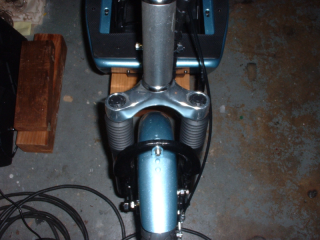
I took apart the fork and flipped the top part around to give the wheel more trail. This helped a lot.
Tires can make a big difference too. Avoid anything with a square-ish profile.
Before:
After:
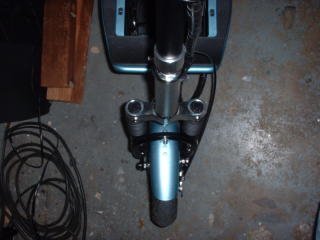
I took apart the fork and flipped the top part around to give the wheel more trail. This helped a lot.
Tires can make a big difference too. Avoid anything with a square-ish profile.
Before:
After:
casainho
Legend
- Joined
- Feb 14, 2011
- Messages
- 6,117
Thanks for sharing!!My old Vego scooter had twitchy steering like that. Almost impossible to ride with one hand.
I took apart the fork and flipped the top part around to give the wheel more trail. This helped a lot.
Tires can make a big difference too. Avoid anything with a square-ish profile.
How just a small distance make so big difference!!
Regarding handling, if it's lack of trail causing issues you might be able to safely elongate the fork sufficiently with longer springs.
If the issue is more related to weight, solution is to lower bars, lengthen stem, and then move sadfle forward if the handlebar repositioning stretches you out too much. Such bikes commonly have short stems and slack seat tubes (<70 degrees), because they're intended for slow upright ghost pedalling,
if your back is sufficiently flexible, and you intend to push the pedals, it's preferable to get forward and lean into it - improves pedalling power and front end control.
If the issue is more related to weight, solution is to lower bars, lengthen stem, and then move sadfle forward if the handlebar repositioning stretches you out too much. Such bikes commonly have short stems and slack seat tubes (<70 degrees), because they're intended for slow upright ghost pedalling,
if your back is sufficiently flexible, and you intend to push the pedals, it's preferable to get forward and lean into it - improves pedalling power and front end control.
No pedals on these! My bad, sorry.
Principle still applies though - anything you can do to shift your weight forward will help.
Looking at the steep head angle, longer springs won't help enough either - you really need to slacken the head angle by bending the frame.
Principle still applies though - anything you can do to shift your weight forward will help.
Looking at the steep head angle, longer springs won't help enough either - you really need to slacken the head angle by bending the frame.
casainho
Legend
- Joined
- Feb 14, 2011
- Messages
- 6,117
Yes!!No pedals on these! My bad, sorry.
Principle still applies though - anything you can do to shift your weight forward will help.
Looking at the steep head angle, longer springs won't help enough either - you really need to slacken the head angle by bending the frame.
My old scooter that was perfect, was shorter so I had a fork advance - I think it canceled the fork displacement off center of the wheel. Also because of that, more of my weight were placed on the front wheel.
That is why I hope that cutting the frame of my new scooter, to make it shorter as the old one and fit inside my car, will also solve this issue of the lack of trail. If not, then I will move to change the head angle by bending the frame.
Similar threads

- Replies
- 3
- Views
- 11,520

- Replies
- 25
- Views
- 10,357

