• Hello ES! We could use some help to get us past the finish line on building the new knowledgebase for the forum.
    Can you donate? Please see our fundraising page. Thank you!

What is a good budget spot welder?

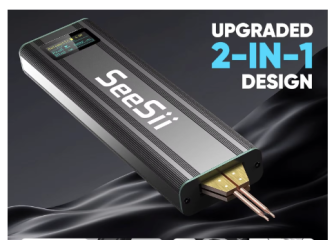
I ended up ordering the AwithZ UK1 for $50 off Amazon.

I'm a little bit worried about the battery going bad over time, but I have no shortage of lithium cells that I could rebuild it with...
 
I'm just dusting mine off as I'm assembling another pack (350+ welds). I've lengthened my battery leads with 18" 8 ga. cable which appears to be a mistake. Nice to have the working room with the longer cables but my dwell times jumped from 15 to 45 to make the same weld. I need to experiment a bit with test welds before final assembly.
You might be able to mitigate some of that dwell time by twisting/bundling the battery and probe leads in close proximity to themselves respectively.

Bulk resistance and stray inductance really come into play when dealing with high pulse currents.

I have a Malectrics welder and a 6 pack of Maxwell 3000 farad supercaps I am assembling.

The plan is to mount the caps, welder and probes within inches of each other on a counter balanced beam to minimize the above effects.

Gonna try to weld some copper nickel flux sandwiches... tasty.
 
I ended up ordering the AwithZ UK1 for $50 off Amazon.

I'm a little bit worried about the battery going bad over time, but I have no shortage of lithium cells that I could rebuild it with...
It probably uses Lipo pouch cells. If you put them away at full charge, they can deteriorate. Spot welding at 100A pulses isn't good for them either, I originally bought a Seesil and later a BIRC with internal pouch batteries in Fall of 2021. By end of year, both were too weak to weld.

My replacement welder was the red one above, with a simple mod, and a external Ternegy 3S RC drone battery. Worked OK, but I also ruined the battery by not discharging it for storage, It swelled up. Now I charge the replacement before I use it, and discharge to store. The Ternergy welds better than my car battery.
 
It probably uses Lipo pouch cells. If you put them away at full charge, they can deteriorate. Spot welding at 100A pulses isn't good for them either, I originally bought a Seesil and later a BIRC with internal pouch batteries in Fall of 2021. By end of year, both were too weak to weld.

My replacement welder was the red one above, with a simple mod, and a external Ternegy 3S RC drone battery. Worked OK, but I also ruined the battery by not discharging it for storage, It swelled up. Now I charge the replacement before I use it, and discharge to store. The Ternergy welds better than my car battery.
I have several 3S RC batteries for my remote control helicopters...

I wanted to buy one of the red ones, but was thinking I would need a massive car battery.

I might end up returning this one and trying one of those, but it would be nice to know when that already has the modifications.
 
This seems like a decent one... I've not used one yet though.

 
This seems like a decent one... I've not used one yet though.

It's a bit better than the Kekk K7 Pro I have.

A member on the ebikes discord server bought it and they've loved it apparently.
 
You might be able to mitigate some of that dwell time by twisting/bundling the battery and probe leads in close proximity to themselves respectively.
Good point that I had forgotten. The leads to the battery "jump" during each weld. I need to make some test welds and I'll try both ways (twisted & straight) to see the difference.
 

That one is great. Super powerful welds.
 
This seems like a decent one... I've not used one yet though.

Anyone tested this welder using copper/ stainless steel sandwich + flux on 18650/21700 cells? What thickness copper will it weld?
 
I have several 3S RC batteries for my remote control helicopters...

I wanted to buy one of the red ones, but was thinking I would need a massive car battery.

I might end up returning this one and trying one of those, but it would be nice to know when that already has the modifications.
I also did not want to do the modifications. The point of the modifications is two fold. Keep the inrush current when first hooking it to a battery, from stressing components on the PCB, and prevent the voltage falling so low during the weld, that the mosfet has issues holding the mosfet gates closed.

The inrush issue can be solved with using an XT90 Antispark connector between the battery and the welder.
The too low a voltage issue can be by using a dedicated 12v battery just to power the welder circuitry, but a separate 3S battery for the welding current. The battery powering the welder PCB does not need to be any high C rate battery, but the weld battery certainly does, but not too high.
There is a goldilocks zone, and any particular lead acid car battery might be within that zone, or it might not

I built 3 10s2P batteries with the Purple spot welder, 0.1mm copper and 0.1 nickel plated steel sandwich using a Zee 60C 5.2AH Lipo, but as that lipo aged I kept having to increase the gear/pulse mS, and consistency suffered and it got more and more difficult and stressful to use.

I used same exact Beefed up cabling/ Dual battery system for both the red and the purple welder and the Purple could weld the 0.1 copper under 0.1 NPS, but my red one could not

While I much preferred the interface of the Red, I almost never used it, in favor of the Purple. Using the very tedious infinite Slot method, I was able to get 0.15mm copper welded under 0.1mm NPS on a test cell, one sanded free of previous welds and the nickel plating, but these same settings on new cells proved too weak, all other factors being equal.20250626_135310.jpg

When my Zee Lipo failed, I was just reluctant to get another as I knew it was just going to work well for one battery and then degrade too fast, even when kept at proper storage voltage and temperature. I had a backup purple PCB ready to be swapped in if I smoked it mid battery build.
Zeus-FL then hooked me up with a AwithZ P20B, so these sit unused, and honestly, If I am in immediate need of 8AWG with an XT90, out come the wire cutters.

If I were to Use the Purple welder again, I'd likely get a high end 3S~ 5 Amp hour Lipo, and use 0.12mm copper, and 0.1mm stainless steel, and Flux. The Stainless and Flux decrease the welder power required enough I suspect this one would be capable of 0.15mm copper. I'd try it if I had a healthy 3S lipo on hand. I was unaware of the magic of Stainless steel, or the welding flux when I had only the purple and red welders.

This purple welder has a very loud annoying beep, which I neutered, but there is no easy way to hook up a pedal to it, it just fires a half second or so after both probes are placed on battery and this delay is not adjustable.

Getting them aligned right where desired, and the proper even pressure on the probes, before it fired, was kind of stressful, and I came close to ruining a few cells when the probe slipped off the strip and it fired automatically, and nearly blew a hole in the can.

On youtube, there are videos by Luca showing how to modify both the red and purple welders, and there are several different versions of the red, and even when modified, the purple outperformed the red, and he shows exactly how.
I did not perform the modifications, I just used the xt90 Antispark and 2 12v batteries, and the purple welder lives on, it is just not powerful enough for my desires, and the interface is too clunky, and consistency really suffers when the Lipo weld battery ages and the welder gets hot.

The AwithZ is luxurious to use in comparison. It is pricey, but Lipo's aint cheap either, and old ones limit the end result.
 
I also did not want to do the modifications. The point of the modifications is two fold. Keep the inrush current when first hooking it to a battery, from stressing components on the PCB, and prevent the voltage falling so low during the weld, that the mosfet has issues holding the mosfet gates closed.

The inrush issue can be solved with using an XT90 Antispark connector between the battery and the welder.
The too low a voltage issue can be by using a dedicated 12v battery just to power the welder circuitry, but a separate 3S battery for the welding current. The battery powering the welder PCB does not need to be any high C rate battery, but the weld battery certainly does, but not too high.
There is a goldilocks zone, and any particular lead acid car battery might be within that zone, or it might not

I built 3 10s2P batteries with the Purple spot welder, 0.1mm copper and 0.1 nickel plated steel sandwich using a Zee 60C 5.2AH Lipo, but as that lipo aged I kept having to increase the gear/pulse mS, and consistency suffered and it got more and more difficult and stressful to use.

I used same exact Beefed up cabling/ Dual battery system for both the red and the purple welder and the Purple could weld the 0.1 copper under 0.1 NPS, but my red one could not

While I much preferred the interface of the Red, I almost never used it, in favor of the Purple. Using the very tedious infinite Slot method, I was able to get 0.15mm copper welded under 0.1mm NPS on a test cell, one sanded free of previous welds and the nickel plating, but these same settings on new cells proved too weak, all other factors being equal.View attachment 380035

When my Zee Lipo failed, I was just reluctant to get another as I knew it was just going to work well for one battery and then degrade too fast, even when kept at proper storage voltage and temperature. I had a backup purple PCB ready to be swapped in if I smoked it mid battery build.
Zeus-FL then hooked me up with a AwithZ P20B, so these sit unused, and honestly, If I am in immediate need of 8AWG with an XT90, out come the wire cutters.

If I were to Use the Purple welder again, I'd likely get a high end 3S~ 5 Amp hour Lipo, and use 0.12mm copper, and 0.1mm stainless steel, and Flux. The Stainless and Flux decrease the welder power required enough I suspect this one would be capable of 0.15mm copper. I'd try it if I had a healthy 3S lipo on hand. I was unaware of the magic of Stainless steel, or the welding flux when I had only the purple and red welders.

This purple welder has a very loud annoying beep, which I neutered, but there is no easy way to hook up a pedal to it, it just fires a half second or so after both probes are placed on battery and this delay is not adjustable.

Getting them aligned right where desired, and the proper even pressure on the probes, before it fired, was kind of stressful, and I came close to ruining a few cells when the probe slipped off the strip and it fired automatically, and nearly blew a hole in the can.

On youtube, there are videos by Luca showing how to modify both the red and purple welders, and there are several different versions of the red, and even when modified, the purple outperformed the red, and he shows exactly how.
I did not perform the modifications, I just used the xt90 Antispark and 2 12v batteries, and the purple welder lives on, it is just not powerful enough for my desires, and the interface is too clunky, and consistency really suffers when the Lipo weld battery ages and the welder gets hot.

The AwithZ is luxurious to use in comparison. It is pricey, but Lipo's aint cheap either, and old ones limit the end result.

BTW, if you're using those pouch cells for welding, I'd mainly recommend using some straps around them to keep the cells compressed.

Compressed cells = happy cells that will almost never puff up and have higher performance overall.
 
BTW, if you're using those pouch cells for welding, I'd mainly recommend using some straps around them to keep the cells compressed.

Compressed cells = happy cells that will almost never puff up and have higher performance overall.
My Zee 3S 5.2Ah Lipo did have the hard plastic case. It still had decent capacity when I smelled its electrolyte leaking. There was only a very slight bulge to the casing, but when I discharged it completely with a 12v fan, and then put it on a 10 ohm 100 watt resistor for a few days, the bulge was much more pronounced.
The two halves did not want to separate easily, even when I cut the sticker at the seam.

I wanted to get inside and cut the 12awg leads as close as possible to cell tabs, and reuse the XT90-S that I added, at some future point. I did not try and pry the casing apart and just snipped the cables shorter than I would have desired.

I still need to recycle it.
 
My Zee 3S 5.2Ah Lipo did have the hard plastic case. It still had decent capacity when I smelled its electrolyte leaking. There was only a very slight bulge to the casing, but when I discharged it completely with a 12v fan, and then put it on a 10 ohm 100 watt resistor for a few days, the bulge was much more pronounced.
The two halves did not want to separate easily, even when I cut the sticker at the seam.

I wanted to get inside and cut the 12awg leads as close as possible to cell tabs, and reuse the XT90-S that I added, at some future point. I did not try and pry the casing apart and just snipped the cables shorter than I would have desired.

I still need to recycle it.
A plastic hard case usually doesn't make for very good compression, hence straps. Especially if it's puffed up, careful with sharp edges near it xD
 
thick enough metal or thick enough plastic, or either one with reinforcing ribs in the right directions and places, are required for even compression of the large faces of pouch and prismatic cells. THe "best" way to do it is with shaped plates or thick enough plates to prevent any distortion or flexing of the plates, and have hte plates extend beyond the edges of the cells so they can be bolted together around the pack.

Straps could be used with those plates instead of bolts, but if you use straps on plates that are thin enough to distort or flex, the forces at the edges of the plates where hte straps curve around them to change direction will cause the plates to distort (probably not visibly) and provide more pressure at those points and along the edges than in the center, making them less effective.

There are some images of these methods in various posts I've made that point out the need for cell stack compression in prismatic or pouch cells, if you poke around.
 
If I didn't know better, I would almost think I know what I'm doing.

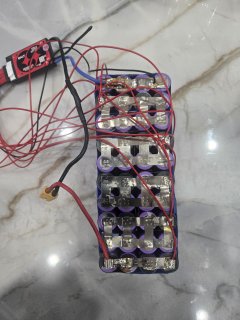
Ordered the AwithZ UK1, and right out of the box I made my first spot welds.

This thing has "Gears" up to 100, but I never went over 10.

These were a bunch of old batteries with internal resistance that was pretty dismal, so I figure it was a great chance to practice.

20251104_010119.jpg
 

Attachments

  • 20251104_010128.jpg
    20251104_010128.jpg
    1.4 MB · Views: 12
  • 20251104_012644.jpg
    20251104_012644.jpg
    1.2 MB · Views: 11
Back
Top