• Hello ES! We could use some help to get us past the finish line on building the new knowledgebase for the forum.
    Can you donate? Please see our fundraising page. Thank you!

DONUT MOTOR porn images

Doctorbass

📗 Minor legend
Joined
Apr 8, 2007
Messages
7,510
Location
Quebec, Canada East
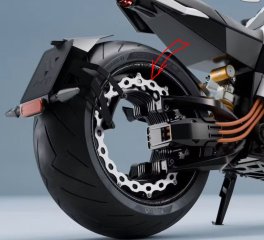
While waiting to see the real Solid States Battery working as claimed recently by DONNUT LAB at the 2026 CES why not take a look to their motor!

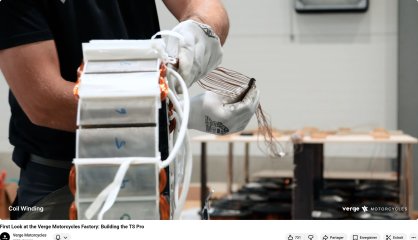
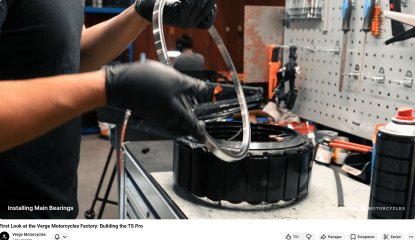
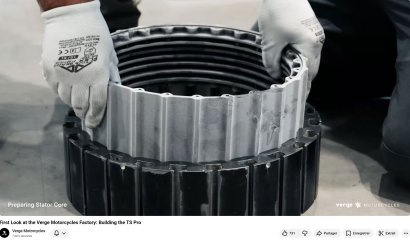
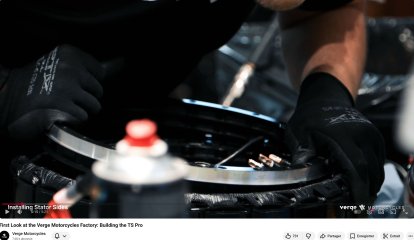
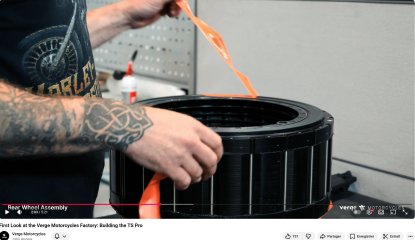
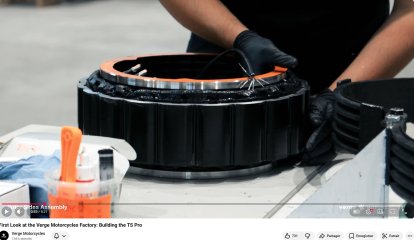
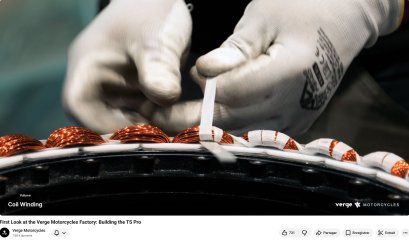
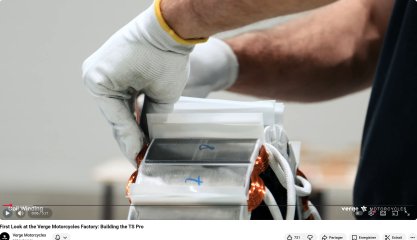
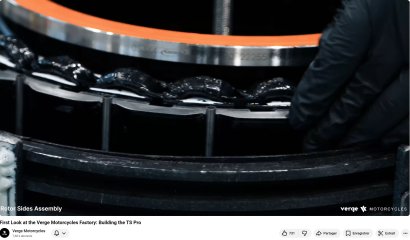
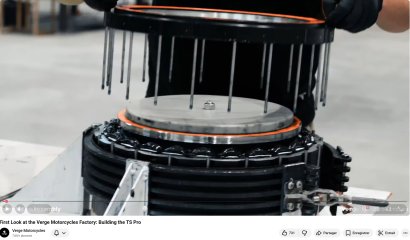
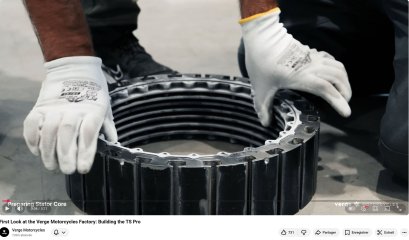
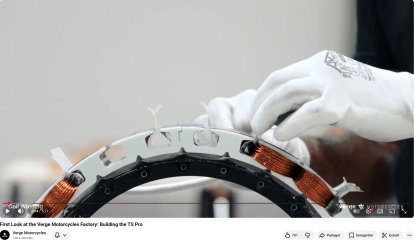
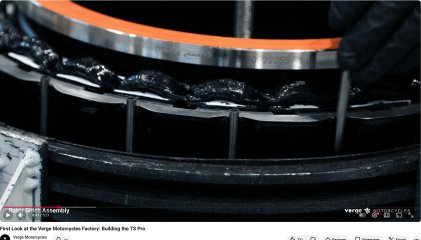
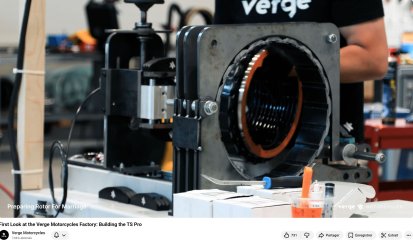
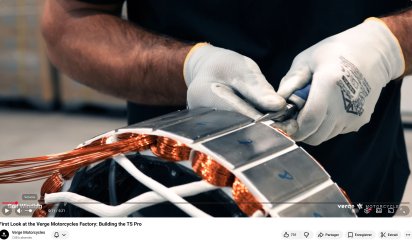
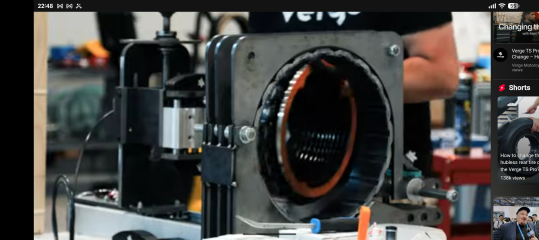
In one of their corporate video I saw very quick images of their fabrication at very high speed in 4K but I slowed it down and took some pictures of the inside!
Here are some of my observations: (note that this is a motor made to work on 96s (350Vdc) Btw I also made a thread about their Lithium ion battery here: Donut Verge Li-ion Battery
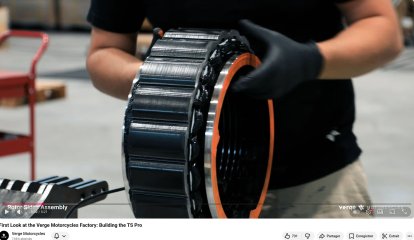
  • It use black varnish to reduce corrosion and winding strands vibrations
  • The stator is made of 20 parallel strands about the size of each that are in our Crystalyte and QS motors
  • YES bearing are larges!! we can even see some numbers on them for the more curious
  • They are conventional winding with round strands and manually wound
  • They use what look like cast aluminum structural heatsink in the I.D. that they cool down before to presfit them insid ethe stator.
  • The stator O.D. is wave profiled at the magnetic coils ends probably to optimize the flux or reduce Eddie loss
  • They use multiple small tubes placed between the stator coils to cary the bolt that fix each half cover together
  • They use ferrule to join all strands from each phase.
  • I counted 20 stator poles
  • The rotor is made of strangely spaced continuous magnets...
  • They have a motor controller that is unusuall (I searched alot on google image and never found exactly which company it is but only some with very similar casing.
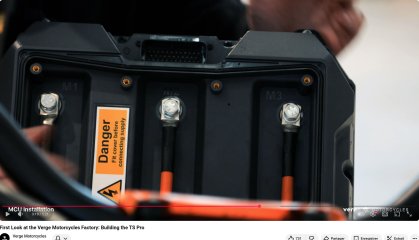
  • motor controller.JPG


2 bearing installed.JPG
20 strands winding.JPGbearing.JPGcooled stator core insertion.JPGferule crimped phases.JPGfully coated motor.JPGhall sensor wires maybe.JPGmanual winding stator.JPGmaybe laminated stator.JPGmotor stator and bearing.JPGmotor stator.JPGNo lamination stator maybe.JPG

regular wound motor stator.JPGrotor side.JPGrotor to stator joining jig.JPGstator.JPG
 
Last edited:
Are there more details about how they realized the mechanical interface between the rotor and stator? The recent donut electric bicycle failed miserably due to that thing. I mean imagine all those rollers inside those large bearings and stuff submerged in a dirty water while you ride over a not so deep puddle. Also the bearings mating surfaces run over each other at significantly higher speed due to significant diameter of the bearings which means higher temperature and accelerated wear and tear. Those large bearings are not even for high RPM applications while the motorcycle wheel spins very fast at highway speed.

 
Last edited:
So as I think as we all expected the only "innovation" here seems to be the possible marketing advantages of a hubless motorcycle although even that seems to really be straying into the gimmick territory. Their claims of incredible power density I think are honestly just based on peak numbers in ideal conditions and with no active cooling they will probably be easily beat by most modern production EV motors.
 
So as I think as we all expected the only "innovation" here seems to be the possible marketing advantages of a hubless motorcycle although even that seems to really be straying into the gimmick territory. Their claims of incredible power density I think are honestly just based on peak numbers in ideal conditions and with no active cooling they will probably be easily beat by most modern production EV motors.
I think too. However the fact that the "hub motor" have no side covers probably really help for the cooling. You can see all teh aluminum cast parallel fins on the inside area which receive alot of wind I guess.. but I hope they made drain holes to the lower portion to not trap water between fins and have a path to the bearing
 
I'm looking at the way he loads that stator into the jig for aligning. It's not a very strong jig. He does it casually without concern for the huge forces that would occur with magnets. I'm not convinced there are any magnets in that motor. Otherwise I'm not sure that assembly guy would have many fingers left.
 

Attachments

  • Screenshot_20260114-224826.png
    Screenshot_20260114-224826.png
    1.6 MB · Views: 13
I'm looking at the way he loads that stator into the jig for aligning. It's not a very strong jig. He does it casually without concern for the huge forces that would occur with magnets. I'm not convinced there are any magnets in that motor. Otherwise I'm not sure that assembly guy would have many fingers left.
That may explain the shape, is this some sort of reluctance or PM-reluctance based motor? If so that does make their power density claims even more interesting because wouldn't those be even harder to accomplish with such a design.
 
That may explain the shape, is this some sort of reluctance or PM-reluctance based motor? If so that does make their power density claims even more interesting because wouldn't those be even harder to accomplish with such a design.
The instantaneous power is extremely high because of the large stator OD. Yes the coils will get hot but in any practical motorbike application i don't think that's important when it's this big and this much cooling... So even with srm it's capable of high power... Just add more voltage as usual...

Is it SRM? Who knows until someone tears it down... It's totally possible that they have a dummy rotor for filming and fitment in the video.
 
I read their supposed solid state battery is a deception and its really capacitors.


The motor looks like a nightmare of finicky fragile expensive thin section bearings. I imagine with their size theyre loose cold and too tight when hot.
 
Last edited:
I think this motor design would be so much better if it was just a DD with a cast rim, with the stator just a little smaller than the rim diameter itself.

You still have water ingress to figure out but you don't have dozens-hundreds of bearings problems.

IE imagine a magic pie but instead of the stator being personal pizza sized, it's more medium sized 😅

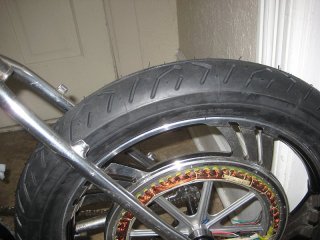
536111_3493915358028_978210530_n.jpg

But you know, they had to do it the hard way
 
HI, I want to know
They have external ring brake with the caliper on the inside diameterView attachment 383276
I would like to understand the cooling system of a donut motor. Based on its aluminum geometry, it appears to be air-cooled rather than liquid-cooled. In hot environments conditions (approximately 48–50 °C),
how is effective cooling achieved for such a motor? What is the typical maximum operating temperature under these conditions, especially for a 150 kW power rating?
Additionally, can this type of motor operate reliably without liquid cooling, or are there design limitations that restrict it to air cooling only?
 
Back
Top