• Hello ES! We could use some help to get us past the finish line on building the new knowledgebase for the forum.
    Can you donate? Please see our fundraising page. Thank you!

LeafBike 1000 watt axel size??

Kayscotts

🔌 New-ish
Joined
Nov 1, 2025
Messages
15
Location
New Jersey, United States
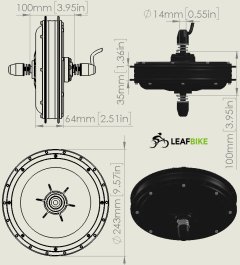
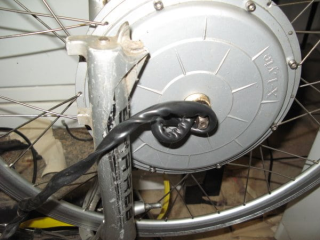
Does anyone know what dropout type/diameter these leafbike 1000 watt hub motors are compatible with? I’ve heard the hub axel is 12 or 14mm with 10mm flats but can’t confirm. The diagram shows 14mm diameter but clearly you can see a step down for the threaded ends, that’s not measured. I have a Gunnar 853 frame coming with 10mm ritchy qr dropouts and am in the process of ordering a suspension corrected steel rigid fork but im really at a loss with this axel size…the rear and front hubs have the same item number strangely enough as well…

Front hub motor: 26 inch 48V 52V 1000W front electric bike motor wheel
Rear hub motor: 26 inch 48V 52V 1000W rear electric bike motor wheel
 

Attachments

  • 085E5B10-242C-4A58-8C22-AFDC0D15EF6C.jpeg
    085E5B10-242C-4A58-8C22-AFDC0D15EF6C.jpeg
    137.9 KB · Views: 7
Last edited:
Depends on the version of the motor. I'd recommend looking at the big leaf motor thread for various versions and builds it's been used on.
 
Depends on the version of the motor. I'd recommend looking at the big leaf motor thread for various versions and builds it's been used on.
Yes I saw that forum, I wasn’t too sure how active it was but will try there if I must. I did reach out to leafbike directly so hopefully they end up being able to get back..
 
Threads don't ahve folders, just pages. There are page numbers at the top and bottom that are links to each page.

If you're looking for the first page, that's where the link I provided takes you. ;)

As for browsers, I'm still using Firefox from...seven or eight years ago ATM, and I have an older computer I sometimes use that has a 12 year old version that still works.

At one time I used opera, probably a decade ago, and that still worked on that laptop half a year ago when I opened it up.

Don't know what browsers might *not* work on it.
 
Threads don't ahve folders, just pages. There are page numbers at the top and bottom that are links to each page.

If you're looking for the first page, that's where the link I provided takes you. ;)

As for browsers, I'm still using Firefox from...seven or eight years ago ATM, and I have an older computer I sometimes use that has a 12 year old version that still works.

At one time I used opera, probably a decade ago, and that still worked on that laptop half a year ago when I opened it up.

Don't know what browsers might *not* work on it.
Sounds good thank you for the direction! It always takes me a while to figure them out.

Edit: what I meant actually was how to get to this part of the directory, if that’s possible?
 

Attachments

  • EBAC02EB-4576-47CF-86EA-F931C501F14B.jpeg
    EBAC02EB-4576-47CF-86EA-F931C501F14B.jpeg
    76.1 KB · Views: 3
The diagram shows 14mm diameter but clearly you can see a step down for the threaded ends, that’s not measured.
Regarding this, the attached image in your post doesn't show any stepdowns smaller than the measure-brackets. If youre' referring to the rubber endcaps they unhelpfully show placed over the axle ends, those don't have any measurements displayed as they aren't relevant to whether it would fit or not. ;)

As far as the actual dropout *width*, across the flatted parts of the axles, that is always approximately 10mm (none are exact, almost all are slightly smaller by some amount, different on each axle flat face pair, amount depending on the individual machinist and equipment used at the time of that specific axle's manufacturing. That is to fit in typical old-standard bicycle dropouts (not applicable to any of the various "modern" axle types on "modern" style frames made this century).

The >10mm dimensions are the height of the threaded portion of the axle, the double-D shaped portion where material has not been removed to create the flatted portion of the axles.

If you aren't sure what I'm describing (if you haven't had a hubmotor with typical axle design in your hands), I'd recommend looking at photos of various axles; the big Torque Arm Picture Thread is a good one to see them from the end of the axle. :)
 
Edit: what I meant actually was how to get to this part of the directory, if that’s possible?
There are no directories. No folders. Just pages. That is simply the thread title, and the person creating the thread used forwardslashes in the title itself to separate the terms commonly used to refer to that manufacturer.
 
There are no directories. No folders. Just pages. That is simply the thread title, and the person creating the thread used forwardslashes in the title itself to separate the terms commonly used to refer to that manufacturer.
Thank you again for you help and explanation above in regards to the op. No I have not ever held a hub motor in my hands. It’s a really great idea though and I’m learning as much I have a chance to! So in other words though All I need are standard 10mm dropouts then it sounds like
 
Yes, as far as the width of the flats.

But the depth of standard dropouts, for a front fork, are also only 10mm. (very old ones may be only 9mm).

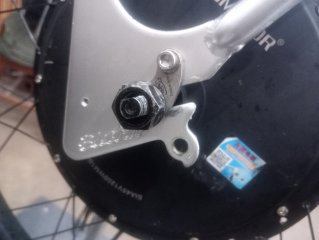
So if you use a hubmotor with flatted axles in there, it won't fully sit in the dropout, and won't be fully supported. It may be necessary to use a round file and file the dropouts deeper by at least half the difference between the threaded axle dimension and the flatted axle dimension, depending on the reason for doing this.

If it is a disc brake wheel, then you want to center the rotor as with a normal wheel so it sits in the caliper correctly. This may leave some of the axle flats unsupported, meaning it is easier for the axle to pry the dropouts apart and the wheel to come out of the fork while riding, which is the most undesirable outcome. :(

If it's rim brake then it doesn't really matter, since the pads and arms have enough adjustment to deal with almost any amount of displacement caused by axle dislocation. So you can file the dropouts deeper by the full amount, to fully support the axle flats, and help minimize the prying issue.

if 14mm vs 10mm, then difference is 4mm, so half is 2mm and is how much deeper the dropouts must be to put the center of the axle where it should be, for disc wheels.


I would strongly reocmmend a pair of good clamping torque arms like the Grin Tech ebikes.ca v7, properly mounted on the fork, to minimize the risks of axle-dropout damage and wheel escape.


Note that filing the dropouts at all increases the risk of dropout failure, as it removes structural material from them. Some are made to just barely support the standard bicycle axle, and have no tolerance for motor torque or modification.*** Properly designed, fitted, and mounted torque arms on both sides are essential to prevent failure in these cases.


***no part of a standard bicycle frame was designed to deal with motor axle-reaction torque; the single exception for this is (rear) dropouts designed for IGHs that transfer torque to the frame via their axles, but even these typically have reaction arms bolted to the frame. Potentially a frame or fork designed for a drum brake hub might have a dropout design to help handle this, but they also almost certainly have a reaction arm bolted to the frame as well.

Almost no electric bicycle frame was designed to deal with motor axle reaction torque either, so those also fail the same way (some of them even easier as they are not infrequently more poorly made to reduce costs).


That said, softer crappier steel (which the really cheap ones are more likely to be made of) is more likely to survive without breaking (just deforming) than various alloys, CF, etc., and usually provides obvious signs of impending doom before it fails, where the others are more typically sudden unwarned catastrophic failures.
 
Thank you for the wealth of information! A lot of this turned up in the research I have done but it’s still a lot to take in and hub motors a new concept to me. The frame I “went with” is a used vintage Gunnar Rockhound with heat treated 853 so I’m hoping if I can properly mount dual torque arms it should be alright for the rear 1000watt. The frame is made for V brakes. For the rigid fork, I am searching for chromoly, again with the intention of dual torque arms. Hopefully this being a safe set up for a front 1000watt (I already have the electrical component list more or less complete on paper, for a dual controller, single battery awd 48v throttle-only setup, with grin cycleanalyst lcd and splitter). I assumed disc brakes would be the way to go for the front but I’m unsure..as far as filing center, this is what I’ve read and it makes logical sense, although as you mentioned the downsides of this, I’m hoping that it ends up working out and not being required..
 
Last edited:
The frame I “went with” is a used vintage Gunnar Rockhound with heat treated 853 so I’m hoping if I can properly mount dual torque arms it should be alright for the rear 1000watt.
If you can't mount torque arms I'd recommend building custom made torque plates that fit your dropout/frame shape to do the same job, that then securely mount to the frame and dropouts. That linked torque arm thread has plenty of design ideas to guide you.


For the rigid fork, I am searching for chromoly,

Just beware that simply being made from a certain material does not guarantee suitability of purpose. ;)

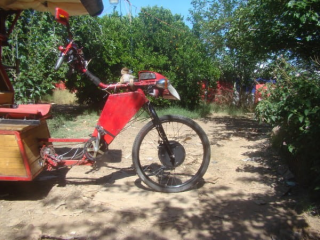
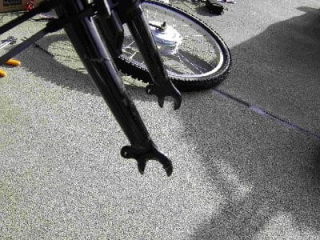
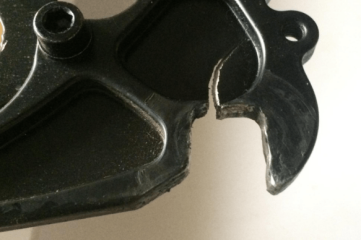
This is a cromoly fork, and appears well-designed, but for my application, it was not, if you look at the before and after images of deformation from braking forces over time.
1762127594765.png 1762127662879.png
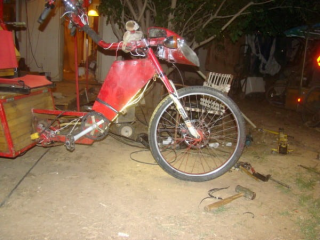
vs what i replaced it with (made from old cromoly bike frame tubing, doubled up inside, a double-crown steerer/clamp set, and the lowers from a really shitty suspension fork welded to the bike tubing mostly just ot give me "instant dropouts" (I later got good dropout plates for a pedicab, but have never gotten them installed to replace those lowers).
1762128077830.png


again with the intention of dual torque arms. Hopefully this being a safe set up for a front 1000watt (I already have the electrical component list more or less complete on paper, for a dual controller, single battery awd 48v throttle-only setup, with grin cycleanalyst lcd and splitter).
As long as the torque arms are properly designed and correctly mounted and correctly (perfectly) fit the axle flats so there is *no* movement/rotation within the arm's axle hole, any power level would work fine up to the point the frame / fork actually fail from rotational stress, which should be quite a lot more than you'd be doing with a 2kw 2wd system. ((I've abused quite a lot of such stuff, and have broken axles on the motors first for things that are properly secured).


I assumed disc brakes would be the way to go for the front but I’m unsure..

Depends on your own bicycle build, riding, and maintenance experience. There are a few "disc vs rim" brakes threads, and plenty of individual posts (or series' of them) within various other threads, that discuss the good and bad of each kind, and of hydraulic vs cable actuated versions of each type, if you want that kind of info.

Just remember that if the brake can lock up the wheel on the riding conditions that you have at that time, that is the most possible braking you can get out of it--at that point the brake no longer matters, only the tire contact patch. This post Fork issues, motor recommendations, and other newbie questions/issues has some info on this; you can find lots more that discuss this part.

The other main thing that matters is modulation--whether you have fine enough control over the braking force to do what you want to do with it for your riding style and conditions.

After that, it's how easy it is to setup and maintain. (at least, these are my priorities).


Until I broke the custom-rebuilt fork I used on SB Cruiser that I'd successfully used for rim brakes on it and the previous CrazyBike2 (both heavy heavy-cargo builds), RBs worked fine for my purposes, using KoolStop brand pads and Avid SD5 arms and levers. The fork I had available after that was disc-only, so I went with the Avid BB7 MTN with 200mm rotor and that has worked perfectly fine on SBC since then, thru several sets of pads, as the only mechanical brake on the trike; still using the Avid SD5 lever, and continued to use even after I build a new better fork.


as far as filing center, this is what I’ve read and it makes logical sense, although as you mentioned the downsides of this, I’m hoping that it ends up working out and not being required..
If the caliper sits completely to the side of the rotor, either behind it or in front of it, parallel to the fork, then it won't be necessary. If the caliper sits above the rotor, it is necessary if you want full pad contact with the rotor (full braking force, proper operation of the caliper, etc). You'll see what I mean when you get it installed and setup.
 
Okay I’ve gone through everything you’ve said and learned a decent bit. I had entirely no idea that this is how the axel bolts fitted to the drop outs. I’m trying to take it step by step but believe I’m at a pretty good starting point. Once I get whatever fork seems likely the best for the job, I’ll evaluate how the torque arms will be mounted. The (I think) custom dropouts in that first image you linked above in this thread, look like a great set up, with the torque arms bolted to the side plate..I think that’s what I’m looking at. Anyway if I can stay away from fabrication though, that would obviously be best. I know I’ve heard clamp on style torque arms are a no-go..? For the brake system however I’m pretty sure I’m going to go with disc mounts mainly just because discs are what I’m used to but you have convinced me that I should do some actual research on the topic. Like I was saying earlier too, this is all really new information to me, I didn’t know what a drop out was even a couple days ago.. so thank kindly for the help guiding me in the right direction! I really like the idea of being able to build something unique and custom to exactly one’s “needs”.
 
The (I think) custom dropouts in that first image you linked above in this thread, look like a great set up, with the torque arms bolted to the side plate..I think that’s what I’m looking at.
Not sure what "first image" you are referring to, but these dropouts:
.jpg

is not custom; neither is the TA, which is an off-the-shelf Grin product-- their torque arms (and other components) are all top quality items. Here is their TA page:
Torque Arms - Grin Products - Product Info

I know I’ve heard clamp on style torque arms are a no-go..?
You seem confused-- clamping TAs are one of the best designs for holding the axle from rotating (the main job of the TA) and securely in location. Many examples of clamping TAs in this thread:


Don't buy cheap junk, insist on good design/ high quality materials and workmanship for this important component:

 
I had entirely no idea that this is how the axel bolts fitted to the drop outs.
There's a lot of pics of various hubmtoors installed in or being test fitted into droputs of vaoroisu shapes, if you do an image search on the web for taht sort of thing, and just wnat to see all the variations. :)


. Once I get whatever fork seems likely the best for the job, I’ll evaluate how the torque arms will be mounted. The (I think) custom dropouts in that first image you linked above in this thread, look like a great set up, with the torque arms bolted to the side plate..I think that’s what I’m looking at.
The dropouts aren't custom, AFAIK, but yes, the arm bolted to them remains fixed in place well, becoming a torque plate instead of an arm.


I know I’ve heard clamp on style torque arms are a no-go..?
I'm not certain what you mean.

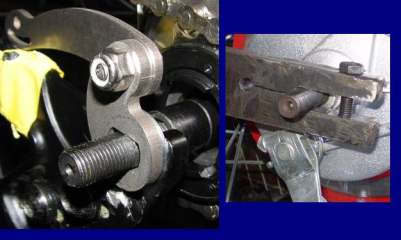
If you mean like this, where there's a hose clamp securing it to the frame:
1762149098070.png
they'll work fine as long as they are not movable, and the clamps are not deformable. As soon as any part moves, it deforms other parts and things move more. If nothing moves, and material limits are not exceeded, nothing deforms and everything stays not moving. :)

If anthing moves, especially the axle itself relative to the arm....
1762150113000.png 1762150193912.png1762150181060.png
and one from me
1762150246134.png
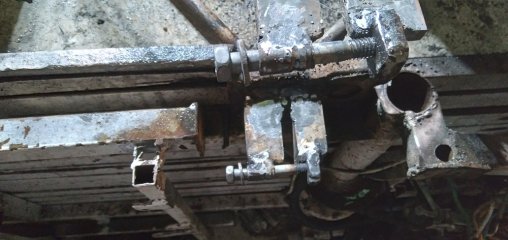
Once, I used a small wrench as the torque arm, and a couple of good old 1980s Ideal brand hose clamps to hold it to the fork, for crazybike2. The wrench itself broke before anything else failed.

But clamping / pinching dropouts, with no need for separate torque arms, are perhaps the most secure you can get with flatted-axle type hubmotors. (there are better motor/axle designs, but not many use them yet, and not all fo them are quite perfected). The pic below sohws a poorly fitting torque arm (taht wouldn't do the necesary job for long if at all) vs a custom-made clamping plate from that torque arm picture thread.
1762149897081.png
my crude but functional version
1 (3).jpg
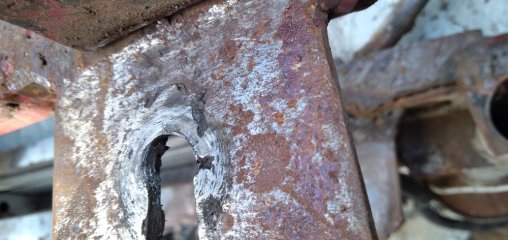
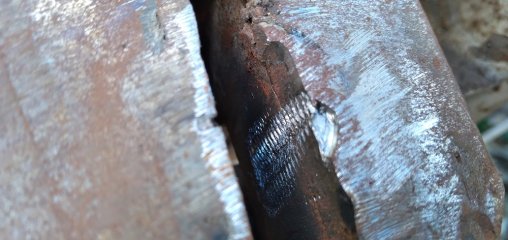
because this happened
1 (2).jpg1.jpg


I really like the idea of being able to build something unique and custom to exactly one’s “needs”.
;) It's certainly fun, but I don't think you've quite gotten to completely custom yet. :p Just wait till you know enough about bikes themselves, and....

I started with regular existing bikes, the most customized one of which was DayGlo Avenger, and worked my way up to SB Cruiser, the trike I posted, which is essentially scratch built other than a few salvaged bicycle parts here and there ;) (even the wheels are built by me from existing rims, hubs, and spokes) and the long bike just uses a few segments of frames with the rest scratch built.
 
And if you buy leaf, please leave a message encouraging the manufacturer to design an axle with a proper torque arm - it's really not that complicated and if enough people complain, maybe someone will listen... I've seen so many designs over the years - literally anything is better than axle flats.
 
Not sure what "first image" you are referring to, but these dropouts:
.jpg

is not custom; neither is the TA, which is an off-the-shelf Grin product-- their torque arms (and other components) are all top quality items.https://ebikes.ca/product-info/grin-products/torque-arms.html
Interesting, Yes thats the picture ..about the torque arms, to clarify I’m referring to hose clamps, (not sure if I’m allowed to post this) Front Hub Motors Dangerous? - Electricbike.com Ebike Forum
I found a good thread here post #9 goes over it. They refer to them as helical gear clamps, and it seems the issues are user end related. My main priority is safety as I don’t necessarily want my children to inherit a death trap so to speak.
 
If you mean like this, where there's a hose clamp securing it to the frame:
View attachment 380010
they'll work fine as long as they are not movable, and the clamps are not deformable. As soon as any part moves, it deforms other parts and things move more. If nothing moves, and material limits are not exceeded, nothing deforms and everything stays not moving. :)
I was reading that many of the issues with the hose clamp are because they are used improperly (over torqued,a fork that is not cylindrical, improperly sized clamp, etc.). I definitely need to do some more brainstorming. In regards to the pinching drop outs, I’m hearing more about them being the way to go. I am inquiring a custom fork from Marinos but not sold yet. I’m not sure how much I trust going with them based on price or if they would be able to do pinched drop outs on special request perhaps. I had two “prototypes” (part lists) on paper that I ended up scrapping. The main issues were both fork related; too small steering tube diameter (old 1” trek) and the other, no suitable fork (pre built moped) I could find that I would feel confident experimenting with. I use the term custom loosely, I more so just am referring to piecing something together rather than buying a complete unit. More and more interests of mine, this is turning out to be the case over the years as my preferences/design priorities become too expensive/less common..
 
Last edited:
And if you buy leaf, please leave a message encouraging the manufacturer to design an axle with a proper torque arm - it's really not that complicated and if enough people complain, maybe someone will listen... I've seen so many designs over the years - literally anything is better than axle flats.
Well now I don’t know if I want to go with leaf, which is good..this is the feedback I’m trying to find. Do you have any suggestions for brands that make suitable 1000 watt 48v hub motors? I really am blindly shopping brands with only somewhat of a sense on who makes “good stuff”. The front and rear wheel configurations are one of my main attractors to leafbike but I am not entirely sure it’s that important or necessary? Safety is my top priority but top speed is definitely a priority as well..I am shooting for at least 35mph level ground top speed..
 
Well now I don’t know if I want to go with leaf, which is good..this is the feedback I’m trying to find. Do you have any suggestions for brands that make suitable 1000 watt 48v hub motors? I really am blindly shopping brands with only somewhat of a sense on who makes “good stuff”. The front and rear wheel configurations are one of my main attractors to leafbike but I am not entirely sure it’s that important or necessary? Safety is my top priority but top speed is definitely a priority as well..I am shooting for at least 35mph level ground top speed..
That advice would apply to the entire industry, not just Leaf. The exception being the motors made by Grin. We all want the industry to evolve, but it ain't happening globally, because the motors still sell. So, if you're going to judge which motor is best based on that alone, then you're limited to the selections made by Grin.
If it were me, I'd get the motor that's best suited for the performance requirements, then deal with the torque arm issue like any other good DIYer would do. It's not like you're building up a 5kW hub motor. I've peaked at 7kW on my 1500W leaf, without the two Grin torque arms budging. I also accidentally left the house for a test ride, forgetting to tighten the axle bolts, and figured it out when I got home. No movement from the axle.
 
I was reading that many of the issues with the hose clamp are because they are used improperly (over torqued,a fork that is not cylindrical, improperly sized clamp, etc.).

Interesting, Yes thats the picture ..about the torque arms, to clarify I’m referring to hose clamps, (not sure if I’m allowed to post this) Front Hub Motors Dangerous? - Electricbike.com Ebike Forum
I found a good thread here post #9 goes over it. They refer to them as helical gear clamps, and it seems the issues are user end related.
Those are some of them.

Other issues are using clamps with improperly made parts or poor materials (none of the harbor freight clamps I have ever had, for instance, have been even sufficiently well made to use for their intended purpose--the slots strip out even before they are tightened on a hose of the diameter they are for, etc. Some of them actually tore across the strap at a slot during tightening on a rubber hose. Some the entire screw-holder assembly simply came off the strap, etc.. Similar failures, with just the intended usage, for other sources of them. the only really great ones I've ever had were by Ideal, made before this century).

Another issue is that most of the torque arm designs intended to use hose clamps to secure them to the frame have sharp corners or edges where the clamp strap passes thru or over them. For many cheap clamp materials this will cause a stress point and it can crack or tear at that point as the arm applies force to it. For strong clamp materials they may remain curved around this point instead of reshaping to it, and so they can allow the arm itself to move a bit underneath.

There are other failure modes that are hard to describe, but you can find images of them.


However, if the fit and the materials are correct, the hose clamped designs work well enough. :)


In regards to the pinching drop outs, I’m hearing more about them being the way to go. I am inquiring a custom fork from Marinos but not sold yet.
From here?
Visually it looks like they do good work, and $80 isn't expensive for a custom built part like that (depending on the options you need for it--they can even add derailer hangers to the fork, for use on things like FWD recumbents or other systems that need a shiftable drivetrain on the front wheel). Shipping costs more than the part, however, more than doubling the price.


I’m not sure how much I trust going with them based on price or if they would be able to do pinched drop outs on special request perhaps.
Unless they have no machining abiliyt and just weld together premade parts, they should be able to do pinched dropouts if you want them. Probably add a lot to the cost.


I had two “prototypes” (part lists) on paper that I ended up scrapping. The main issues were both fork related; too small steering tube diameter (old 1” trek)

I used 1" steerer on cheap crappy forks on CrazyBike2 for years without issue (from either braking or the front hubmotor, even in the Death Races), until I finally got a half-decent suspension fork for it that had a larger steerer. Doesnt mean ti can't be a problem, but it doesn't have to be.


and the other, no suitable fork (pre built moped) I could find that I would feel confident experimenting with. I use the term custom loosely, I more so just am referring to piecing something together rather than buying a complete unit. More and more interests of mine, this is turning out to be the case over the years as my preferences/design priorities become too expensive/less common..
Almost nothing out there in any type of hardware or software actually does what I want the way I want or need it. Software I can't do much about beyond using hte msot customizable stuff I can find that's close...but hardware I can and do customize as much as physically possible, or build it from scratch where I can't find something I can mutate into what I need. :)


My main priority is safety as I don’t necessarily want my children to inherit a death trap so to speak.

:) Well, in my limited experience most kids (of any age) have no interest in their parents' stuff or hobbies, and get rid of the entire mess as soon as possible, so unless yours are exceptions, it's probably not something you have to worry about.

Well now I don’t know if I want to go with leaf, which is good..this is the feedback I’m trying to find. Do you have any suggestions for brands that make suitable 1000 watt 48v hub motors?

Leaf is a good motor (you should read that thread, starting from the end since that's more recent applicable info). Unless you specifically want a different axle / torque arm solution, or have some other specific concern, there's not really any reason not to go with them I can think of.

If you want something with an integrated arm solution that doesn't rely on flatted axles, they can get expensive fast as there are few such options. Ebikes.ca's GAA Grin All Axle is one, there are also geared mtoros like the GMAC, for the expensive end of the spectrum. I don't remember the names of others.


I really am blindly shopping brands with only somewhat of a sense on who makes “good stuff”. The front and rear wheel configurations are one of my main attractors to leafbike but I am not entirely sure it’s that important or necessary? Safety is my top priority but top speed is definitely a priority as well..I am shooting for at least 35mph level ground top speed..
I recommend using hte simulator at ebikes.ca to experiment and find the power / etc requirements for a 2WD system that does what you want on the terrain / riding conditions you have. Doing this will also give you data you can base the capacity of your battery on to give you the range you want under those conditions.


And if you buy leaf, please leave a message encouraging the manufacturer to design an axle with a proper torque arm - it's really not that complicated and if enough people complain, maybe someone will listen... I've seen so many designs over the years - literally anything is better than axle flats.

That is true--it would be great if more hubmotor makers could be prompted to begin using integrated arm designs. It would cause more designs to be created and that could lead via experimentation to even better ones.
 
Well now I don’t know if I want to go with leaf, which is good..this is the feedback I’m trying to find. Do you have any suggestions for brands that make suitable 1000 watt 48v hub motors? I really am blindly shopping brands with only somewhat of a sense on who makes “good stuff”. The front and rear wheel configurations are one of my main attractors to leafbike but I am not entirely sure it’s that important or necessary? Safety is my top priority but top speed is definitely a priority as well..I am shooting for at least 35mph level ground top speed..
Hmm, if you're us based it's going to be tough. Here in europe you can get used neodrives/go swissdrives for reasonable money or heinzmann, they all have pretty good torque arms. If you'e buying chinese, I know that leisheng makes motors with good torque arm mountings (though no good torque arms), and if you can get a tdcm, those are also really good. Of course there is the GAA with its paramount ta, but it's super expensive. For that price I buy 4 to 5 motors. Oh and don't forget old bionx or cristalytes. So you see: there are some options after all :) Chinese hub motor manufacturers are quite innovation-shy (dunno why!?!), but I do think that we are going to see more and more hub motors with dedicated torque arms in the future.
 
Hmm, if you're us based it's going to be tough. Here in europe you can get used neodrives/go swissdrives for reasonable money or heinzmann, they all have pretty good torque arms. If you'e buying chinese, I know that leisheng makes motors with good torque arm mountings (though no good torque arms), and if you can get a tdcm, those are also really good. Of course there is the GAA with its paramount ta, but it's super expensive. For that price I buy 4 to 5 motors. Oh and don't forget old bionx or cristalytes. So you see: there are some options after all :) Chinese hub motor manufacturers are quite innovation-shy (dunno why!?!), but I do think that we are going to see more and more hub motors with dedicated torque arms in the future.
That's a good list. Which one would be best suited for the OP?
 
Back
Top