• Hello ES! We could use some help to get us past the finish line on building the new knowledgebase for the forum.
    Can you donate? Please see our fundraising page. Thank you!

Looking for fastest low power hub motor.

Hummina Shadeeba

🏍️ Giga poster
Joined
Apr 25, 2014
Messages
3,333
Location
Sausalito
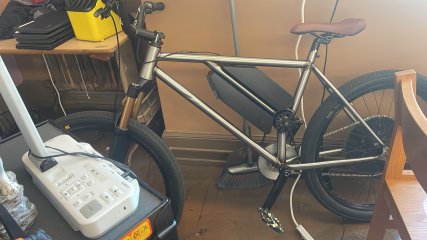
I just bought a used motoped. I always wanted this rare bike and the design is great with the hub motor mounted mid-frame and a double gear reduction, but I now realize as it’s designed its only a 2:1 reduction, so going to change from chain to pulleys and shoot for maybe a 6:1 reduction and looking for advice on what smaller hub motor would be a good fit.

An ideal motor will have a kv that gets maybe 50mph top speed with a 6:1 and 84v full charge, so a very fast hub motor which doesn’t seem available. Or is there an unwound hub motor available I could wind myself? I’m also worried about possible high eddy currents from so many magnet poles or even mechanical destruction from the high rpms. I have some stators I could use that are an ideal size but have so many teeth I fear eddy meltdown. On the other end of the spectrum I have this similar bike I made using a 83100 motor that only has 12 teeth and 14 magnets which is very few for such a large diameter, and even with multiple attempts of locking the bearings to the shaft with every type of retaining fluid and even center-punching the shaft last time.. they all still have horrendous vibrations at a low rpm from the slight play between shaft and bearings coupled with the large unbalanced magnetic forces of so few poles.

U can see in the pic the gearing from motor to jackshaft is actually a gear INCREASE and not a reduction. So backwards


I’ll be replacing the motor-mount plates to bring the smaller motor further back for more battery room so the axle size could be whatever and need not even be a true bicycle hub motor.
 

Attachments

  • IMG_5467.jpeg
    IMG_5467.jpeg
    2 MB · Views: 32
  • IMG_5466.jpeg
    IMG_5466.jpeg
    1.9 MB · Views: 30
  • 13EE3DC3-1770-4342-AF55-4CCEB9225D66.jpeg
    13EE3DC3-1770-4342-AF55-4CCEB9225D66.jpeg
    1 MB · Views: 32
  • IMG_3509.jpeg
    IMG_3509.jpeg
    3.6 MB · Views: 25
Last edited:
if you want to just use a hub in the wheel:

9c clone type motors hit peak efficiency and power output in a 20"-22" wheel actually and are subpar for larger wheels, yet companies keep reproducing that design instead of going to more poles/taller

leafbike 30mm 4T would probably = a pretty good time, don't expect it to do 50mph continuously though, you want a bigger DD

Few geared motors are ideal for small motors like these, you want to look for a lower reduction ratio than usual and lower pole count than usual. But i can't think of a single one that will do 50mph sustained. That's 3000w cont.

Otherwise in the jackshaft you probably want more like 1:1
 
Otherwise in the jackshaft you probably want more like 1:1
But that would be a waste of the jackshaft and my goal to spin light motors fast

Looking at my other bike with the 10:1 ratio I can get huge flipping torque from
0-20. If it was a 2:1 ratio it would be awful acceleration. I want to do the same with this bike. Get most torque in smallest motor. Spin it fast!

im not sure if i have the grin simulator working right and dont know what to think and dont know what im doing, but a mxus turbo strangely has 50 or 51 teeth, and it doesn’t show too inefficient at 200mph. I don’t think. But really I want it at 10:1 again and can’t think of a reason not to. Anyone? @liveforphysics.

Not that I want to spin the mxus motor 400 mph.


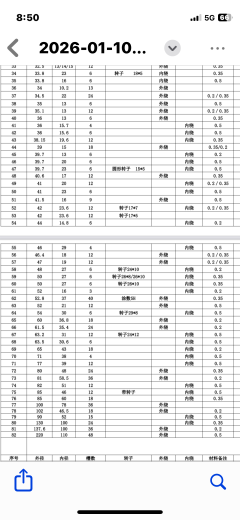
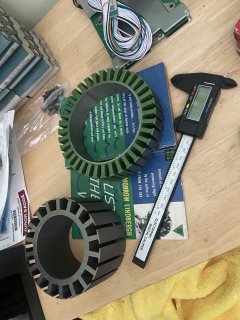
I have some stators that are 100mm diameter. I believe they would produce 1/4 the max torque of a 200mm diameter stator. They have 36 teeth. Or I could get this 136mm stator also with 36t. I think both are .2mm lams.
 

Attachments

  • IMG_5485.jpeg
    IMG_5485.jpeg
    1.4 MB · Views: 5
  • IMG_5484.jpeg
    IMG_5484.jpeg
    1.7 MB · Views: 5
  • IMG_5488.jpeg
    IMG_5488.jpeg
    1.7 MB · Views: 5
  • IMG_5496.jpeg
    IMG_5496.jpeg
    1.7 MB · Views: 6
  • IMG_5504.jpeg
    IMG_5504.jpeg
    2.1 MB · Views: 6
  • IMG_5506.png
    IMG_5506.png
    618.3 KB · Views: 6
10:1?
A hub motor is completely wrong for the task then.
You start losing efficiency/power in a 9C hub below a 20" wheel.
Geared motor will be super inefficient and cannot shed the heat generated from the additional watts; gears also aren't up to the task.

You're looking for a large, low KV RC motor with thinner than average laminations and a fairly low pole count.
I'd suggest a scooter motor ( typically designed for 2-3x the rpm ) but i doubt any would fit into that dropout, and you still may run up against eddy currents.

9C type motors have 23 or 26 poles i believe.
 
Geared motor
Definitely not doing geared

9C type motors
but still the same 205mm diameter with its same problem of being unnecessarily big and the torque output even with 2:1 would be more than enough. 54 magnets. It’s an overkill size motor and takes space from the battery (I’ll make shorter mounting plates and keep the smaller motor towards the back)


But as I say I’m going to glue two of these 100x50mm stators together n make a 100x100 and half the max torque possible of the common 205mm hubs.

I think 3700rpm could be way too much, no? That’s only a 6:1. Have to try on grin calculator but don’t know if immdoing it right. But don’t remember a magnet amount input in the simulator which is needed. Or maybe it’s assuming based on typical switching increasing with diameter. But it’s not doing diameter

Especially with controllers being able to do some huge amount of switching it seems appropriate to get the speed up there
 

Attachments

  • IMG_5508.png
    IMG_5508.png
    588.7 KB · Views: 1
Last edited:
36 teeth = 18 poles, yeah?
That's too many for 10:1 and very high RPMs
Unless it has super thin laminations ( below 0.35mm ) to reduce the eddy currents.

Bike chain will be unbearably loud at such high RPMs and you need something more like go kart chain.

I wouldn't do more than 3:1 with a DD hub motor made for a larger wheel.
But even at that reduction ratio you might not be able to get a turn count that's low enough, so you have to make up for it with super high voltage to get the RPMs you need.

I don't know anything about your homemade motor, but in the thousands of RPMs, you want a very well balanced rotor.

An low KV, low pole count RC motor would be the most ideal motor for this.
 
36 magnet pole pairs? It would be like 38 magnets in total n 19 pairs.

If ur good at running the grin simulator could u see how 3700rpm fares for me and tell me what u know? I know the concepts but not practical


But even at that reduction ratio you might not be able to get a turn count that's low enough, so you have to make up for it with super high voltage to get the RPMs you need.
That’s maybe another practical limit to high rpm I hadn’t thought of. Doing a 1t motor with as many strands in parallel as possible sounds easy to get great fill and easy to wind and maybe I’ll start there and decide the gearing based on the results
 
Last edited:
36 teeth = 18 poles, yeah?
That's too many for 10:1 and very high RPMs
Unless it has super thin laminations ( below 0.35mm ) to reduce the eddy currents.

Bike chain will be unbearably loud at such high RPMs and you need something more like go kart chain.

I wouldn't do more than 3:1 with a DD hub motor made for a larger wheel.
But even at that reduction ratio you might not be able to get a turn count that's low enough, so you have to make up for it with super high voltage to get the RPMs you need.

I don't know anything about your homemade motor, but in the thousands of RPMs, you want a very well balanced rotor.

A low KV, low pole count RC motor would be the most ideal motor for this.
If I could find an already built motor that would be good but all the outrunners aren’t designed with two stationary shafts. I could push the shaft through the rotor and sit on some kind of bearing pillow but it’s not ideal especially with the rotor not being supported on both sides or with a wide thin wall bearing, which I detest.


At this point I reality just want to confirm a couple things:

magnet gap diameter 2x wider is 4x the torque potential


A 36t stator with maybe 38 magnets can do 3700 rpm. (Very inefficient? Fly apart? Too many poles to get high kv?)
 
Last edited:
I see, the hub is part of the pedal drive transmission too.

Well if you attempt to use a hub, the thinner the laminations, the less poles, the better. Both these factors reduce iron losses and are part of high RPM design for a reason.

You will discover the true meaning of iron losses with a 10:1 and the motor will heat up and consume way more power than you expect.
But since you can't find an appropriately wound hub motor, you also need 100's of volts to get it to spin that fast.
You will also have an enormously loud chain since you are using bike chain.

In short this is a very bad idea and you will be pretty unhappy with the result if you continue to push through.

I would stop at 3:1, and even still, you'll struggle to find the right winding.
For example you can get a 3T motor and it will do something crazy like 30mph on 36v in a 20" wheel.
But since we have 3:1, that figure is now 10mph.
Double the voltage to 72v and we have 20mph.

I've never seen a hub motor maker produce a 1T or 2T winding. That's what you would need. Or a hundreds of volts battery.
 
Last edited:
This battery in a steel frame box literally is hanging by its threads. Unbelievable and it looks stock.

the top tube being ..a tube is annoying for trying to mount a stable battery, hanging. I guess that’s kinda the appeal esthetically w this. Not so practical. I’m thinking I should get some kind of rectangular support frame I can weld on.

I’m going to look for a fewer teeth stator. The other bike with the 10:1 gearing is 70mm diameter and 12 teeth.
 

Attachments

  • image.jpg
    image.jpg
    2.3 MB · Views: 5
  • image.jpg
    image.jpg
    1.9 MB · Views: 5
Last edited:
considering this motor is doing thousands of rpm I feel better about using the stators I have but looking into getting this stator and freerchobby will sell stators


Looks like 26 teeth.
 
Last edited:
RC motors usually have 4-12 poles. You're getting closer ;)
Not going to find a 12 tooth stator over 70mm diameter. They get problems with unbalanced magnetic forces going bigger it seems. Ive experienced problems with the 70mm diameter ones I use and they’re impossible to lock to the shaft and vibrations.

Considering paraglider motors are rated for thousands of rpm and have a lot of teeth the iron losses don’t seem a big deal. I’m hoping to get a stator from one of the fewer teethed ones in 120mm diameter
 
Last edited:
Actually I’m seeing some big stators available with few teeth. #78 is a freak with 102mm diameter and 18 teeth.

What are the reasons to go with many teeth vs few? My understanding is there’s not more torque with many teeth and the benefits are thinner magnets and less steel can be used and therefore cheaper, lighter, and greater precision or smoothness. Anything else?


but as I say the paraglider motors do many thousands of rpm and have 36 or more teeth and thinking will use those stators or the 100mm with 36teeth I already have.

I’m doing belts

Will give some slots and scoops to the rotor for air flow
 

Attachments

  • IMG_5533.png
    IMG_5533.png
    330.1 KB · Views: 1
Last edited:
For every switch of the poles as the stator/rotor spins, there is a small amount of energy loss. The thickness of the laminations will affect this loss ( the thinner, the better ), and so will the pole count.

Most motor manufacturers do no not state the lamination thickness. It's safe to assume they are using 0.35mm, but you want closer to 0.20mm for ideal efficiency/power output at thousands of RPM.

Therefore the safe bet is to try to get a low pole count motor to minimize this.
 
For every switch of the poles as the stator/rotor spins, there is a small amount of energy loss. The thickness of the laminations will affect this loss ( the thinner, the better ), and so will the pole count.

Most motor manufacturers do no not state the lamination thickness. It's safe to assume they are using 0.35mm, but you want closer to 0.20mm for ideal efficiency/power output at thousands of RPM.

Therefore the safe bet is to try to get a low pole count motor to minimize this.
I know what eddies and hysteresis are. Eddies a loss with an exponential relationship to rpm and hysteresis linearly. I’m wondering why it would be worth increasing these iron/switching losses with more teeth other than the reasons I listed
 
Last edited:
I’m selling one of these and could order parts for a second motor too

 
Opted for this 36 tooth stator from AliExpress. 138x30 with .2mm laminations


After finding all my stators have roughly between .4 and .8 ohms and being told they would be essentially induction ovens, and reading there’s very high resistance that’s needed for stators to pass some standards I can’t remember.. I’m realizing both that the stators we use all have resistance numbers similar to mine and that’s ok because the eddies produced are from very low voltages and result in very little eddy current. It’s not ideal and I wonder just how much better a no-load current draw would be with a stator that has truly isolated lams.


(The pics..if they finally post (my phone is crap))
Using the bigger diameter stator that’s already coated in green epoxy. The other one is for sale and also .2mm and a freak with few teeth but relatively large diameter. Will only do a 7:1 gear ratio to avoid needing a giant rear pulley which could produce horrendous sag and reverse sag from throttle and regen braking. The erpms won’t be so high and eddies won’t be so bad.


The custom crystalline hub motor that comes on these is ridiculously big n heavy. What I replace it with will be much lighter and much more open for cooling. Someday
 
Last edited:
Stator comes in thickness options.

Won’t fit as much wire but I’m going to add long radiating fan blades and scoops in the center using glued-on 3d prints
 

Attachments

  • IMG_6101.jpeg
    IMG_6101.jpeg
    1.9 MB · Views: 4
  • IMG_6092.png
    IMG_6092.png
    2.1 MB · Views: 4
Last edited:
Tell me if I’m wrong but i see this bike as the most powerful light bike available. The tragedy is both the ES forum members and myself didn’t bat an eye as I just planned to handicap it with a small motor. I changed my mind and getting the 50mm wide. (They said don’t bother returning it n just pay 100$ for the new and I can keep the old. This seems a common response and I now have these two stators in the pic they say don’t bother to return).

This bike could fit much wider stator and be the race winner I describe but 50 is good enough for me. I can’t believe they sold this bike with a 2:1 gearing and a huge hub motor when they could’ve even kept the rear sprocket small and made the first speed reduction bigger and at least gotten to about 4:1. The first reduction ratio is limited based on what sprocket would not hit the swingarm but there’s more room.


If only could fit a much bigger sprocket here.
 

Attachments

  • image.jpg
    image.jpg
    1.8 MB · Views: 2
I know what eddies and hysteresis are. Eddies a loss with an exponential relationship to rpm and hysteresis linearly. I’m wondering why it would be worth increasing these iron/switching losses with more teeth other than the reasons I listed

More torque and less cogging at low rpm. But that's at the expense of high RPM capability, although if you're using 0.2mm laminations, you're negating that quite a bit ( i don't know by how much )

I have a motor with 0.2 or 0.27mm laminations and it has godlike efficiency at high RPM despite a pretty high pole count, so yours might be the same. Make sure those windings are super tight :)

I'm skeptical that glued 3d printed things could survive in a motor due to lots of vibration inside, you might want metal instead.
 
More torque and less cogging at low rpm. But that's at the expense of high RPM capability, although if you're using 0.2mm laminations, you're negating that quite a bit ( i don't know by how much )

I have a motor with 0.2 or 0.27mm laminations and it has godlike efficiency at high RPM despite a pretty high pole count, so yours might be the same. Make sure those windings are super tight :)

I'm skeptical that glued 3d printed things could survive in a motor due to lots of vibration inside, you might want metal instead.
I’d do the printed scoops on the outside at center


I’ll be vacuuming resin into the windings and baking
 
Last edited:
Back
Top