to7motor@SZ
🔋 Established
Hi everyone,
Over the past two years, we've gained valuable insights from conversations across Reddit and Endless Sphere. While many riders have shared positive experiences, others have raised thoughtful questions or concerns about long-term reliability. We take all of that feedback seriously, and we believe the best response isn't just words, but actual, real proof. That's why we want to show you exactly how every DM motor is rigorously tested before it ever leaves our factory.
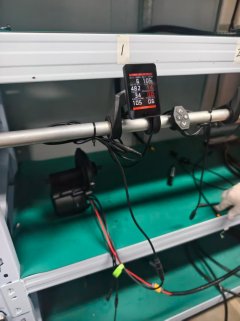
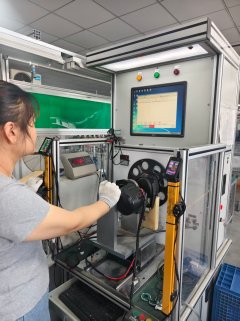
Instead of just saying "every unit is tested," here is a look at what actually happens on our bench for every single DM motor before it ships.
We test every DM motor individually.
We don’t rely on batch sampling. Each production motor is hooked up to a test bench before it’s packed.
The goal is straightforward: make sure the motor, controller, sensors, and communication system all work together properly before anyone installs it.
1. Electrical Safety Check
Before we apply power, we run basic electrical checks:
2. Controller Functional Test
Then we power up the controller and verify:
3. Torque Sensor Calibration
The torque sensor has a big impact on how the bike actually feels to ride.
Because the torque sensor determines how natural the bike feels to ride, it's one of the last systems we calibrate before final inspection. We check:
4. Dynamic Motor Run Test
During production testing, the motor is operated through multiple speed and load conditions to verify consistent behavior before shipment.
We monitor:
5. Acoustic & Mechanical Vibration Check
Small changes in bearing preload or gear meshing often appear as sound before they appear as measurable performance problems. That's why every motor is listened to as well as measured during testing.
6. Communication Verification
E-bike systems rely on smooth communication between components.
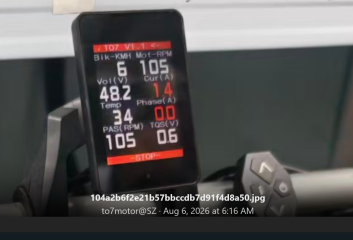
Before shipping, we test the motor with supported displays to confirm:
Right before packaging, each motor gets a visual once-over:
Why Factory Testing Is Just the First Step
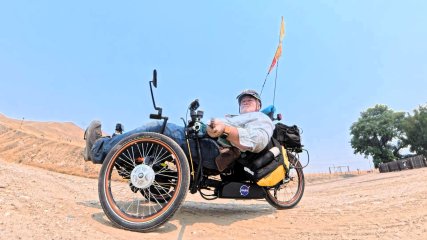
Bench testing guarantees that every motor leaves our facility in peak condition. But controlled bench conditions aren't the trails, rain, or heavy daily commutes our riders put these motors through.
Real-world riding introduces variables that no test bench can fully replicate. That's why post-launch feedback from builders, dealers, and riders is a direct input into our production line. Some of the improvements we've introduced over the past two years came directly from field feedback rather than laboratory testing.
We’re Still Working to Get Better
Like every engineering company, we're continuously learning and improving. As riders, dealers, and builders share their experiences, we keep refining our products, our processes, and our tests.
Sometimes improvements come in hardware. Sometimes in firmware.
If you've found something we can improve, we'd like to hear it. Some of the changes we've made over the past two years came directly from rider feedback.
If you’re riding a TOSEVEN DM motor, we really want to know what you think. Good or bad, feedback helps us build better products.
And if you’re curious about any part of our testing process, just leave us your comments,we’re happy to get into the details.
Over the past two years, we've gained valuable insights from conversations across Reddit and Endless Sphere. While many riders have shared positive experiences, others have raised thoughtful questions or concerns about long-term reliability. We take all of that feedback seriously, and we believe the best response isn't just words, but actual, real proof. That's why we want to show you exactly how every DM motor is rigorously tested before it ever leaves our factory.
Instead of just saying "every unit is tested," here is a look at what actually happens on our bench for every single DM motor before it ships.
We test every DM motor individually.
We don’t rely on batch sampling. Each production motor is hooked up to a test bench before it’s packed.
The goal is straightforward: make sure the motor, controller, sensors, and communication system all work together properly before anyone installs it.
1. Electrical Safety Check
Before we apply power, we run basic electrical checks:
- Connector integrity
- Wiring continuity
- Power circuit condition
- Internal communication between controller and sensors
2. Controller Functional Test
Then we power up the controller and verify:
- Startup behavior
- Hall sensor feedback
- Rotor position detection
- Phase switching
- Internal communication
3. Torque Sensor Calibration
The torque sensor has a big impact on how the bike actually feels to ride.
Because the torque sensor determines how natural the bike feels to ride, it's one of the last systems we calibrate before final inspection. We check:
- Zero torque value is correct
- Sensor output is stable
- Signal changes smoothly under load
- No abnormal drift or fluctuation
4. Dynamic Motor Run Test
During production testing, the motor is operated through multiple speed and load conditions to verify consistent behavior before shipment.
We monitor:
- Rotation
- Speed response
- Current draw
- Phase balance
- Controller behavior
5. Acoustic & Mechanical Vibration Check
Small changes in bearing preload or gear meshing often appear as sound before they appear as measurable performance problems. That's why every motor is listened to as well as measured during testing.
6. Communication Verification
E-bike systems rely on smooth communication between components.
Before shipping, we test the motor with supported displays to confirm:
- Startup works normally
- Parameters transmit correctly
- Errors report as expected
- Assist operation responds properly
Right before packaging, each motor gets a visual once-over:
- Housing condition
- Fasteners
- Labels
- Connector protection
- Waterproof seals
- Packaging completeness
Why Factory Testing Is Just the First Step
Bench testing guarantees that every motor leaves our facility in peak condition. But controlled bench conditions aren't the trails, rain, or heavy daily commutes our riders put these motors through.
Real-world riding introduces variables that no test bench can fully replicate. That's why post-launch feedback from builders, dealers, and riders is a direct input into our production line. Some of the improvements we've introduced over the past two years came directly from field feedback rather than laboratory testing.
We’re Still Working to Get Better
Like every engineering company, we're continuously learning and improving. As riders, dealers, and builders share their experiences, we keep refining our products, our processes, and our tests.
Sometimes improvements come in hardware. Sometimes in firmware.
If you've found something we can improve, we'd like to hear it. Some of the changes we've made over the past two years came directly from rider feedback.
If you’re riding a TOSEVEN DM motor, we really want to know what you think. Good or bad, feedback helps us build better products.
And if you’re curious about any part of our testing process, just leave us your comments,we’re happy to get into the details.