• Hello ES! We could use some help to get us past the finish line on building the new knowledgebase for the forum.
    Can you donate? Please see our fundraising page. Thank you!

Neu 8057 6kW left hand drive hardtail with vesc and encoder

[youtube]_eJ-COu0IkY[/youtube]

First proper video from the gopro I bought on boxing day. The ride itself isn't that interesting. Towards the end I climb a hill at 65kph which was fun.
 
Impressive, how is the throttle modulation and control? Top speed? What are you thoughts so far? Are you freewheeling or direct drive? What are you running for a display?
 
evolutiongts said:
Impressive, how is the throttle modulation and control? Top speed? What are you thoughts so far? Are you freewheeling or direct drive? What are you running for a display?

It is direct to rear wheel with no freewheel. I'm using regen. Display is CA.

At the moment it is geared really high. Top speed without fw is 90 kph.

Throttle control and smoothness is excellent. Even at extremely low duty and current the controller still seems to track the rotor very well in sensorless. So well that I'm wondering if bemf is used for rotor position at very low speeds while the motor is being driven. Maybe the current sensing is just very accurate and clean.
 
evolutiongts said:
Are you running sensors or purely just sensorless?

No sensors. I've been considering emulating the halls with the encoder but I need to make it a bit more rugged and sealed against crap from the chain.
 
evolutiongts said:
Are you able to get smooth startup from a stop while running sensorless?
It starts smooth enough and reliably. Main downside is that the startup routine takes up around a third of a second during which the motor is unresponsive to brake or throttle input.
 
Sensorless parameters are:

Starting current: 180A (I'm sure the full current is not used)
Open loop injection current ramp time: 60ms
Closed loop enable frequency: 16hz
Open loop frequency ramp time: 250ms
Open loop dc current hold time: 15ms

Current is quite high to make sure it starts reliably even on an incline or off road. Set up like this it enters closed loop quickly. On my 8 pole pair motor the back wheel rotates around one eight of a revolution in open loop, maybe less. Since the motor runs at a much higher erpm than a dd hub the controller should be able to enter closed loop at a lower speed.
 
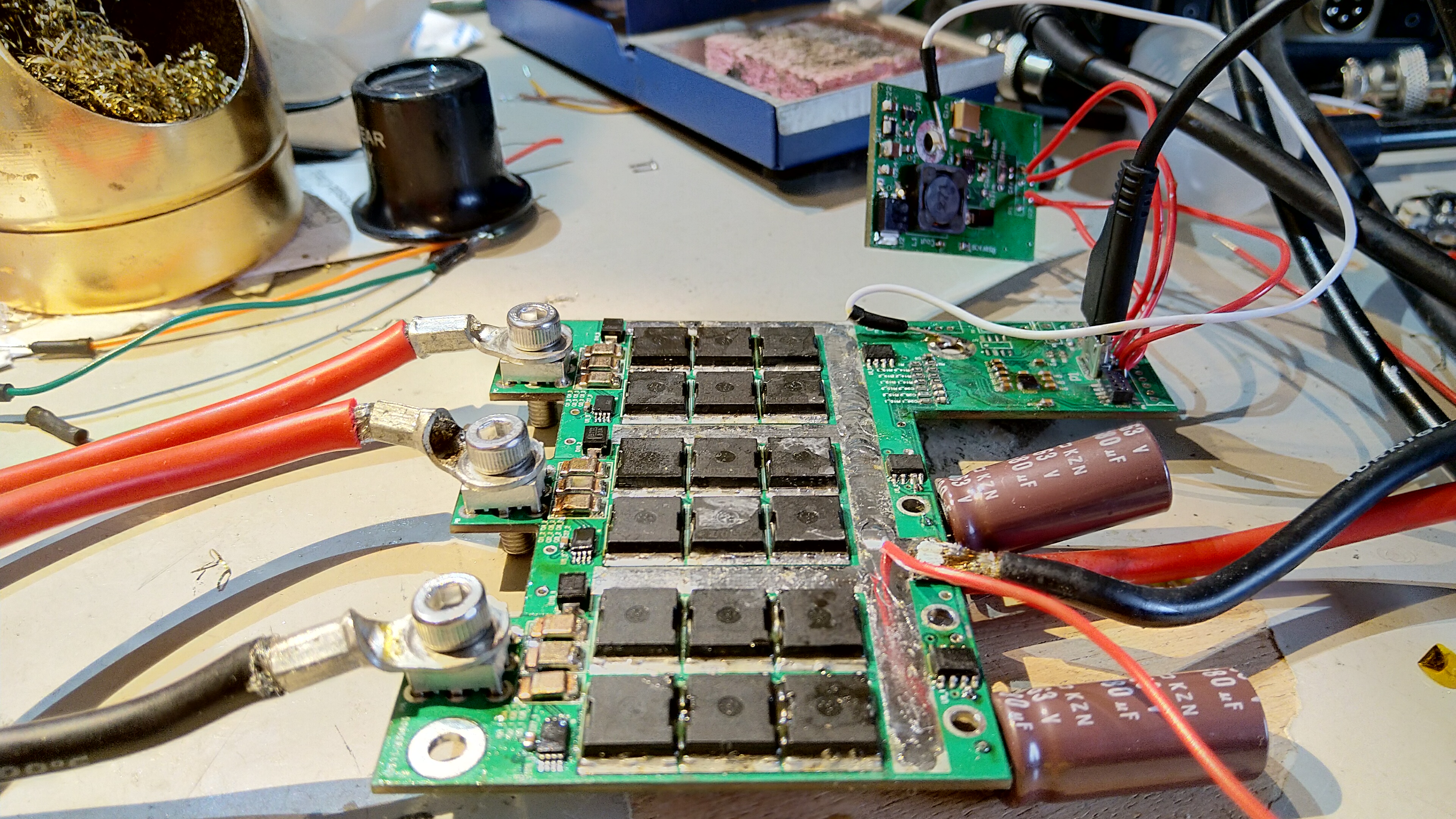
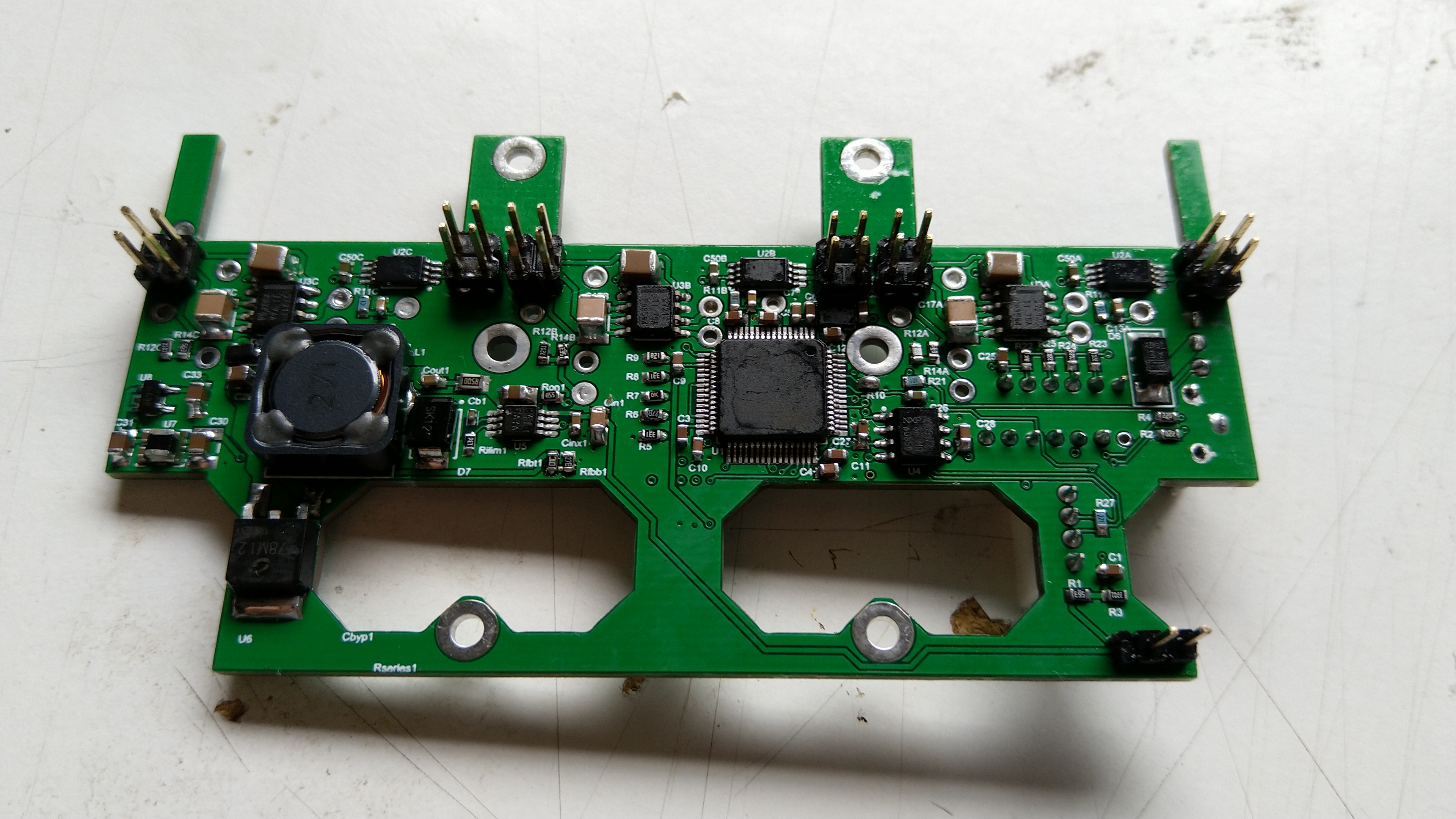
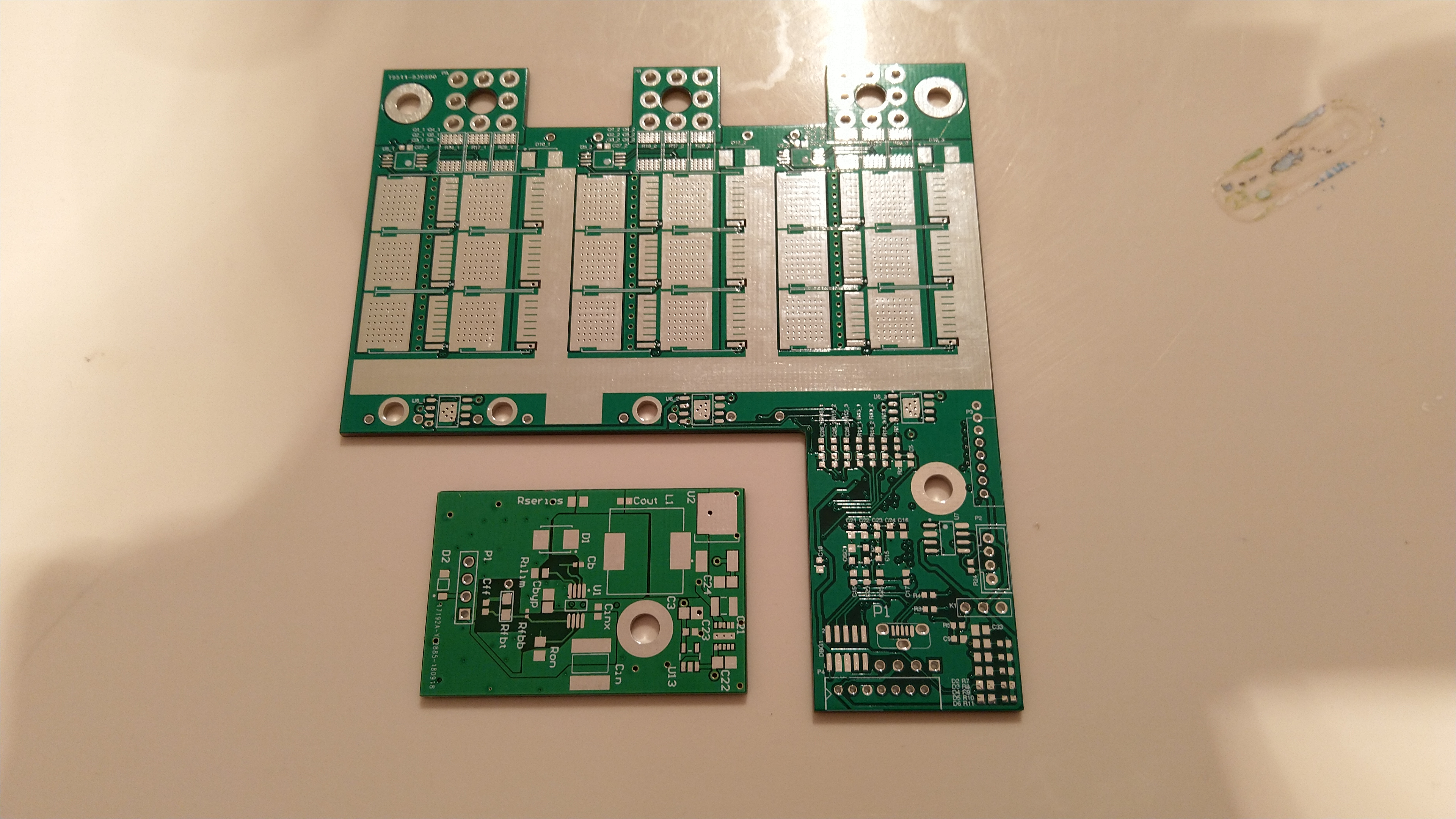
I'm going to start rebuilding the vesc quite soon. Have the pcbs for the new version and am ordering the parts now.

JDg9VGX.jpg


I also realised the encoder has ABI incremental outputs. Since they only need to be used for startup the quadrature signals will only be a few khz before transitioning to sensorless. Latency is still low as they are on interrupts. Much better than the 4mhz or whatever the spi was running at.
 
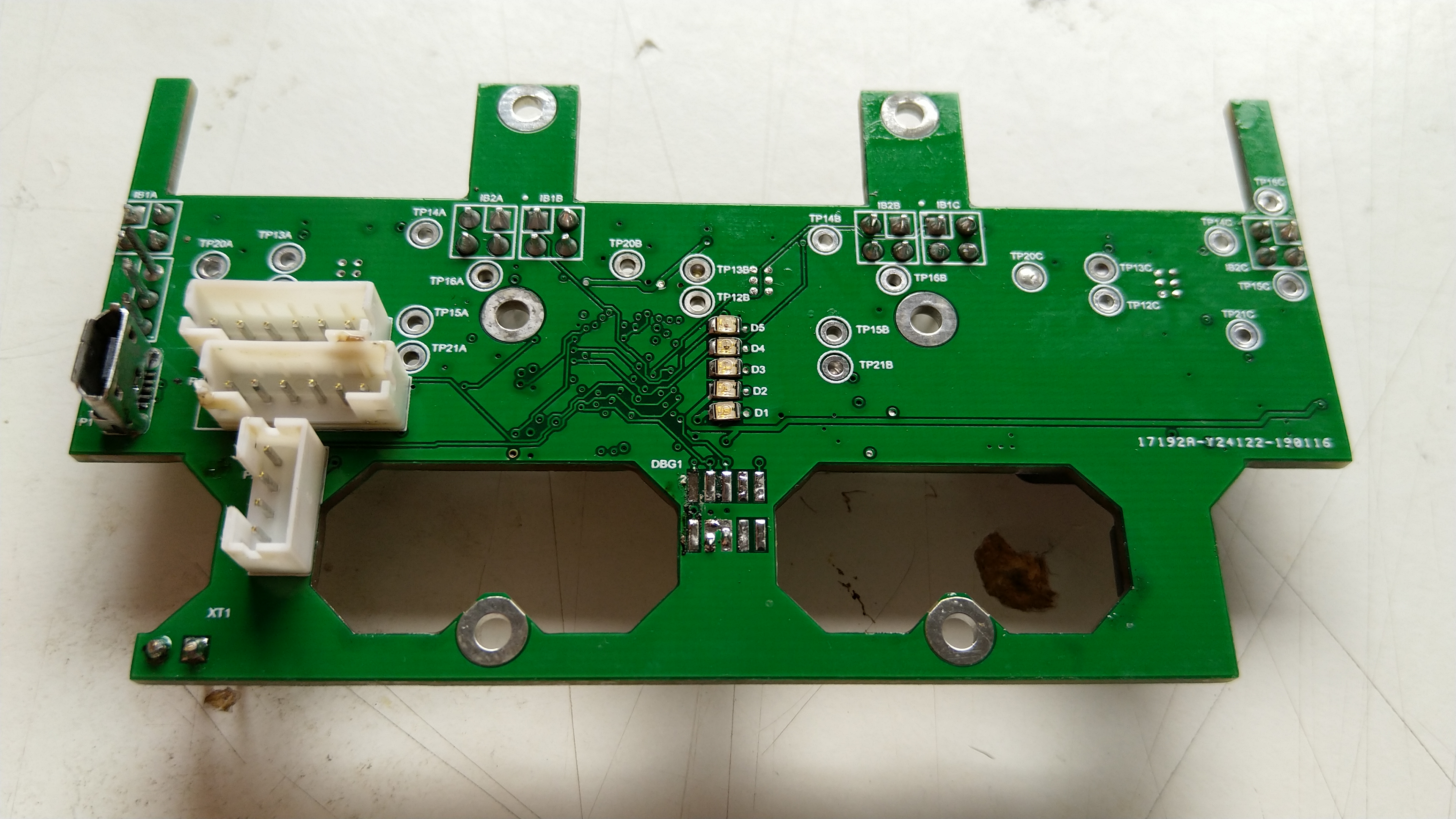
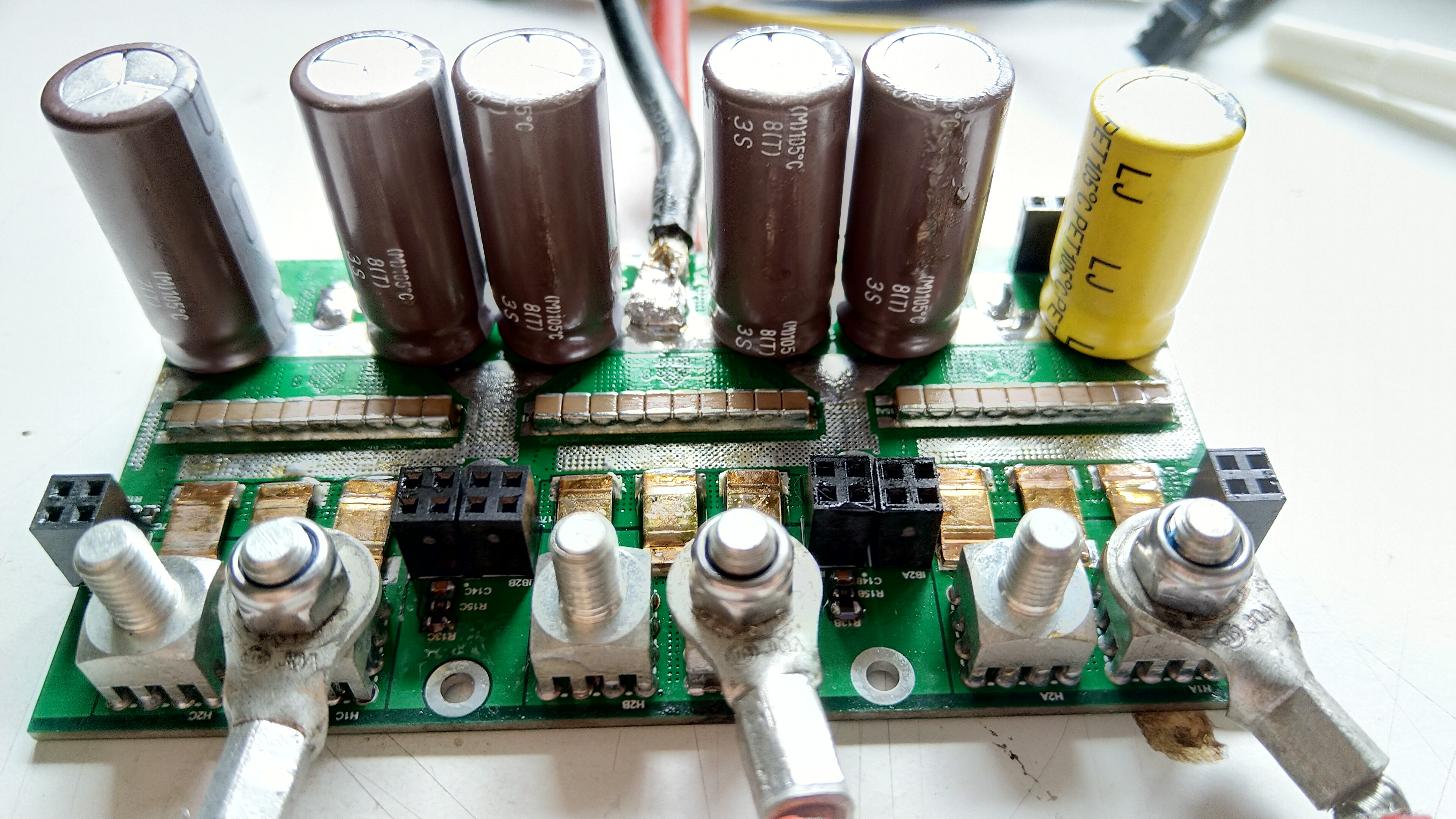
The new vesc is mostly soldered and tests good. Had a hiccup initially where the motor would just twitch with current readings all over the place. Turned out to be one current sensor which had a stuck output. All good after replacement.

AfLSEba.jpg


NSMnp5n.jpg
 
evolutiongts said:
How does the VESC compare to the ASI BAC4000? What is the max voltage supported by the VESC?

The asi controller can push much higher phase currents. Not just because it is rated for more but also because it is less affected by the change in motor parameters as the stator begins to saturate. At higher currents this can cause the vesc to lose track of the rotor in sensorless mode.
 
district9prawn said:
The asi controller can push much higher phase currents. Not just because it is rated for more but also because it is less affected by the change in motor parameters as the stator begins to saturate. At higher currents this can cause the vesc to lose track of the rotor in sensorless mode.
Wouldn't it be possible to program the VESC so that it always uses hall or resovler signal for tracking the rotor position?
Hmm, i have asked Neumotor about maximum torque of the 8057 (or maximum current before it saturates), but i never got an answer.
 
madin88 said:
Wouldn't it be possible to program the VESC so that it always uses hall or resovler signal for tracking the rotor position?
Hmm, i have asked Neumotor about maximum torque of the 8057 (or maximum current before it saturates), but i never got an answer.

Yes using sensors at higher rpm fixes it. I don't want to use the encoder over the entire rpm range as sensorless is a bit more efficient at high speed. And at high speeds the currents are not high enough to saturate.

The vesc actually has a setting to compensate for stator saturation but it is quite crude as is just scales the compensation factor linearly based on the phase current. Apparently Vedder is working on getting the initial parameter detection to properly map the saturation curve.

I can sort of tell where saturation starts to kick in by changing the current used for L/R measurement. At high currents the returned inductance is significantly lower. I don't feel that some saturation is a problem for short bursts of acceleration. As long as it does not cause problems for the controller

Also I forgot to mention in my previous post. The voltage is limited by the current sensors which are only good to 80v. I used 100v fets and caps though.
 
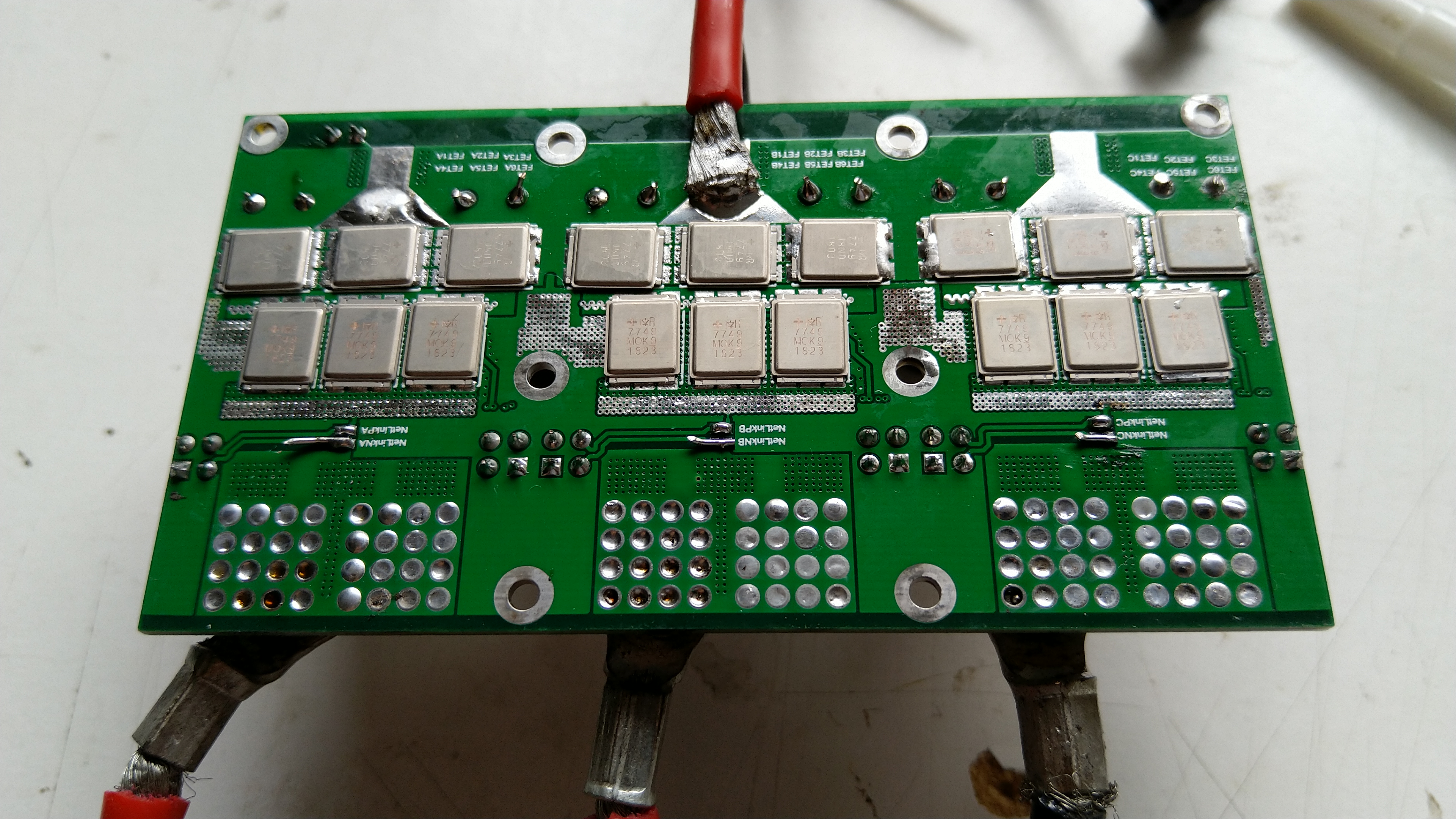
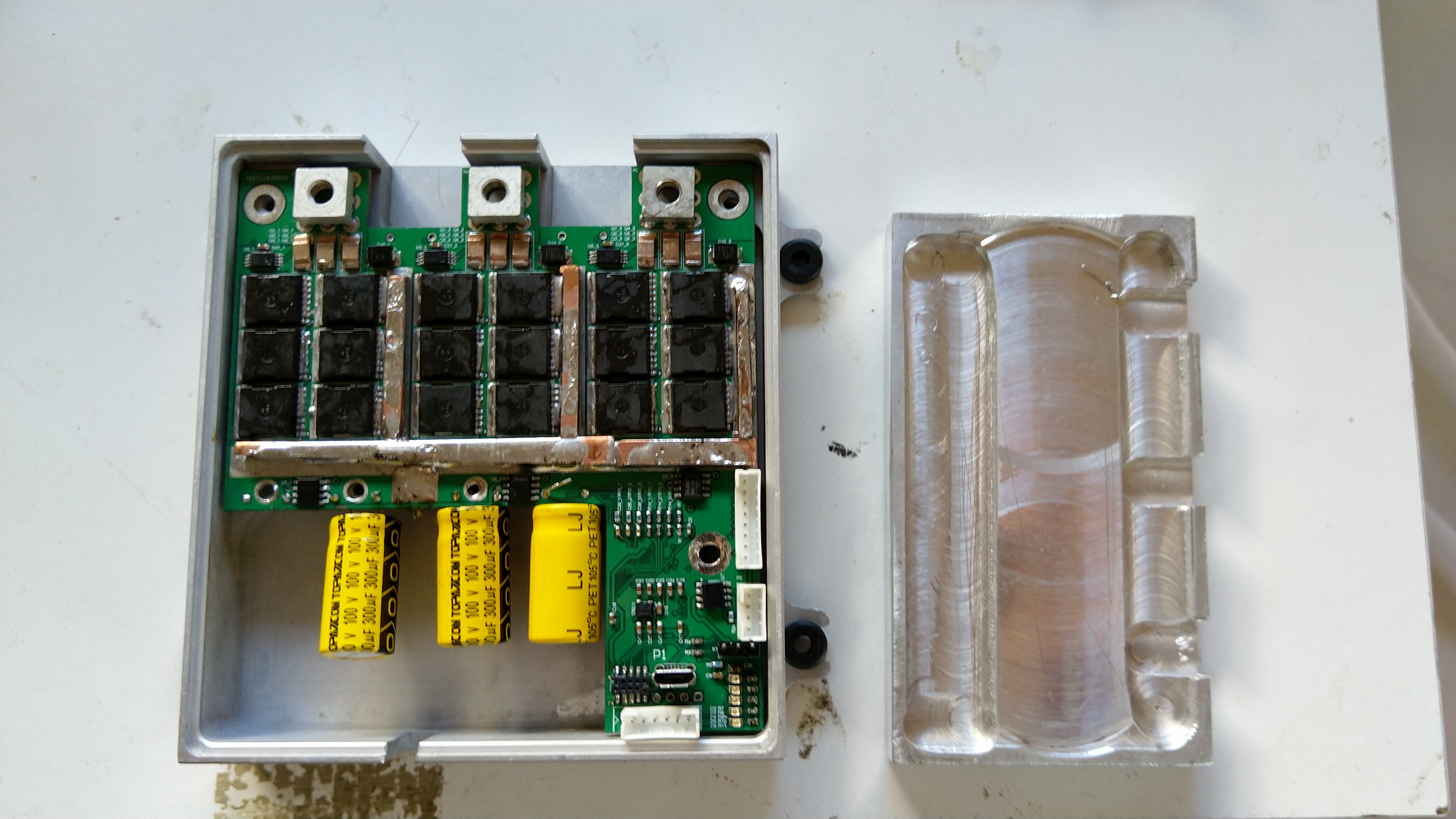
New controller is pretty much done. I've also just finished soldering a much more compact version of the a200s which uses 18 directfets.

Footprint of the directfet version is barely larger than a regular 6 fet controller.

2TNZ0AT.jpg


The bus bars and larger fets of the bigger controller should allow for higher peak currents but the compact layout of the directfet controller should allow it to drive all sorts of silly motors reliably.

u6uFWmK.jpg
 
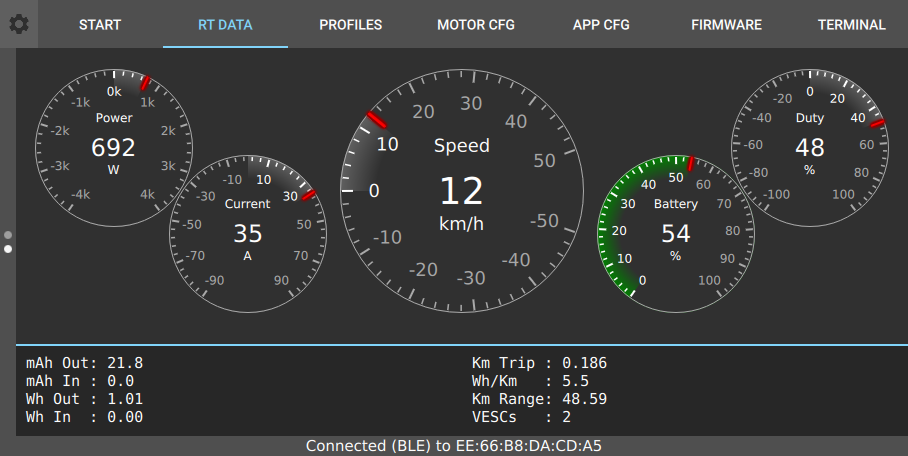
I've used vesc-tool with BLE on android and linux a fair bit but only for testing on the bench. Don't really like phone on handlebars even if it is a cheap one just used as a display.

The main problem with using it for display is that the watt-hours and battery current may not be that accurate since it is calculated from motor current and duty cycle. And the accuracy can vary depending on motor configuration and how you ride as well.

I wish I knew how to build the app to show other values such as field weakening current.
 
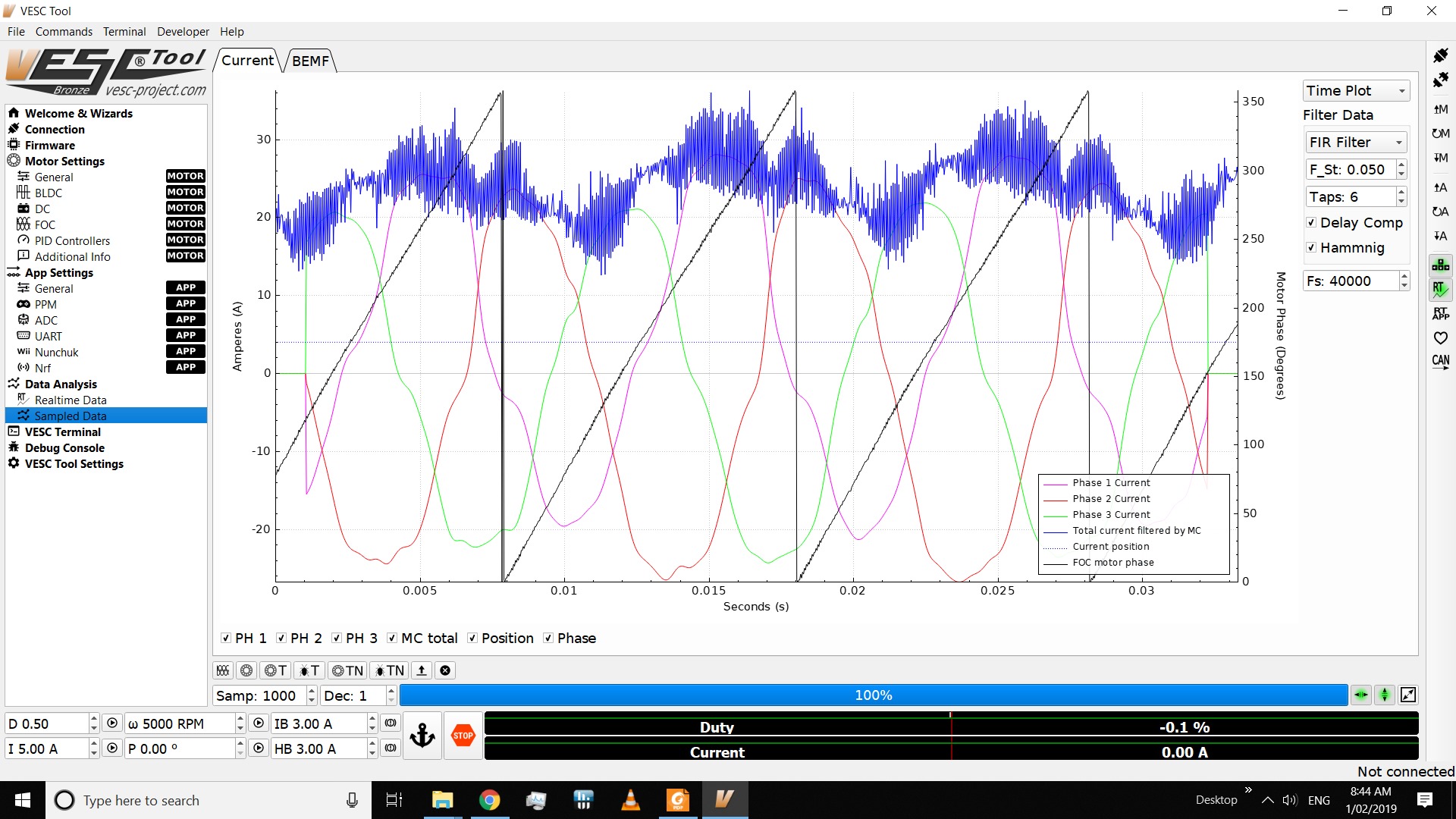
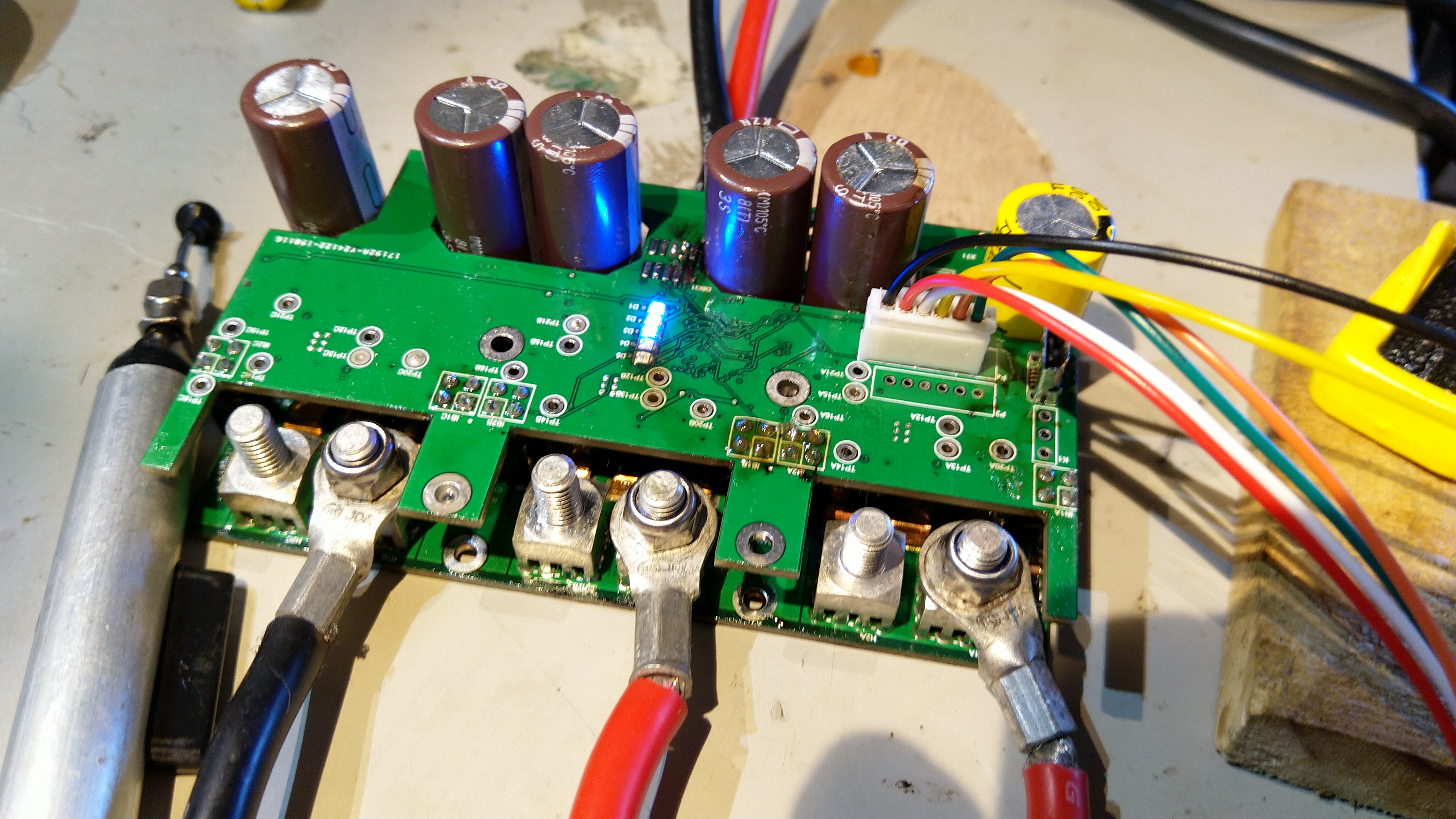
The v1.3 a200s board with the hsof-8 fets has been running well. Played around with the observer gains and rc filters on the current sense output. Now I can be as rough on the throttle as I want at 300A phase in sensorless. Everything is smooth with no faults.

Been trying to find a better way to handle low speed braking. Currently what the vesc does is modulate shorting windings when braking at very low speeds. At a crawl this works well but go a bit faster and the motor will cog. In regular current control mode the motor will also begin to cog as the low speed causes the controller to lose sync. So there is a erpm range where neither duty cycle mode or current control mode can brake smoothly.

On the bench I tried using position control mode to provide active braking at low speed with an encoder. Hopefully this translates well to actual riding.
 
district9prawn said:
The v1.3 a200s board with the hsof-8 fets has been running well. Played around with the observer gains and rc filters on the current sense output. Now I can be as rough on the throttle as I want at 300A phase in sensorless. Everything is smooth with no faults.
Does the controller need a given motor RPM or does it supply the 300A from a dead stop without loosing sync?

Been trying to find a better way to handle low speed braking. Currently what the vesc does is modulate shorting windings when braking at very low speeds. At a crawl this works well but go a bit faster and the motor will cog. In regular current control mode the motor will also begin to cog as the low speed causes the controller to lose sync. So there is a erpm range where neither duty cycle mode or current control mode can brake smoothly.

On the bench I tried using position control mode to provide active braking at low speed with an encoder. Hopefully this translates well to actual riding.

Down to which speed does regen braking work?
I am happy if regen does slow me down to around 5kmh and so i never did use active braking on my adaptto controllers (only for tests) due to the fact that it does take energy from the battery (to produce reverse torque).
At high settings this active braking was as strong as the hydraulic and i could lock the wheel.

The thing with the shorted motors phases sounds interesting, but wouldn't this heat it up alot?
 
madin88 said:
Does the controller need a given motor RPM or does it supply the 300A from a dead stop without loosing sync?

It starts smoothly but the very first bit of acceleration won't be as strong as a sensored setup. Maybe from 0-2 km/h. After that its the same. It's still an improvement over the ASI sensorless start as the open loop routine is always the same. So however you configure it there will always be situations where it doesn't feel right.


madin88 said:
Down to which speed does regen braking work?

Down to walking speed so perhaps 3-4 kph? The shorting phases don't result in much heat as it is just from like 3kph to stop.

It would be cool to get active braking working well. I really liked how the ASI controllers could do active braking to zero in sensorless without overshooting and causing reverse rotation.
 
Back
Top