


Very cool to see the 1960s style three-speed hub in use. These shift only when coasting as I remember. They were THEE thing before the first 10-speeds came out. How much torque can be put through them I wonder?

-
Hello ES! We could use some help to get us past the finish line on building the new knowledgebase for the forum.
Can you donate? Please see our fundraising page. Thank you!
You are using an out of date browser. It may not display this or other websites correctly.
You should upgrade or use an alternative browser.
You should upgrade or use an alternative browser.
The SB Cruiser : Amberwolf's 2WD Heavy Cargo Trike & Dog Carrier
- Thread starter amberwolf
- Start date

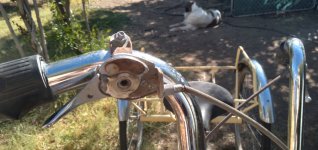
I don't know, but I found the reaction arm stamped Shimano 3SC model. It's casing is custom (probably modified by Schwinn?) but the internals are probably the same as the OTS version (333 type, I'd guess), from the bits of info found with google.Very cool to see the 1960s style three-speed hub in use. These shift only when coasting as I remember. They were THEE thing before the first 10-speeds came out. How much torque can be put through them I wonder?
I did a "test ride" around the yard (on the disintegrating flat tires) and it was difficult to pedal but could be done. The chains are rusty but not sticky or jammed, and if I pull the cable manually the IGH shifts correctly, and pedals easily enough in the lowest gear. (anybody with normal strength/etc would be able to pedal easily even in the high gear it defaults to, but I can't).
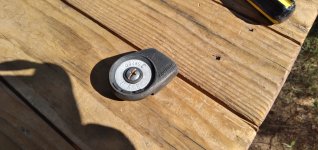
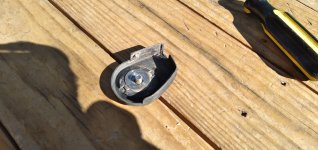
The plastic cable retainer inside the shifter has flaked away part of it, so I filed it down flat to allow a large fender washer to go in there to replace that to allow the shifter to operate. The shifter cable (and the front "brake" cable) have disintegrating housings, and the cables are rusty and sticking, so replacing those would fix those problems. I'm sure it would roll better if greased / oiled appropriately, but it's doing pretty amazing considering that it has probably not been used in decades and been out in the weather all that time, and that it may not have been serviced at all since it's construction back in the 1970s.
I expect I could change the tubes and tires and brake pads, and the two cables, and just ride this thing around. (for me, very very slowly, and not very far, without a motor...but it would work).
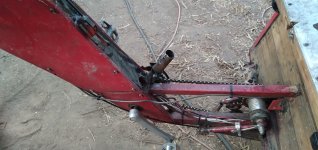
The wheels are all 24", but I will almost certainly change at least the front to 26", and swap out the fork to fit, for one with a disc caliper tab and use one of my "spare" Avid BB7 calipers on it. (but almost anything would be better than the existing ancient caliper brake on smooth steel rim).
If I reinforce the crown (not sure what I'd do yet) I could use that old ex-Luna fatbike fork, and then use the fat-tire front bafang motor on it (until a suitable middrive can be constructed).
Some pics from today at end of post.
Regarding the titular trike of this thread: After opening up the SB Cruiser's covers and bits to make sure no water intrusion / damage occured, and leaving them open for the day to dry out just in case, it's back together and appears to all be working again including the speedo. Guess we'll see how it works out in normal use tomorrow and the rest of the workweek.
Attachments

Nothing's gone wrong with the SBC since being drenched, soaked, and splattered earlier this week, so apparently there's no damage from any of that.
Never figured out what specifically caused the speedo issue, but it's been working perfectly since the post above.
I can't think of anything that could cause it to show spurious high readings (that would require extra pulses) and *also* have no readings (zero), (which would require no pulses, or too infrequent to trigger the readout), both "at the same time" (alternating back and forth, until the spurious readings stopped after a few minutes and it just read zero).
Since it would certainly be caused by water intrusion somewhere, if I knew what would cause that specific problem, I could find and fix where the water intrusion occured to prevent a recurrence.
The brake lights being stuck on was almost certainly water in the microswitch down at the caliper. The only other place it could occur would be at the relay on the left "ebrake" lever, but if that relay was triggered so would the ebrake / throttle switching relays and I'd've been stuck in regen mode. That never happened, so it's pretty certainly not that. Plus there was no water intrusion in any of the wiring inside the black neoprene covering on the tiller wiring bundle, which is where those relays are, but there would certainly have been water at the caliper, a lot of it, and the microswitch is not sealed in any way. I can "seal" it by filling it with vaseline (dielectric grease) but it may affect the ability of the switch to operate at all; it's very cheap and small, I doubt the return-spring in it is very strong.
I thought about moving the switch to the lever, but the reason I didn't put it there originally is that it would be possible to damage it or catch it on something I'm riding past (bushes or tree branches sticking out into the road), or even on my jacket sleeve in the winter when I'm walking the bike thru my workplace to get to / from the breakroom I have to park it in while working. I could make a box to go around it and the lever base to prevent that; would take some time to work a design out in CAD and 3D print one; dunno when I'd get time for that.
Still letting my brain work out the stuff needed to do the conversion of the yellow Schwinn; it's not likely to be quick.
Never figured out what specifically caused the speedo issue, but it's been working perfectly since the post above.
I can't think of anything that could cause it to show spurious high readings (that would require extra pulses) and *also* have no readings (zero), (which would require no pulses, or too infrequent to trigger the readout), both "at the same time" (alternating back and forth, until the spurious readings stopped after a few minutes and it just read zero).
Since it would certainly be caused by water intrusion somewhere, if I knew what would cause that specific problem, I could find and fix where the water intrusion occured to prevent a recurrence.
The brake lights being stuck on was almost certainly water in the microswitch down at the caliper. The only other place it could occur would be at the relay on the left "ebrake" lever, but if that relay was triggered so would the ebrake / throttle switching relays and I'd've been stuck in regen mode. That never happened, so it's pretty certainly not that. Plus there was no water intrusion in any of the wiring inside the black neoprene covering on the tiller wiring bundle, which is where those relays are, but there would certainly have been water at the caliper, a lot of it, and the microswitch is not sealed in any way. I can "seal" it by filling it with vaseline (dielectric grease) but it may affect the ability of the switch to operate at all; it's very cheap and small, I doubt the return-spring in it is very strong.
I thought about moving the switch to the lever, but the reason I didn't put it there originally is that it would be possible to damage it or catch it on something I'm riding past (bushes or tree branches sticking out into the road), or even on my jacket sleeve in the winter when I'm walking the bike thru my workplace to get to / from the breakroom I have to park it in while working. I could make a box to go around it and the lever base to prevent that; would take some time to work a design out in CAD and 3D print one; dunno when I'd get time for that.
Still letting my brain work out the stuff needed to do the conversion of the yellow Schwinn; it's not likely to be quick.
I had to get some metal out of the shed for the Snuggles The Wolf Robotics Project test skeleton today, so I also got out some square 1" tubing that came in a beige color to use for the extension frame bits on the Schwinn when i get that far, and put it with the trike. Also the Luna nonsuspension fatbike fork and the old dual-linear-pull- caliper-brake suspension fork I used to have on SB Cruiser; both are for 26" wheels (the Schwinn is all 24"), to put with the Schwinn for when I get to working out the wheels and drive.
pardon the typos, the bandaid on my finger keeps hitting wrong keys...but what good would a repair be without a blood sacrifice4?
I took the4 last couple days off work along with my usual days off consecutive with them, because SBC has had a squeak for months, loud enough for me to hear even over my tinnitus and other hearing problems.
It's the kind of squeak that usually indicates broken metal rubbing against other broken metal, but stuff has been happening at work that prevented me from getting time off to do it (the time I did get off last time it was too hot for me to do all this) while it is cool enough to work on it for hours in the middle of the daytime when I can clearly see things.
So in the last two days, I've gone over the whole trike, taking stuff off where necessary to see all of the metal, and can't find any fatigue cracking, broken welds, or broken tubing anywhere. :/ That includes in the bedframe steel that concerned people after I did the keel repair with it, and the keel itself at the point it has twice broken before. Not in the fork, or the headtube, downtube, steerer, clamps, etc. Not in the wheels (rims, spokes, axles, etc).
Because of my hearing I can't tell where the squeak is from; it only happens while riding. No matter how I move the trike around when it's here at home in the yard, pushing, pulling, rolling it on it's side, etc., sittting on it and holding the brake and rocking back and forth or side to side, bouncing up and down on the seat, etc., it doesn't make the noise. :/
So....I dunno.
While I had stuff apart here and there, I did some wiring fixes / changes I wanted to do for a while, such as adding a new switch to disconnect the relay coil that turns the main lighting power on whenever the traction power is also on, so that I can leave it charging without the lights being on, or having to unplug the lighting battery. I used to have a switch on the control cluster that did this, but it failed, and I didn't want to reuse the wiring for it (in case it was also a problem) a long time back, so I ran a new wire pair from one side of the output of the DC-DC that is powered from the traction power, and th4 corresponding input wire to the relay coil, up to a new toggle switch (made in sept 1969, salvagd long ago from the front panel of some ancient room-siz4ed computer; I have a box of them saved from that) up next to the headlight switch (which is also one of these same switches).
I also fixed some stuff on the wiring "bus bar" at the bottom of hte "triangle", where there's been a loose connection on the main ground for the rear lights for a while that I didn't find anywhere else aned suspected had to be at the bus, but it's very hard to get to--the rivets holding the back (rightside) panel on have to be drilled out and the panel taken off and the bus unscrewed from the panel to access this, because the wiring had to be very short down there to get it to all fit in the space. I removed the spade4 lug from that wire and a few others and soldered them directly to the bus tabs, and siliconed around these connections and wires to strain releif them so vibration is less likely to break them at the joint (which is why I originally used spades, but the spades bought for the purpose have prooven crrappy as they keep deforming and making bad connections).
While I had the panels off the triangle, I also added on the stub tube for a front derailer to clamp to, and test fitted a derailer (saved from the crappier green bike in the stuff I recently pikced up). I coudln't add the tube without taking the plastic panesl off because welding the tube on would have set fire to the panels (or at least melted them), so it's been a few years since I had decided on wanting to do this. A front shifter isn't required to operate the trike, since it naturally sits on the granny ring where I'd need it for starting up from a stop, but it would be helpful to shift to higher rings to let me still apply a bit of pedal force for what little exercise my legs can handle at speeds faster than a couple mph. :lol:
I haven't got a shifter on there yet, or a cable to it, as the way all the derailers I have (that will fit in the space and line up with the rings) are all top-pull-upward, so I have to add a pulley abovve the derailer on the stub tube so the cable can go back down and then around up the triangle and thence to the handlebars. Then i have to modify the clamp on the shifter so I don't have to take everything off the bars on one side to get the shifter on (since that would require cutting and rewiring switches, lights, and things as I don't have connectors up there). I may be able to make a stub tube that clamps to the bars and put the shifter on the stub, I have to take a look at the one Grin sells (or other places that have them) to see if I have the right idea. It's an old shimano friction shifter lever; which will fit in among the other stuff up there ok. (gripshifter would be easier to use, but won't fit up there and can't be installed without removing stuff first).
I do still have to change the left rear tire; it's worn down way past the tread (the rightside is still good); I've already got the tire from when I got the one on the rightside, and a tube if I need it...it's just such a PITA to do.
If I have time left after that tomorrow, I might look back thru the thread and see if there are things I wanted to do to the trike that are possible in that time.
I took the4 last couple days off work along with my usual days off consecutive with them, because SBC has had a squeak for months, loud enough for me to hear even over my tinnitus and other hearing problems.
It's the kind of squeak that usually indicates broken metal rubbing against other broken metal, but stuff has been happening at work that prevented me from getting time off to do it (the time I did get off last time it was too hot for me to do all this) while it is cool enough to work on it for hours in the middle of the daytime when I can clearly see things.
So in the last two days, I've gone over the whole trike, taking stuff off where necessary to see all of the metal, and can't find any fatigue cracking, broken welds, or broken tubing anywhere. :/ That includes in the bedframe steel that concerned people after I did the keel repair with it, and the keel itself at the point it has twice broken before. Not in the fork, or the headtube, downtube, steerer, clamps, etc. Not in the wheels (rims, spokes, axles, etc).
Because of my hearing I can't tell where the squeak is from; it only happens while riding. No matter how I move the trike around when it's here at home in the yard, pushing, pulling, rolling it on it's side, etc., sittting on it and holding the brake and rocking back and forth or side to side, bouncing up and down on the seat, etc., it doesn't make the noise. :/
So....I dunno.
While I had stuff apart here and there, I did some wiring fixes / changes I wanted to do for a while, such as adding a new switch to disconnect the relay coil that turns the main lighting power on whenever the traction power is also on, so that I can leave it charging without the lights being on, or having to unplug the lighting battery. I used to have a switch on the control cluster that did this, but it failed, and I didn't want to reuse the wiring for it (in case it was also a problem) a long time back, so I ran a new wire pair from one side of the output of the DC-DC that is powered from the traction power, and th4 corresponding input wire to the relay coil, up to a new toggle switch (made in sept 1969, salvagd long ago from the front panel of some ancient room-siz4ed computer; I have a box of them saved from that) up next to the headlight switch (which is also one of these same switches).
I also fixed some stuff on the wiring "bus bar" at the bottom of hte "triangle", where there's been a loose connection on the main ground for the rear lights for a while that I didn't find anywhere else aned suspected had to be at the bus, but it's very hard to get to--the rivets holding the back (rightside) panel on have to be drilled out and the panel taken off and the bus unscrewed from the panel to access this, because the wiring had to be very short down there to get it to all fit in the space. I removed the spade4 lug from that wire and a few others and soldered them directly to the bus tabs, and siliconed around these connections and wires to strain releif them so vibration is less likely to break them at the joint (which is why I originally used spades, but the spades bought for the purpose have prooven crrappy as they keep deforming and making bad connections).
While I had the panels off the triangle, I also added on the stub tube for a front derailer to clamp to, and test fitted a derailer (saved from the crappier green bike in the stuff I recently pikced up). I coudln't add the tube without taking the plastic panesl off because welding the tube on would have set fire to the panels (or at least melted them), so it's been a few years since I had decided on wanting to do this. A front shifter isn't required to operate the trike, since it naturally sits on the granny ring where I'd need it for starting up from a stop, but it would be helpful to shift to higher rings to let me still apply a bit of pedal force for what little exercise my legs can handle at speeds faster than a couple mph. :lol:
I haven't got a shifter on there yet, or a cable to it, as the way all the derailers I have (that will fit in the space and line up with the rings) are all top-pull-upward, so I have to add a pulley abovve the derailer on the stub tube so the cable can go back down and then around up the triangle and thence to the handlebars. Then i have to modify the clamp on the shifter so I don't have to take everything off the bars on one side to get the shifter on (since that would require cutting and rewiring switches, lights, and things as I don't have connectors up there). I may be able to make a stub tube that clamps to the bars and put the shifter on the stub, I have to take a look at the one Grin sells (or other places that have them) to see if I have the right idea. It's an old shimano friction shifter lever; which will fit in among the other stuff up there ok. (gripshifter would be easier to use, but won't fit up there and can't be installed without removing stuff first).
I do still have to change the left rear tire; it's worn down way past the tread (the rightside is still good); I've already got the tire from when I got the one on the rightside, and a tube if I need it...it's just such a PITA to do.
If I have time left after that tomorrow, I might look back thru the thread and see if there are things I wanted to do to the trike that are possible in that time.
I've been in a similar situation on my TSDZ2 mid drive trying to find the source of a clicking noise for the last few months. It's not very loud. On windy days, the wind drowns the noise out. It's louder going down hill than uphill. Does not happen on a bike stand. Only when under load, i.e. riding, which makes it hard to pin point the source.I took the4 last couple days off work along with my usual days off consecutive with them, because SBC has had a squeak for months, loud enough for me to hear even over my tinnitus and other hearing problems.
It's the kind of squeak that usually indicates broken metal rubbing against other broken metal, but stuff has been happening at work that prevented me from getting time off to do it (the time I did get off last time it was too hot for me to do all this) while it is cool enough to work on it for hours in the middle of the daytime when I can clearly see things.
So in the last two days, I've gone over the whole trike, taking stuff off where necessary to see all of the metal, and can't find any fatigue cracking, broken welds, or broken tubing anywhere. :/ That includes in the bedframe steel that concerned people after I did the keel repair with it, and the keel itself at the point it has twice broken before. Not in the fork, or the headtube, downtube, steerer, clamps, etc. Not in the wheels (rims, spokes, axles, etc).
Because of my hearing I can't tell where the squeak is from; it only happens while riding. No matter how I move the trike around when it's here at home in the yard, pushing, pulling, rolling it on it's side, etc., sittting on it and holding the brake and rocking back and forth or side to side, bouncing up and down on the seat, etc., it doesn't make the noise. :/
So....I dunno.
Naturally I suspected the worst, the sprague clutch bearing. I did not want to tear it apart to remove & replace (bought a spare), since I was not 100% sure.
Today, I tried this trick:
I took wired ear-set from my iPhone, used painters tape to fasten the mic in contact with 3 different spots on the bike and made audio recordings of each.
1. top of the motor
2. seat tube by the chainstay
3. rear wheel dropout
Playing back each recording I found the clicking noise inaudible at the motor. Audible at the seat tube but not very loud. Very loud at the rear dropout.
I am relieved the clicking is not from the motor. It's from somewhere in the rear wheel.
You may want to give this trick a try.
Edit: If you have a walkman cassette recorder with external mic input (remember those?), you can listen in real time. FM wireless mic + Fm radio + ear pones allows mounting it on rotating things like drive shaft. https://www.aliexpress.us/item/3256806861133880.html?src=google&gatewayAdapt=glo2usa
Last edited:
Got the tire changed, aligned with zipties keeping it in-round while the bead seats into the rim, but it turned out there had been a 1cm long thorn in the old tire the tube came from, all the way up thru the tube, that had somehow managed to keep holding all its air just fine. I didn't know about the hole, so when I moved the old tube to the new tire, it leaked out all the air in a few minutes.
So, I pulled that tube, checked and found it had TWO holes, one very small and new with a scratch near it--I must have dragged that spot over the thorn while taking the tube out, and pushed it onto the thorn just enough to punch the tube. I checked the old worn tire and foudn that thorn, poking my finger pretty good in the process. It was over 1mm wide at the base sticking out of the inside of the tire, and very hard--it was probably a paloverde or mesquite thorn, most likely from the canal path ride to get those bikes and trike. I razor-trimmed the seam next to the holes, applied the blueglue, let dry, and patched it and clamped the patched area.
While that was curing, I thought, hey, let's just pop in the brand new tube I got with the tire...and I couldn't even air it up--the pump couldn't keep up with the leak.
Turns out the brand new tube came with holes preinstalled. It's a whole new failure mode I've never seen before. There is raised-outline lettering for the tube size, 2.25 - 2.5 x 16, and inside the top line of both 5's there is a tiny slit, either a tear or a defect of insufficient material or bubble voids.
So I dremeled the raised lettering outlines away from the area, and a seam line (since razor trimming didn't get enough of the letters), glued, let dry, and patched and clamped it.
I ended up using the already-patched tube that I carry as a spare on the trike, since that one actually held air. :/
So after about three hours I finally got the tire changed, aired up, wheel reinstalled, and the trike back upright (since it has to be rolled on it's side to get wheels on and off, as I have never gotten the frame rebuilt to allow this to be done from the side).
That wore me out, so I didn't get to even looking at this thread for old lists of stuff I would like to do.
good news bits
the tires here

 endless-sphere.com
and the covers here
endless-sphere.com
and the covers here
endless-sphere.com
are both doing their jobs just fine after almost a year
Some pics of yesterday's work, and one of the bean being intensely bored:

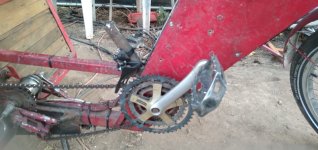


So, I pulled that tube, checked and found it had TWO holes, one very small and new with a scratch near it--I must have dragged that spot over the thorn while taking the tube out, and pushed it onto the thorn just enough to punch the tube. I checked the old worn tire and foudn that thorn, poking my finger pretty good in the process. It was over 1mm wide at the base sticking out of the inside of the tire, and very hard--it was probably a paloverde or mesquite thorn, most likely from the canal path ride to get those bikes and trike. I razor-trimmed the seam next to the holes, applied the blueglue, let dry, and patched it and clamped the patched area.
While that was curing, I thought, hey, let's just pop in the brand new tube I got with the tire...and I couldn't even air it up--the pump couldn't keep up with the leak.
Turns out the brand new tube came with holes preinstalled.
It's a whole new failure mode I've never seen before. There is raised-outline lettering for the tube size, 2.25 - 2.5 x 16, and inside the top line of both 5's there is a tiny slit, either a tear or a defect of insufficient material or bubble voids. So I dremeled the raised lettering outlines away from the area, and a seam line (since razor trimming didn't get enough of the letters), glued, let dry, and patched and clamped it.
I ended up using the already-patched tube that I carry as a spare on the trike, since that one actually held air. :/
So after about three hours I finally got the tire changed, aired up, wheel reinstalled, and the trike back upright (since it has to be rolled on it's side to get wheels on and off, as I have never gotten the frame rebuilt to allow this to be done from the side).
That wore me out, so I didn't get to even looking at this thread for old lists of stuff I would like to do.
good news bits
the tires here
The SB Cruiser : Amberwolf's 2WD Heavy Cargo Trike & Dog Carrier
I have a sister and a cousin who are both gluten intolerant. They both had to find it out on their own. Bread is not really a good nutrient anyway, like donuts it just tastes good. I have a friend who is borderline diabetic so he started wrapping his sandwiches in lettuce leafs instead of...
endless-sphere.com
The SB Cruiser : Amberwolf's 2WD Heavy Cargo Trike & Dog Carrier
I have a sister and a cousin who are both gluten intolerant. They both had to find it out on their own. Bread is not really a good nutrient anyway, like donuts it just tastes good. I have a friend who is borderline diabetic so he started wrapping his sandwiches in lettuce leafs instead of...
endless-sphere.com
Some pics of yesterday's work, and one of the bean being intensely bored:
Last edited:
List of stuff to deal with if I ever get time/energy (at the same time!) after i get somewhere with the Snuggles The Wolf robotics project (which is higher priority than anything other than required repairs to SBC):
ones i could think of or found references to in the last few pages (going back a couple years or so); i know there are a lot more:
cargo rack tail lights
endless-sphere.com
clamping dropouts on left side
get wp8 connector for pr v6 temperature sensor/etc up to ca
endless-sphere.com
and deal with the misalighment of freewheel/chaindrive otuput at the same time
endless-sphere.com
find solution for this
endless-sphere.com
make a better cotter pin replacement
endless-sphere.com
make an overhang cover for the cargo/seatbox lid, better waterproofing, etc
endless-sphere.com
install the second one of these on the left side
endless-sphere.com
widen the front caliper and either get/make thicker rotors, or just use two bolted together
endless-sphere.com
fix all the marker light strips that have failed or been ripped off by stuff on the road/sticking out past the sidewalk/etc
rewire the lighting so that all the stuff that was added over time and the original stuff is all wired up "the same way" and to the same sources/switches, so that i can turn off all the always-on lighting but leave the turn signals and brake lights operational
(no specific post)
update the ca firmware to the later versions that allow torque sensor operation without cadence sensor so it can start from a stop on just torque input without any pedal motion, and figure out all the settings needed for this plus a safety switch to turn off the torque sensor input when i'm not actually sitting there ready to ride
( )
more permanent fix for trhottle cable sticking though it hasn't recurred yet it probably wll
endless-sphere.com
waterproof the caliper-mounted brake light switch
(no specific post)
finish the lebowksis
endless-sphere.com
ones i could think of or found references to in the last few pages (going back a couple years or so); i know there are a lot more:
cargo rack tail lights
The SB Cruiser : Amberwolf's 2WD Heavy Cargo Trike & Dog Carrier
Another of the upper-rack LED turn/tail light strips has failed. previous failure here https://endless-sphere.com/sphere/threads/the-sb-cruiser-amberwolfs-2wd-heavy-cargo-trike-dog-carrier.67833/post-1746253 pic of that old one (present one is same kind, but replacements i have now are...
endless-sphere.com
get wp8 connector for pr v6 temperature sensor/etc up to ca
The SB Cruiser : Amberwolf's 2WD Heavy Cargo Trike & Dog Carrier
Today on the way home from work, while squinting to see in the gusty dusty storm wind, I could still tell that sometimes the turn signals were ceasing after a few blinks. Didn't matter if it was left or right, or when I was stopped vs moving (bumpy road vibration). After I got home I hobbled...
endless-sphere.com
The SB Cruiser : Amberwolf's 2WD Heavy Cargo Trike & Dog Carrier
Lately I've been having good results from Specialized brand innertubes. Do they make 20x2.5 thickwall tubes with a TR-6 threaded valve stem? Sorry, not sure. I got them from FLBS when I was suffering the "evil innertube syndrome." Happily they had the size I needed (26 x 1.75-2.4), decent price...
endless-sphere.com
Phaserunner startup issues (v6 and v1, each running an Ultramotor)
So...this is probably going to be complicated, and requires some explanation of the setup, both as it is now where it doesn't work right, and as it was before when it did work fine. So...apologies for the length. I'm very tired after working on this for the last 12+ hours, so I'll probably...
endless-sphere.com
The SB Cruiser : Amberwolf's 2WD Heavy Cargo Trike & Dog Carrier
Today on the way home from work, while squinting to see in the gusty dusty storm wind, I could still tell that sometimes the turn signals were ceasing after a few blinks. Didn't matter if it was left or right, or when I was stopped vs moving (bumpy road vibration). After I got home I hobbled...
endless-sphere.com
The SB Cruiser : Amberwolf's 2WD Heavy Cargo Trike & Dog Carrier
Today on the way home from work, while squinting to see in the gusty dusty storm wind, I could still tell that sometimes the turn signals were ceasing after a few blinks. Didn't matter if it was left or right, or when I was stopped vs moving (bumpy road vibration). After I got home I hobbled...
endless-sphere.com
The SB Cruiser : Amberwolf's 2WD Heavy Cargo Trike & Dog Carrier
I have a sister and a cousin who are both gluten intolerant. They both had to find it out on their own. Bread is not really a good nutrient anyway, like donuts it just tastes good. I have a friend who is borderline diabetic so he started wrapping his sandwiches in lettuce leafs instead of...
endless-sphere.com
The SB Cruiser : Amberwolf's 2WD Heavy Cargo Trike & Dog Carrier
Rest of the spring clip pics. Sorry they're so blurry but I can't see the screen in the sunlight to tell what the pic looks like, and the autofocus always seems to fixate on the background instead of the object, regardless of how or where I hold the camera. :/
endless-sphere.com
rewire the lighting so that all the stuff that was added over time and the original stuff is all wired up "the same way" and to the same sources/switches, so that i can turn off all the always-on lighting but leave the turn signals and brake lights operational
(no specific post)
update the ca firmware to the later versions that allow torque sensor operation without cadence sensor so it can start from a stop on just torque input without any pedal motion, and figure out all the settings needed for this plus a safety switch to turn off the torque sensor input when i'm not actually sitting there ready to ride
( )
more permanent fix for trhottle cable sticking though it hasn't recurred yet it probably wll
The SB Cruiser : Amberwolf's 2WD Heavy Cargo Trike & Dog Carrier
Lately I've been having good results from Specialized brand innertubes. Do they make 20x2.5 thickwall tubes with a TR-6 threaded valve stem? Sorry, not sure. I got them from FLBS when I was suffering the "evil innertube syndrome." Happily they had the size I needed (26 x 1.75-2.4), decent price...
endless-sphere.com
(no specific post)
finish the lebowksis
The SB Cruiser : Amberwolf's 2WD Heavy Cargo Trike & Dog Carrier
today: replaced the old turn signals in front. the leftside signal had been intermittent for a while, then stopped working altogether. the led strip on the same fork leg still works fine, so it's not a wiring issue up to that point. since i have wanted to change to a "fancier" style of...
endless-sphere.com
Nothing has fallen apart or failed yet on my first work commute back, of the things I fixed or added over the weekend.
The two new BikeMaster tubes I ordered the other day arrived, so I put them in the trike's "toolbox" in case there's an issue with the patched one I used.
I did check them first for problems, especially that wierd thing with the lettering; both are fine (the lettering defect on that other tube was visually obvious even when deflated, once I knew it was there).
Came down with an awful headcold and cough that left me voiceless on Sunday night; still sick and voiceless but I think I'm getting better at this point.
No energy for trying to figure out the shifter/cable/pulley thing for the front derailer though I'd like to try it out. By default it's shifted down to the granny gear so the same as without it.
The two new BikeMaster tubes I ordered the other day arrived, so I put them in the trike's "toolbox" in case there's an issue with the patched one I used.
I did check them first for problems, especially that wierd thing with the lettering; both are fine (the lettering defect on that other tube was visually obvious even when deflated, once I knew it was there).
Came down with an awful headcold and cough that left me voiceless on Sunday night; still sick and voiceless but I think I'm getting better at this point.
No energy for trying to figure out the shifter/cable/pulley thing for the front derailer though I'd like to try it out. By default it's shifted down to the granny gear so the same as without it.
SBC and the mods and fixes are still working, though i'm still sick and even more exhausted than usual (you'd think I'd have to be dead for that, but apparently not).was wrong about getting better; few hours after the above it all got worse than before.
ribs / muscles hurt from so much coughing, most of which is just tiny "keh"s at this point becaue the pain in my throat or my ribs or both stops the inhale before much air gets in to get pushed out. haven't been able to speak all week (have had to use "sticky note" progam on the phone to "talk" to people by typing stuff out so they can read it; some people won't bother and just walk away).
the recycling of moisture wearing the facemask when at work / riding helps keep my throat from being so dry and painful, but i can't sleep with it on so i bury my face in the snuggles-wolfy fur and breathe thru that and it does about the same thing. been keeping hot tea with me to sip as often as i can and it helps too.
these colds always take me at least a couple weeks to get thru, someitmes more. would be less but i can never take off from work to just get better. they usually happen at the time of year when no pto is allowed cuz of the holidaze; at best i can take off the one worst day near the start (already did that this time, have to just live thru the rest)
ribs / muscles hurt from so much coughing, most of which is just tiny "keh"s at this point becaue the pain in my throat or my ribs or both stops the inhale before much air gets in to get pushed out. haven't been able to speak all week (have had to use "sticky note" progam on the phone to "talk" to people by typing stuff out so they can read it; some people won't bother and just walk away).
the recycling of moisture wearing the facemask when at work / riding helps keep my throat from being so dry and painful, but i can't sleep with it on so i bury my face in the snuggles-wolfy fur and breathe thru that and it does about the same thing. been keeping hot tea with me to sip as often as i can and it helps too.
these colds always take me at least a couple weeks to get thru, someitmes more.
would be less but i can never take off from work to just get better. they usually happen at the time of year when no pto is allowed cuz of the holidaze; at best i can take off the one worst day near the start (already did that this time, have to just live thru the rest)gromike
🚴♂️ Mega poster
Once I had what I thought was a cold, after a week I thought I had the flu, and on the third week I was dying. Finally went to the doctor. He diagnosed mycoplasma pneumonia, and prescribed fortunately the right antibiotic. And that cured what was killing me. Though it took like a month to recover from the effects of the pneumonia. I was mid-thirties, which greatly helped.
What I'm trying to say, is with the symptoms you describe you really need to go to the vet, ah doctor.
What I'm trying to say, is with the symptoms you describe you really need to go to the vet, ah doctor.
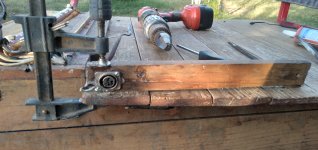
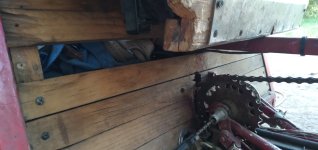
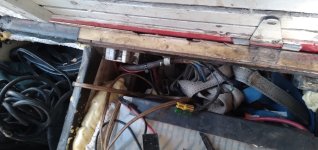
I re-added the XLR charging port for the Satiator to charge the lighting pack. I'd had that still present but it wasn't working (broken solder joint, apparently, right at the contact at the back), and because I had it riveted into the frame right up where the wiring busbar (that I moved last week) I couldn't access it without removing it. So I had just been charging the lighting pack by disconecting it from the system and plugging teh Satiator into it's andersons with an adapter.
When I did the other work last week, I'd pulled out the XLR so I could fix the problem, and decided not to put it back in the front frame and instead install it in the box where the pack is and connect it to the wiring there, so now I can plug the charger in without disconnecting things. Much more convenient.
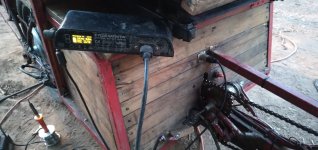
It's not that bad (and is already better than it was, though I still don't have my voice back--that always takes a week or two after I get even a "sore throat"; has always been like that).
I don't have the money for doctors anyway--it usually costs at least a few hundred dollars just to go see them (since I don't have insurance anymore and I don't have a regular doctor either), then more for whatever they prescribe, someitmes enough more than after paying the doctor I can't afford the meds, making it pointless to have even gone). I spent my emergency fund on JellyBeanThePerfectlyNormalSchmoo's several-thousand-dollar medical stuff earlier this year, and it's gonna take a long while to build that back up, since cost of living has gone up so very much in the last couple years (and pay has not).
(before covid happened I had been rapidly gaining on life, beginning to make enough more than what I spent to start buying new things, but once it started and costs for eveything started going up, and then i got sick and was out of work for a couple months till they would let me come back, and then a while later lost kirin and yogi and was out of work for half a year till they would let me come back, i haven't been able to do much more than catch back up).
If something is really life-threatening and I have to go the ER*** then I'd go and then just have to deal with the bills for the tens of thousands of dollars for it afterward and skimping on everything else (especially food/etc) for as long as necessary like I've had to do before. (used to be hundreds, but apparently it's gone up huge amounts in recent years).
"Free clinics" are not useful because I'd have to stay there waiting to be seen, without leaving or lose my place in line, for at least a whole day (and more likely for days, given how many people need them even more desperately than I do) and I couldn't be away from work without prior-approved PTO like that. I also couldn't be away from home that long; even if the Schmoo could self-feed and self-medicate (she has siezure meds 3x a day and can't stop taking them or that will itself cause siezures that probably can't be stopped and would kill her), I wouldn't make it that long without being able to be in my safe place with her and my snuggle-wolfy, and I can't take either of them with me to a place like that.
***assuming the ER will even see anyone; my brother says many ERs and hospitals are still flooded with covid patients and so have no space or people to help anyone else, and some have tent-city type setups in the parking lot to try to help anyway)
When I did the other work last week, I'd pulled out the XLR so I could fix the problem, and decided not to put it back in the front frame and instead install it in the box where the pack is and connect it to the wiring there, so now I can plug the charger in without disconnecting things. Much more convenient.
Once I had what I thought was a cold, after a week I thought I had the flu, and on the third week I was dying. Finally went to the doctor. He diagnosed mycoplasma pneumonia, and prescribed fortunately the right antibiotic. And that cured what was killing me. Though it took like a month to recover from the effects of the pneumonia. I was mid-thirties, which greatly helped.
What I'm trying to say, is with the symptoms you describe you really need to go to the vet, ah doctor.
It's not that bad (and is already better than it was, though I still don't have my voice back--that always takes a week or two after I get even a "sore throat"; has always been like that).
I don't have the money for doctors anyway--it usually costs at least a few hundred dollars just to go see them (since I don't have insurance anymore and I don't have a regular doctor either), then more for whatever they prescribe, someitmes enough more than after paying the doctor I can't afford the meds, making it pointless to have even gone). I spent my emergency fund on JellyBeanThePerfectlyNormalSchmoo's several-thousand-dollar medical stuff earlier this year, and it's gonna take a long while to build that back up, since cost of living has gone up so very much in the last couple years (and pay has not).
(before covid happened I had been rapidly gaining on life, beginning to make enough more than what I spent to start buying new things, but once it started and costs for eveything started going up, and then i got sick and was out of work for a couple months till they would let me come back, and then a while later lost kirin and yogi and was out of work for half a year till they would let me come back, i haven't been able to do much more than catch back up).
If something is really life-threatening and I have to go the ER*** then I'd go and then just have to deal with the bills for the tens of thousands of dollars for it afterward and skimping on everything else (especially food/etc) for as long as necessary like I've had to do before. (used to be hundreds, but apparently it's gone up huge amounts in recent years).
"Free clinics" are not useful because I'd have to stay there waiting to be seen, without leaving or lose my place in line, for at least a whole day (and more likely for days, given how many people need them even more desperately than I do) and I couldn't be away from work without prior-approved PTO like that. I also couldn't be away from home that long; even if the Schmoo could self-feed and self-medicate (she has siezure meds 3x a day and can't stop taking them or that will itself cause siezures that probably can't be stopped and would kill her), I wouldn't make it that long without being able to be in my safe place with her and my snuggle-wolfy, and I can't take either of them with me to a place like that.
***assuming the ER will even see anyone; my brother says many ERs and hospitals are still flooded with covid patients and so have no space or people to help anyone else, and some have tent-city type setups in the parking lot to try to help anyway)
The tube I patched and reused when I installed the new tire on the left rear wheel began slow leaking yesterday--it was flat when I came out to go to work, after being fine since install.
My first thought was "crap, now I'll be way late to work" becuase I thought I would have to change it out, but since airing it up would only take seconds I tried that first, and it held air with no hissing sounds (though these are VERY hard for me to hear anymore over my seriously loud tinnitus), and was still apparently full by the time I got on and rode over to my gate. So I headed off to work, made it all the way there with it still apparently full, but by the time I went to lunch it was totally flat.
Reaired it for the ride home, and again was fine all the way home. Was flat again by the time charging was done, but it was already nearly dark by the time I'd gotten home and totally dark by then, so waited till today to change it.
Found the patch itself was the problem--it had separated at two points on the edge, along wiht the path from there to the hole. Guess I didn't scrub / etc the tube surface enough in those areas, and the patch didn't bond despite the clamping I do on patchjobs overnight.
Replaced the tube with one of the new ones ordered the day I changed the tire, and will re-patch this tube for spare use later. Now we wait and see if the new one holds air.
Still haven't gotten back to the front shifter stuff to modify the actual shifter and then install it and a cable (and pulley) to be able to shift the front derailer.
My first thought was "crap, now I'll be way late to work" becuase I thought I would have to change it out, but since airing it up would only take seconds I tried that first, and it held air with no hissing sounds (though these are VERY hard for me to hear anymore over my seriously loud tinnitus), and was still apparently full by the time I got on and rode over to my gate. So I headed off to work, made it all the way there with it still apparently full, but by the time I went to lunch it was totally flat.
Reaired it for the ride home, and again was fine all the way home. Was flat again by the time charging was done, but it was already nearly dark by the time I'd gotten home and totally dark by then, so waited till today to change it.
Found the patch itself was the problem--it had separated at two points on the edge, along wiht the path from there to the hole.
Guess I didn't scrub / etc the tube surface enough in those areas, and the patch didn't bond despite the clamping I do on patchjobs overnight. Replaced the tube with one of the new ones ordered the day I changed the tire, and will re-patch this tube for spare use later. Now we wait and see if the new one holds air.
Still haven't gotten back to the front shifter stuff to modify the actual shifter and then install it and a cable (and pulley) to be able to shift the front derailer.
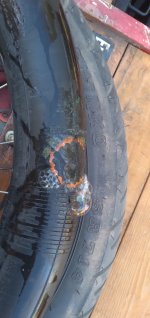

Amazing coincidence: I had that same situation last week. The patch from last summer started leaking a few weeks ago. Soapy solution showed the same bubbles from the edge of the patch. The clear thin plastic backer sheet was still attached but it was cracked and flakey. Preparing to replace the patch, I rubbed the plastic sheet to remove it and that process resealed the patch! Still holding!
My theory: The plastic sheet backer does not stretch with the tube and patch so it must have been pulling at the edge of the patch away from the tube surface.
My theory: The plastic sheet backer does not stretch with the tube and patch so it must have been pulling at the edge of the patch away from the tube surface.
It's possible, but I have had this happen even when I remember to remove the plastic backer. I usually have to sand it off, sometimes by hand with a block and sometimes with the dremel, sometimes by successfully peeling it off but that doesn't usually work without peeling up at least part of a patch edge. I've also tried to remove that backing before removing the patch from the foil but that has never worked.
Almost always when I get the old patch off I can see a difference, even if only slight, between the surfaces where the patch stuck properly and where it didn't, or a bit of debris I somehow missed. Before I figured out that I needed to remove them completely in a patched area, I sometimes had problems with seam lines under the very edge of a patch allowing progressive de-adhesion until it leaked. Those are hard to see why they'd fail the way they do, but it's been more than a couple times over the years, leading to a pattern I can avoid.
I've never had a patch properly re-stick after it starts to come off, but I have not used the self-adhesive ones, only the glue-on types. I don't know which kind you used. Presently I'm using patches and teh blue glue from Rema.
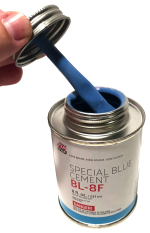
It's worked fine for all the patches I correctly processed, so I probably just screwed this one up.
Sometimes they'll appear to stick back down, but then fail again the same way later.
(I actually have tried self-stick patches now and then over the years with regular bikes, but none of them actually stuck properly even long enough to finish airing up the tire, so I stopped trying them out. there probably are some that really work, but I haven't been lucky enouhg to run into them. I expect adhesives have gotten better in the couple of decades since i probably last tried them).
Speaking of tires, etc, the new ones for the future spare trike / experimental test bed arrived. (some of this crossposted to the other trike thread)
endless-sphere.com
I'll be using 26" x 3" rear wheels, because I have to build new wheels for it no matter how I end up using it, and I already have some rims for those on wheels from a junk bike, but they have worn knobby tires, with pretty thin casing between the knobs, so simply cutting off the knobs isn't a usable option. The size chosen is because 20" wheels on SBC are so small that they "feel" every bump, hole, etc; I've broken axles and a rim (and another rim on the old CrazyBike2 with it's 20" rear wheel). Tires/tubes are better for 20" because I can use moped 16" tires and tubes, which are more durable and cheaper than equivalent bicycle tires, and thicker, and often have better grip...but I really want a more comfortable ride without as much worry about breaking wheels and such, and bigger wheels roll over bigger stuff with less problem, so....
(suspension is complicated for a highly-variable-weight/loading cargo trike, and is another failure point, so I have skipped that on all the trike designs so far)
Why 3" vs more common and cheaper 2"? Because there's a lot more air in there, and that gets me that much more bump absorption, and more distance between the rim and the edges of holes / debris that breaks them. I can't always avoid those when traffic gets bad (and I can't just stop until traffic passes or I could be hit by cars that would otherwise just pass me if I'm moving (because some people are stupid)--even a graze at that speed difference could be fatal while it might just hurt a lot if I'm going my max of 20MPH), so being able to take the hit is important.
26x3 tires are in general fairly expensive, so for this experiment I started looking at the cheap stuff since I don't have the budget for anything decent (well, I don't have the budget for the cheap stuff either but I can skip enough household stuff temporarily for the option I found below). After a fair bit of poking around, and waiting to see what holidaze sales came up, I found these for about $60 (instead of the $90 they usually go for), by "YUNSCM" that I've never heard of:
Can't really tell much from the site page and pics, but if they weren't right I could send them back at no cost to me, and no shipping cost to get them, so a better option than anything else. No really awful reviews, and some positive ones there and elsewhere.
They actually seem decent, even "great" for the price, since that's $30 a wheel for a tire *and* a fairly thick tube. (the plastic rim strips and cheap tire levers are probably not worth even trying out; I already have gorillatape that I use for rim tape, and metal levers that work fine).
I still have to build the wheels, which means disassembling the ones off the junk bike to get the rims and spokes off, designing and building the hubs, which means designing the single-ended axles/mounts the trike will need to have easily-mountable wheels for roadside work, based on whatever stuff I already have laying around here (budget=zero for new stuff).
But if the experiment works on the testbed version, then I can ride that one while I build a version for the SB Cruiser and replace it's existing rear-end with that. (not something that would be anytime soon--my guess is more than a year to work out unforeseen issues with the testbed and get enough miles on it to verify various design features, then however long to gather parts for an SBC version...assuming I'm still able to do all this stuff by then).


Almost always when I get the old patch off I can see a difference, even if only slight, between the surfaces where the patch stuck properly and where it didn't, or a bit of debris I somehow missed. Before I figured out that I needed to remove them completely in a patched area, I sometimes had problems with seam lines under the very edge of a patch allowing progressive de-adhesion until it leaked. Those are hard to see why they'd fail the way they do, but it's been more than a couple times over the years, leading to a pattern I can avoid.
I've never had a patch properly re-stick after it starts to come off, but I have not used the self-adhesive ones, only the glue-on types. I don't know which kind you used. Presently I'm using patches and teh blue glue from Rema.
It's worked fine for all the patches I correctly processed, so I probably just screwed this one up.
Sometimes they'll appear to stick back down, but then fail again the same way later.
(I actually have tried self-stick patches now and then over the years with regular bikes, but none of them actually stuck properly even long enough to finish airing up the tire, so I stopped trying them out. there probably are some that really work, but I haven't been lucky enouhg to run into them. I expect adhesives have gotten better in the couple of decades since i probably last tried them).
Speaking of tires, etc, the new ones for the future spare trike / experimental test bed arrived. (some of this crossposted to the other trike thread)
Amberwolf's Schwinn Trike Rebuild / Conversion to Heavy Cargo Hauler
From here: https://endless-sphere.com/sphere/threads/the-sb-cruiser-amberwolfs-2wd-heavy-cargo-trike-dog-carrier.67833/post-1827806 I got an old Schwinn Tri-Wheeler Town and Country (probably the 1971 or 75 or 78 model, based on info from bikehistory.org) from someone I knew from the...
endless-sphere.com
(suspension is complicated for a highly-variable-weight/loading cargo trike, and is another failure point, so I have skipped that on all the trike designs so far)
Why 3" vs more common and cheaper 2"? Because there's a lot more air in there, and that gets me that much more bump absorption, and more distance between the rim and the edges of holes / debris that breaks them. I can't always avoid those when traffic gets bad (and I can't just stop until traffic passes or I could be hit by cars that would otherwise just pass me if I'm moving (because some people are stupid)--even a graze at that speed difference could be fatal while it might just hurt a lot if I'm going my max of 20MPH), so being able to take the hit is important.
26x3 tires are in general fairly expensive, so for this experiment I started looking at the cheap stuff since I don't have the budget for anything decent (well, I don't have the budget for the cheap stuff either but I can skip enough household stuff temporarily for the option I found below). After a fair bit of poking around, and waiting to see what holidaze sales came up, I found these for about $60 (instead of the $90 they usually go for), by "YUNSCM" that I've never heard of:
Can't really tell much from the site page and pics, but if they weren't right I could send them back at no cost to me, and no shipping cost to get them, so a better option than anything else. No really awful reviews, and some positive ones there and elsewhere.
They actually seem decent, even "great" for the price, since that's $30 a wheel for a tire *and* a fairly thick tube. (the plastic rim strips and cheap tire levers are probably not worth even trying out; I already have gorillatape that I use for rim tape, and metal levers that work fine).
I still have to build the wheels, which means disassembling the ones off the junk bike to get the rims and spokes off, designing and building the hubs, which means designing the single-ended axles/mounts the trike will need to have easily-mountable wheels for roadside work, based on whatever stuff I already have laying around here (budget=zero for new stuff).
But if the experiment works on the testbed version, then I can ride that one while I build a version for the SB Cruiser and replace it's existing rear-end with that. (not something that would be anytime soon--my guess is more than a year to work out unforeseen issues with the testbed and get enough miles on it to verify various design features, then however long to gather parts for an SBC version...assuming I'm still able to do all this stuff by then).
Mine is similar to yours pictured, scalloped feathered edge orange border, common small tube of glue that comes in the kit.I've never had a patch properly re-stick after it starts to come off, but I have not used the self-adhesive ones, only the glue-on types. I don't know which kind you used. Presently I'm using patches and teh blue glue from Rema.
I also have never been able to successfully patch using the glueless patches.
The winter cold, though several degrees warmer than previous years, is seriously affecting the battery performance (it's getting pretty old, more than a decade since the cells were made).
Last few rides it's been sagging down to 49v just during cruise, even when still at full charge of 57v. During acceleration it can drop as low as 45v.
I keep meaning to dig out a couple of old terrarium heating mats to stick on either side of the pack that can be plugged into the wall for overnight warming, but every year I forget about it after it gets warm, and while it's cold I'm usually trying to get other stuff done that I can't do when it's hot out there. This year I've just been too stressed out and exhausted because of the holidaze, both because of work stress and all the &#@(@#%& partiers around here that blast their earthquake bass day and night and blow off mortar-round fireworks randomly at all hours of the night, so what little sleep I would usually get after all the normal nightmares is interrupted or prevented.....
Anyway, rant aside, I really should dig out those mats.... (the little candelabra incandescent bulbs I'd used previous years, sitting under the trike to keep the thing warm from underneath, inside the shed with the doors closed, finally burned out...)
When it's really cold, there's a new squeal from one of the wheels under certain conditions while turning--I assume it's a bearing; it stops once it's warmed up from riding.
The tires haven't been a problem though.
Last few rides it's been sagging down to 49v just during cruise, even when still at full charge of 57v. During acceleration it can drop as low as 45v.
I keep meaning to dig out a couple of old terrarium heating mats to stick on either side of the pack that can be plugged into the wall for overnight warming, but every year I forget about it after it gets warm, and while it's cold I'm usually trying to get other stuff done that I can't do when it's hot out there. This year I've just been too stressed out and exhausted because of the holidaze, both because of work stress and all the &#@(@#%& partiers around here that blast their earthquake bass day and night and blow off mortar-round fireworks randomly at all hours of the night, so what little sleep I would usually get after all the normal nightmares is interrupted or prevented.....
Anyway, rant aside, I really should dig out those mats.... (the little candelabra incandescent bulbs I'd used previous years, sitting under the trike to keep the thing warm from underneath, inside the shed with the doors closed, finally burned out...)
When it's really cold, there's a new squeal from one of the wheels under certain conditions while turning--I assume it's a bearing; it stops once it's warmed up from riding.
The tires haven't been a problem though.
Chalo posted a link in another thread to these

 batteryhookup.com
that would be a good deal at$20 each, $64/kwh; dunno how well they'd perform (would have to look up the cell test data such as at lgyte-info.dk ). Is less than $300 to get 10 of them here including shipping, that would give me about 3kwh, enough for most of the things I do with the trike (could still use my aging EIG packs for range extension). I dislike that they're a bunch of small cylindrical cells vs fewer large-format types though. (more failure points). But other than adding some cell-monitoring solution (and maybe balancing if they're not matched cells), they would just bolt up to cabling to parallel them up to the system. At least some would have to go in the cargo area, though, because they are maybe half the density of the EIG packs I'm using now, so it wouldn't all fit in the spot they're in. (in theory I could put them under the trike like various EVs do, but that would require a completely waterproof enclosure for them, and that's hard to do, and it would be best to compartmentalize that so each one has it's own separate waterproof section in case any of them has a leak. Or even totally separate enclosures so they are isolated for service, etc as well).
batteryhookup.com
that would be a good deal at$20 each, $64/kwh; dunno how well they'd perform (would have to look up the cell test data such as at lgyte-info.dk ). Is less than $300 to get 10 of them here including shipping, that would give me about 3kwh, enough for most of the things I do with the trike (could still use my aging EIG packs for range extension). I dislike that they're a bunch of small cylindrical cells vs fewer large-format types though. (more failure points). But other than adding some cell-monitoring solution (and maybe balancing if they're not matched cells), they would just bolt up to cabling to parallel them up to the system. At least some would have to go in the cargo area, though, because they are maybe half the density of the EIG packs I'm using now, so it wouldn't all fit in the spot they're in. (in theory I could put them under the trike like various EVs do, but that would require a completely waterproof enclosure for them, and that's hard to do, and it would be best to compartmentalize that so each one has it's own separate waterproof section in case any of them has a leak. Or even totally separate enclosures so they are isolated for service, etc as well).
Given the ratings on the cells, and the info quoted below from the site, then since my typical commute only takes about 6Ah on the EIG packs, these might only take two in parallel to do that job, if I recharge every day....but that's harder on the cells both load-wise and more / deeper cycles. And two would not be enough for store trips and whatnot. Four would be the minimum I'd want to use.

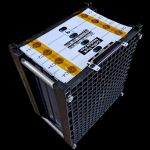
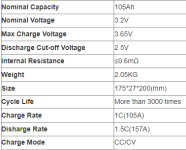
A more dense option would be these 12.8v 105ah 1.34kWh Lifepo4 Battery
 batteryhookup.com
which are actually a bit cheaper at $63/kwh, but more expensive in total because they are much higher capacity and lower voltage, so require at least four in series to run the trike, and I'd want a fifth for spare cells. At $85 each, plus about that for shipping, it would be almost $600 to get them here.
batteryhookup.com
which are actually a bit cheaper at $63/kwh, but more expensive in total because they are much higher capacity and lower voltage, so require at least four in series to run the trike, and I'd want a fifth for spare cells. At $85 each, plus about that for shipping, it would be almost $600 to get them here.
They can be made even more dense by taking the modules apart and reassembling so there are only two endplates with 16 (or 17) cells secured between them, and much longer bolts. If more pressure is required for the larger number of cells, two endplates can be stacked on each end to stiffen them, and heavy duty fender washers / etc placed under the bolt heads and nuts.
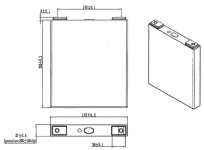
The other issue is that the existing interconnects are only good for about 20A according to the description, and there are no bolt terminals, just aluminum terminal "blocks" / pads. So I'd need a way to weld busbars from terminal to terminal for a really secure connection. It *might* be possible, given the few mm thickness of those terminals, to drill and tap a few holes in each one to bolt busbars to them -- tedious but doable. There appear to be copper pads under the aluminum of a few more mm, but it might require testing the process on one cell (possibly sacrificing it in the process if the holes penetrate non-pad materials underneath) to see if this would really work. The dimensional diagram for the cell says there's 6mm +/- 0.1mm available in those pads, total.
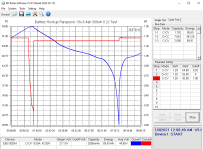
48v 6.4ah 307.84wh Battery with Panasonic Cells - $64/kWh
This is the best deal on 48v modules that test like new. Just $20. These are absolute BEAST power modules with Panasonic cells inside. 48.1v 6.4ah 307.84wh. Built for power but at this price you will not find a better deal on batteries that have either never cycled or only cycled a few times...
batteryhookup.com
Given the ratings on the cells, and the info quoted below from the site, then since my typical commute only takes about 6Ah on the EIG packs, these might only take two in parallel to do that job, if I recharge every day....but that's harder on the cells both load-wise and more / deeper cycles. And two would not be enough for store trips and whatnot. Four would be the minimum I'd want to use.
These are absolute BEAST power modules with Panasonic cells inside. 48.1v 6.4ah 307.84wh. Built for power but at this price you will not find a better deal on batteries that have either never cycled or only cycled a few times. Perfect for solar storage as well. These modules have 52 cells inside. They are rated for 307.81wh and every module we tested has tested around that capacity. The test of the module is in the 3rd photo. Since these were used as backup only they likely have never been cycled. The cells are power cells, Sanyo UR18650WX 1600mah cells manufactured by Panasonic which are 25a rated power cells. This module can push 100a and had a 150a in-line fuse on it (not included). It is just built so well and it is also easy to work with. The circuit board has balancing but the board is not a BMS, it is a BMU which communicates to a main unit so you will have to add your own BMS.
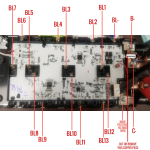
The 2nd photo shows the easy BMS wiring schematic. The copper piece connecting B- to C- will already be removed for you. BL stands for balance leads. BL- is the main negative balance lead. Usually the main negative balance lead wire of a BMS is white or black color. BL1 would be the 1st balance lead after the negative balance lead. All the way up to 13. So a 13s BMS will have 14 balance leads. One for the main negative and 1 for each of the cells in series positive connection. There are large solder balls on the connections already for the balance leads so you only need to use a soldering iron to heat that solder up, place the balance lead wire in the solder, then remove and let it cool. It takes seconds to connect the balance lead wires this way. The main B- and C- connect easily, just add a ring terminal and bolt those wires down. The main positive and negative connections can simply be bolted down with ring terminals as well.
The battery module is 8 lbs.
The bolts that fit the main connections (not included) are M6-1.0 for the negative side and M5x0.8 for the positive side. Recommend 1/2" length. You can find them everywhere, they are very common bolts.
Module size with handle is approximately 13" x 6" x 2.25"
Nominal voltage - 46.8v (3.6v per cell)
Fully charged voltage - 54.6v (4.2v per cell)
Fully discharged voltage - 36.4v (2.8v per cell)
Max continuous charge - 5a (1.25a per cell)
Max continuous discharge - 100a (25a per cell)
These modules are built to the highest standards and you will be able to see first hand what a top notch battery assembly looks like. The balance board even has fused series connections to prevent a possible short caused by the board.
A more dense option would be these 12.8v 105ah 1.34kWh Lifepo4 Battery
12.8v 105ah 1.34kWh Lifepo4 Battery - Needs BMS - $63/kWh
These modules are pretty awesome and unique. They are 12.8v 105ah lifepo4 in 4s1p configuration. They also have compression. You can buy 4 of these, top balance, series connect, then add a 16s BMS to make 51.2v 105ah batteries. We are not sure what the amp rating is on the laser welded flexible...
batteryhookup.com
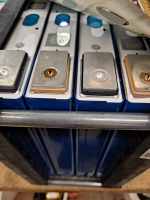
They can be made even more dense by taking the modules apart and reassembling so there are only two endplates with 16 (or 17) cells secured between them, and much longer bolts. If more pressure is required for the larger number of cells, two endplates can be stacked on each end to stiffen them, and heavy duty fender washers / etc placed under the bolt heads and nuts.
The other issue is that the existing interconnects are only good for about 20A according to the description, and there are no bolt terminals, just aluminum terminal "blocks" / pads. So I'd need a way to weld busbars from terminal to terminal for a really secure connection. It *might* be possible, given the few mm thickness of those terminals, to drill and tap a few holes in each one to bolt busbars to them -- tedious but doable. There appear to be copper pads under the aluminum of a few more mm, but it might require testing the process on one cell (possibly sacrificing it in the process if the holes penetrate non-pad materials underneath) to see if this would really work. The dimensional diagram for the cell says there's 6mm +/- 0.1mm available in those pads, total.
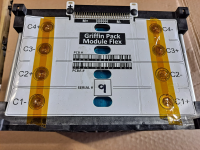
These modules are pretty awesome and unique. They are 12.8v 105ah lifepo4 in 4s1p configuration. They also have compression. You can buy 4 of these, top balance, series connect, then add a 16s BMS to make 51.2v 105ah batteries.
We are not sure what the amp rating is on the laser welded flexible busbar. If you want to use these in low drain applications we would recommend that. Otherwise you would have to weld busbars to the aluminum studs or use a laser welder for higher amp needs. It seems with the current busbars they should be used up to 20 amps. perhaps they can handle more amps but we haven't tested above 20 amps to confirm. The white busbars are a flexible sheet.
Overall great value here as the modules we tested were all above 90% capacity.
We guarantee all cells to arrive balanced.
There is no BMS on this module. The PCB is just used as a flexible busbar to put these in 4s1p configuration.
Module dimensions and weight below:
8.5" tall x 8" wide x 5.5" deep
20.55 lbs
You can get voltage out of the pins.
The pin connector is 2.5" wide and 3/16" tall. There are 2 rows of 25 pins for a total of 50 pins. The best way to make a connections would likely be to the pins. The 20 pins (2 rows x 10 pins) on each side are the main + and -. The balance lead pins are in the center. You likely could solder the rows of pins to make your main connections. Or if you can find the male connector. We don't know the name of the pin and you would have to use the photos and measurements provided.
The cells also have cooling pad insulation. We recommend keeping these modules in the current 4s configuration however if you wanted to recover the cells it is simple but the connections are laser welded and not bolted

Chalo
📜 Mega legend
For something as big as your trike, Greentecauto has even better deals on high capacity modules. Some of their sale items feature free shipping.
I have much less objection to 18650 packs that have been assembled in controlled industrial conditions than I do to ones put together by Chinese orphans or DIY beer drinkers.

 www.greentecauto.com
 www.greentecauto.com
I have much less objection to 18650 packs that have been assembled in controlled industrial conditions than I do to ones put together by Chinese orphans or DIY beer drinkers.
UR18650ZK V52A Sanyo 54V 38Ah 2kWh 18650 module | Greentec Auto
Check out these UR18650ZK V52A Sanyo 54V battery modules for sale. Perfect for modular projects with space to install your own BMS.
www.greentecauto.com
Shop Hybrid Batteries for Honda, Toyota, Nissan | Greentec Auto
Browse our hybrid battery selection, pricing, and warranty info. Buy from our secure online store and find the right hybrid battery for your vehicle.
www.greentecauto.com
Yeah, those are way better deals especially because of free shipping...I'll have to see if they have any large-format-cell packs like that.
I'd much rather not have to worry about dozens of interconnects and cells and such, though it's almsot certainly a much less likely problem with ex-EV / etc packs than "ebike" packs.
I'd much rather not have to worry about dozens of interconnects and cells and such, though it's almsot certainly a much less likely problem with ex-EV / etc packs than "ebike" packs.
Chalo
📜 Mega legend
Yeah, those are way better deals especially because of free shipping...I'll have to see if they have any large-format-cell packs like that.
This is (I think) the big battery I use, at half the price I paid for it a couple of years ago. Despite the text of the link, it's 12S:

Jeep Cherokee PHEV 44v Battery 2.1kWh modules Samsung Cells 12s
Tier-1 EV Performance. Engineered for high density and maximum output, these premium 44V 47Ah 2.1kWh Lithium-Ion modules are salvaged from low-mileage Jeep platforms. Featuring genuine automotive-grade Samsung SDI cells in a clean, factory 12S1P layout, they deliver ultra-reliable capacity for...
jag35.com
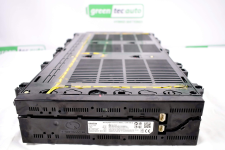
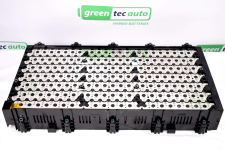
A closer look at the two first links above shows the black box battery can only provide 25A, so it's not usable, regardless of it's other specs.
The second one with teh cooling plate can do over 200A, so that would have plenty of unused capability with my present setup (two phaserunners, two motors, probably around 80A for a few seconds then settling down to half or less of that. A bit higher cost / kwh than the ones I posted about above, but the free shipping takes it down to less than that, and it's way easier to use. The large heavy cooling plate doesnt appear to come with it, but is probably sold separately, and could also be repurposed for something else, since it's not likely that I would be pushing this hard enough to need it. I'd probably have to make covers for it, to protect the bare cell ends.
It's about teh same volume and weight as my originally-4kwh EIG pack, but different dimensions:
Length: 20 1/2 inches
Width: 11 1/16
Height: 3 inches
Weight: 34.5lb
I think the length is greater than the space available in the underseat cargo/battery/etc box, so it would probalby have to ride on the floor of the cargo area behind me (so it's weight would be more on the already-heavily-loaded rear wheels, though still in front of them).
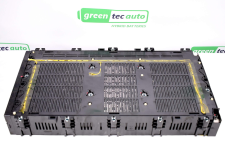
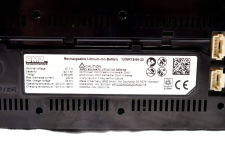
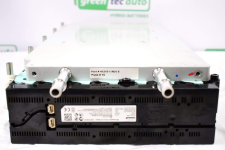
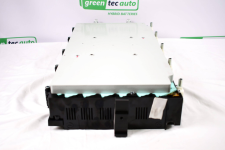
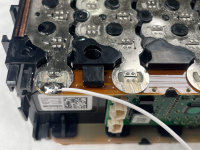
The second one with teh cooling plate can do over 200A, so that would have plenty of unused capability with my present setup (two phaserunners, two motors, probably around 80A for a few seconds then settling down to half or less of that. A bit higher cost / kwh than the ones I posted about above, but the free shipping takes it down to less than that, and it's way easier to use. The large heavy cooling plate doesnt appear to come with it, but is probably sold separately, and could also be repurposed for something else, since it's not likely that I would be pushing this hard enough to need it. I'd probably have to make covers for it, to protect the bare cell ends.
It's about teh same volume and weight as my originally-4kwh EIG pack, but different dimensions:
Length: 20 1/2 inches
Width: 11 1/16
Height: 3 inches
Weight: 34.5lb
I think the length is greater than the space available in the underseat cargo/battery/etc box, so it would probalby have to ride on the floor of the cargo area behind me (so it's weight would be more on the already-heavily-loaded rear wheels, though still in front of them).
INR18650M29 LG Chem 48V 62.7Ah 2.99kWh BMZ Module
Original price was: $300.00. Current price is: $200.00.
Price per kWh: $100/kWh $66/kWh!!
Years: 2020
Shipping: Free Ground Shipping
Warranty: 6 Months, Extendable
INR18650M29 LG Chem 48V 62.7Ah 2.99kWh BMZ Module quantity
A 48V module made out of INR18650M29 LG Chem cells. The 13S configuration offers an ideal 48V battery pack. The cooling plate is sandwiched between 2 modules. One or both sides of the module that meet the cooling plate have no cover, instead, there is a thermal transfer pad that comes off. So the module you receive may or may not have the plastic cover over the busbars and the thermal pad could be missing as well. Cooling plate listing coming soon.
The last 4 pictures show the best place to make a BMS voltage tap connection. You could solder on the BMS voltage taps to the busbar as shown in the 9th picture. The busbar is made of solid nickel and is extremely easy to solder. There is some glue in that area, but it was easily scraped away with a razor blade. The scraping and soldering took less than 30 seconds if you have all the tools in front of you.
The BMS is under the cover with the large sticker. The BMS takes power from the battery pack it is monitoring to power itself. We unplugged the ribbon cable and plugged it back in and a Green light turned on for about one minute and turned off. The BMS wakes up but does NOT balance and is NOT a working BMS. We monitored the BMS closely and it does not drain the battery after a long period of inactivity. The Sleep mode does not use much energy. If you plan on storing this battery for any length of time over a few months, we recommend unplugging the BMS so it does not drain your battery, shorter durations are of no consequence.
Nominal Module Energy: 2.99kWh
Nominal Module Capacity: 62.7Ah
Nominal Cell Capacity: 2.85Ah
Module Configuration: 13s22p
Max Module Voltage: 54.6V
Nominal Module Voltage: 47.7V
Min Module Voltage: 32.5V
Max Cell Voltage: 4.2V
Nominal Cell Voltage: 3.67V
Min Cell Voltage: 2.5V
Length: 20 1/2 inches
Width: 11 1/16
Height: 3 inches
Weight: 34.5lb
Length with cooling plate: 22 inches
Height with brackets: 3 9/16
Weight with cooling plate: 44.6lb
Peak Discharge Current: 220A
Nominal Discharge Current: 132A
Nominal Charge Current: 30.25A
Peak Charge Current: 60.5A
Chalo
📜 Mega legend
A closer look at the two first links above shows the black box battery can only provide 25A, so it's not usable, regardless of it's other specs.
Interesting, I didn't notice that. I guess it's a limitation of the nickel bus. Surmounting it would put it back in the "hokey homebuild" category. Anyway, not useful here unless someone in USA wants abnormal range for his sub-350W e-bike, or craves a really heavy battery for audio and lighting.
I finally remembered to do this today, though I only had time to insert one down between the lighting pack and the traction pack, and then the other down the other side of the traction pack. The AC cords just run out the back edge of the almost-closed lid of the seatbox, so ther'e some heat leakage that way, but their direct contact with the batteries means most of their heat goes into those to keep them from getting so close to freezing.I keep meaning to dig out a couple of old terrarium heating mats to stick on either side of the pack that can be plugged into the wall for overnight warming, but every year I forget about it after it gets warm, and while it's cold I'm usually trying to get other stuff done that I can't do when it's hot out there.
(IIRC wiithout any heating the batteries on their outsides are still a good 10F+ above whatever ambient is by the time it actually gets to freezing out there, but they don't perform well when that cold)
I put them in about 8pm or so when it was still about 48F out there (all temperatures measured with a cheap IR gun) and the battery was at 56F, and a few minutes ago at 1130pm I checked up on it*** and the air temp was down to 30-32F depending on where I pointed, and the wood of the trike down to 35F on the outside of the battery area. Inside the battery area, air temp was 54F and the battery read 55F.
So, it works as expected.
They're really small, about 6" x 8", only 8w, essentially the same thing as this
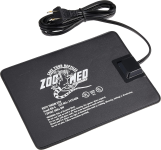
***I went to check because I could smell (well, really was choking from) burning rubber even inside the house...which is usualy just from the assholes that do donuts and/or lock their non-drive-wheel brakes while they smoke the drive wheels, for minutes at a time, in the general area--far enough away I can't usually hear them inside the house, but close enough for the smoke to fill the whole neighborhoods for a long long way around, making it very hard to breathe and nearly as hard to see if they're close enough, especially when its' cold outside so the stuff just settles down toward the ground instead of being carried away by rising hot air like in the summer.
That's what it was this time, too, but since the pads are rubber, I had to make sure it wasnt' the trike on fire or something.
Similar threads

- Replies
- 44
- Views
- 9,921
- Replies
- 15
- Views
- 4,736
- Replies
- 20
- Views
- 4,500
- Replies
- 12
- Views
- 5,003
- Replies
- 0
- Views
- 1,562