
@Inanek use an ultra sonics cleaner. Maybe he'll chime in on what solvent he uses.It is a PS-10A, 80 W, just some cheap one from amazon. I was trying to follow an online protocol and just had mediocre results. Don't remember exactly what solvent I used, I don't think its safe to use hydrocarbon based solvents like white spirits or paint thinner or whatever you call it. I was wondering about using citrus degreaser.
Maybe I should try it again.
I think the key is starting with a new chain and thoroughly degreasing it to remove the factory lube. Supposedly it can take five soakings in white spirits to remove all the factory lube. Not sure how you test that.

-
Hello ES! We could use some help to get us past the finish line on building the new knowledgebase for the forum.
Can you donate? Please see our fundraising page. Thank you!
You are using an out of date browser. It may not display this or other websites correctly.
You should upgrade or use an alternative browser.
You should upgrade or use an alternative browser.
Mid drive chain efficiency and longevity tips
- Thread starter neptronix
- Start date

lnanek
🚴♂️ Mega poster
Mineral spirits the first go, then aircraft simple green to avoid hydrogen embrittlement in my later attempts. Both performed well despite simple green's terrible performance in the Project Farm shoot out video.
I cleaned them first with one of those cheap plastic crank powered chain scrubber boxes and a normal drivetrain degreaser (Peaty's Foaming Drivetrain Degreaser), then set the ultrasonic heater to max temperature, and ran a couple half hour cycles, swishing them around in their zip lock bags frequently (I have a big one so fill it with mostly water then the parts in a bag with a cleaner to use less cleaner). Cleaned with alcohol after.
Kind of embarrassing I did all that work now that I know you can just start with factory fresh chains and use Strip Chip, or whatever the generic is, stearic acid, at some high temperature like 120 degrees to convert the factory grease to wax. At least most of the time was spent wrenching in my garage with just a couple minute intervals for the chain cleaning here or there.
I cleaned them first with one of those cheap plastic crank powered chain scrubber boxes and a normal drivetrain degreaser (Peaty's Foaming Drivetrain Degreaser), then set the ultrasonic heater to max temperature, and ran a couple half hour cycles, swishing them around in their zip lock bags frequently (I have a big one so fill it with mostly water then the parts in a bag with a cleaner to use less cleaner). Cleaned with alcohol after.
Kind of embarrassing I did all that work now that I know you can just start with factory fresh chains and use Strip Chip, or whatever the generic is, stearic acid, at some high temperature like 120 degrees to convert the factory grease to wax. At least most of the time was spent wrenching in my garage with just a couple minute intervals for the chain cleaning here or there.
Last edited:
biphaeboh
⚡ Regular
Thanks.Mineral spirits the first go, then aircraft simple green to avoid hydrogen embrittlement in my later attempts. Both performed well despite simple green's terrible performance in the Project Farm shoot out video.
I cleaned them first with one of those cheap plastic crank powered chain scrubber boxes and a normal drivetrain degreaser (Pete's maybe), then set the ultrasonic heater to max temperature, and ran a couple half hour cycles, swishing them around in their zip lock bags frequently (I have a big one so fill it with mostly water then the parts in a bag with a cleaner to use less cleaner). Cleaned with alcohol after.
Kind of embarrassing I did all that work now that I know you can just start with factory fresh chains and use Strip Chip, or whatever the generic is, stearic acid, at some high temperature like 120 degrees to convert the factory grease to wax. At least most of the time was spent wrenching in my garage with just a couple minute intervals for the chain cleaning here or there.
biphaeboh
⚡ Regular
Here is Zero Friction's data for chain life longevity.
SRAM Eagle xx1 x01 is the best by his results.

 zerofrictioncycling.com.au
SRAM Eagle xx1 x01 is the best by his results.
Chain Testing - Zero Friction Cycling
zerofrictioncycling.com.au

Yes, that link is in the first post of this thread. 
Here is Zero Friction's data for chain life longevity.
SRAM Eagle xx1 x01 is the best by his results.
Chain Testing - Zero Friction Cycling
biphaeboh
⚡ Regular
This thread is like a snake swallowing its tail..Yes, that link is in the first post of this thread.
It does show that the 12 speed chains last the longest, by his metrics.
He did have some stuff about ebike chains, but I couldn't find it.

biphaeboh
⚡ Regular
I just buy the cheap $10 chains, but now I'm wondering if I'm wrong and I should I buy the $100 12 speed chains. Will they last 10 times as long? Are they strong enough for a mid drive?It's okay, i'm just wrong, carry on
I just buy the cheap $10 chains, but now I'm wondering if I'm wrong and I should I buy the $100 12 speed chains. Will they last 10 times as long? Are they strong enough for a mid drive?
I don't have enough miles on mid drives to give an opinion on that.
I've read many times hat 8 speed is stronger and imagine that more metal surface = better when we're talking about a powerful mid drive.
Besides if you have >=750w there isn't much use in having a lot of gears.
Back on the subject of removing the chain manufacturers preserving oil from a new chain... I immersed in old petrol to get most of it off, then water with ordinary household washing powder in an old pan on the stove, boil, agitate, then rinse in clean water, repeat. Dry as much as possible with paper towel, then put somewhere warm and dry to evaporate the rest. Wax ASAP after that.
I have since acquired an ultrasonic cleaner, but also not needed to buy a new chain... sooo.. don't know about that method.
I have since acquired an ultrasonic cleaner, but also not needed to buy a new chain... sooo.. don't know about that method.
In the ultrasonics cleaner? Don't the liquids get atomized? Is it a ventilated/ closed system so you don't inhale any of it or do you wear a vapor mask?Mineral spirits the first go, then aircraft simple green
lnanek
🚴♂️ Mega poster
Hmm, I actually do put it out on the cement in front of the garage with the door open so it is ready to drain the water out after via the drain at the bottom. Used mineral spirits have to be collected from the bags after for disposal/filtering (I just unzip and dump the bags out into a Tupperware and fish them out), but simple green I dump.
Are you sure ultrasonic cleaning produces that, though? It's not like boiling or steam cleaning or a nebulizer - there's no fine spray or mist or steam, even if I leave the top off. No gas station smell either, which is very noticeable when cleaning with mineral spirits bare.
Sound is just mechanical bumping of atoms, and the bubbles produced from ultrasonic cleaning are almost too small to see and just make little microscopic mechanical jets of fluid as they form and collapse. There's nothing really going on to atomize the individual particles of the fluid and put them in the air. My ultrasonic puts out less steam than boiling water for making ginger tea, for example.
Are you sure ultrasonic cleaning produces that, though? It's not like boiling or steam cleaning or a nebulizer - there's no fine spray or mist or steam, even if I leave the top off. No gas station smell either, which is very noticeable when cleaning with mineral spirits bare.
Sound is just mechanical bumping of atoms, and the bubbles produced from ultrasonic cleaning are almost too small to see and just make little microscopic mechanical jets of fluid as they form and collapse. There's nothing really going on to atomize the individual particles of the fluid and put them in the air. My ultrasonic puts out less steam than boiling water for making ginger tea, for example.
AI Overview
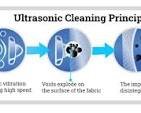
Yes, ultrasonic cleaners generate heat. The process of ultrasonic cleaning involves high-frequency sound waves that create cavitation bubbles in the cleaning solution. These bubbles implode with great energy, generating heat and powerful shock waves that dislodge contaminants from the surface being cleaned. While some ultrasonic cleaners have integrated heaters for temperature control, the vibrations themselves produce heat even in models without a dedicated heater.
Here's a more detailed explanation:
Yes, ultrasonic cleaners generate heat. The process of ultrasonic cleaning involves high-frequency sound waves that create cavitation bubbles in the cleaning solution. These bubbles implode with great energy, generating heat and powerful shock waves that dislodge contaminants from the surface being cleaned. While some ultrasonic cleaners have integrated heaters for temperature control, the vibrations themselves produce heat even in models without a dedicated heater.
Here's a more detailed explanation:
- Cavitation and Heat:
.
The core mechanism of ultrasonic cleaning is cavitation, where the sound waves create and collapse microscopic bubbles in the cleaning solution. The implosion of these bubbles releases significant energy, including heat.
- Heat Generation in All Models:
.
Even in ultrasonic cleaners without a built-in heater, the vibration of the transducer and tank generates heat as a byproduct.
- Heated Ultrasonic Cleaners:
.
Some ultrasonic cleaners are designed with a heating element to control the temperature of the cleaning solution. This can be beneficial for certain cleaning applications where a specific temperature is required.
Last edited:
lnanek
🚴♂️ Mega poster
Lol, if we're doing AI, I got the completely opposite answer to "does an ultrasonic cleaner atomize cleaning liquids":
I didn't set it to boiling and my solvent is in sealed zip lock bags with the parts inside a water bath under a metal lid to boot. So kind of irrelevant. I have masks that can filter volatiles in the air and didn't even need it since there was no smell.
Why are you searching for if they create heat, though? The one I use has a heater built in, since it cleans better with that function set on, and you can set it to whatever temperature you want.
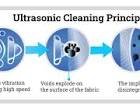
No, ultrasonic cleaners do not atomize cleaning liquids. Instead, they create microscopic bubbles through a process called cavitation, which then implode and generate a scrubbing action that cleans the items submerged in the liquid.
Here's a more detailed explanation:
- Ultrasonic cleaning works by creating cavitation:
High-frequency sound waves are emitted into the cleaning solution within the ultrasonic cleaner.
- Cavitation bubbles form:
These sound waves cause the formation of tiny, microscopic bubbles within the liquid.
- Bubbles implode, not atomize:
These bubbles don't evaporate into a mist. Instead, they rapidly collapse or implode on the surface of the items being cleaned.
- Implosion provides cleaning action:
The implosion of these bubbles releases energy and a scrubbing force that dislodges and removes contaminants from the items.
- Atomization is a different process:
Atomization is the process of breaking down a liquid into a fine spray or mist. This is not how ultrasonic cleaners function.
- Solution is essential:
While the ultrasonic waves create the cleaning action, the cleaning solution itself is crucial. It helps to break down contaminants and enhance the cavitation process.
- Different solutions for different needs:
Different cleaning solutions are used depending on the materials being cleaned and the type of contaminants. For example, acidic solutions are good for removing rust and alkaline solutions for removing grease.
I didn't set it to boiling and my solvent is in sealed zip lock bags with the parts inside a water bath under a metal lid to boot. So kind of irrelevant. I have masks that can filter volatiles in the air and didn't even need it since there was no smell.
Attachments


If your solvent is in a sealed bag in a water bath in the ultrasonics cleaner, then vapor is not a concern.
edit 1: I had (still have it somewhere) a small unheated jewelry ultrasonics cleaner I used to clean diesel injectors. I forget what solvent I used. I do remember the visible and smelly VOC mist emanating from the unit.
edit 2: I think the mechanical collision of the liquid particles in an ultrasonics cleaner has to generate some heat. How much heat depends on the power of the ultrasonics cleaner.
edit 1: I had (still have it somewhere) a small unheated jewelry ultrasonics cleaner I used to clean diesel injectors. I forget what solvent I used. I do remember the visible and smelly VOC mist emanating from the unit.
edit 2: I think the mechanical collision of the liquid particles in an ultrasonics cleaner has to generate some heat. How much heat depends on the power of the ultrasonics cleaner.
Last edited:
I also think offloading too much thought to a LLM is dangerous. use sparingly and tactically.
I'd use it as a first pass for research and always follow up. If you don't understand the subject, and can't vet it's answer, it could possibly be gaslighting both you and us :O
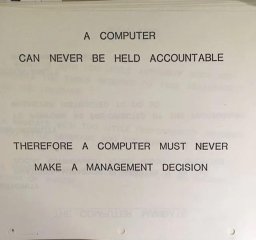
-IBM, 1979
I'd use it as a first pass for research and always follow up. If you don't understand the subject, and can't vet it's answer, it could possibly be gaslighting both you and us :O
-IBM, 1979
Last edited:

scianiac
🚴♂️ Mega poster
- Joined
- Oct 24, 2018
- Messages
- 1,037
My tip with buying an US cleaner is you want as much US power as possible and who cares about the heater power, have to watch out as some list big total power numbers but most is the heater and the US power absolutely heats the liquid up, where do you think all that energy is going? Be mindful though if you put a solvent in a container in the US that solvent will expand a lot when heated. Forgot this once and popped the lid off a glass jar, made quite a pop.
At this point though I'm not sure the US cleaner is worth it, every time I use mind I feel like it's a gamble if it's going to work well or do nothing. Feels like the solvent or degreaser is doing basically all of the work.
At this point though I'm not sure the US cleaner is worth it, every time I use mind I feel like it's a gamble if it's going to work well or do nothing. Feels like the solvent or degreaser is doing basically all of the work.
For my new chain, I bought a bottle of Silca Ultimate Chain Stripper Wax Prep. Very easy process compared to Purple cleaner. I would not use the Silca stripper on a used chain (especially if it has been waxed). Probably will not try their Strip Chip- no need.speaking of stripping chain, has anyone just used silca's concoction?
Last edited:
@neptronix: You already know this, but for others that don't, some thoughts that probably fit better in this thread (where I have also copied this post, for relevance):
LLM's can't think, only predict "the next thing". It might be argued that this is what thinking is, but LLMs don't have experiential history to base the prediction on. Their "learning" doesn't have corrective factors, especially self-corrective ones, unlike a living being, there's no (or insufficient) external feedback. They have no "judgement" capability, to weigh a volume of information and "decide" anything about what to keep and what to discard.
That will probably change in the future, but everything I've seen so far in using them for anything indicates this is a ways off.
So all the thinking needs to be done by the living beings using the LLM, whether that's an ES'er looking up chain waxing info or a cat trying to figure out how to order the right flavor on their slave's iPad. (the dog won't be doing this because it will have eaten the iPad before the idea occurred to them, and instead will be laying there with sadface).
"any".I also think offloadingtoo muchthought to a LLM is dangerous. use sparingly and tactically.
LLM's can't think, only predict "the next thing". It might be argued that this is what thinking is, but LLMs don't have experiential history to base the prediction on. Their "learning" doesn't have corrective factors, especially self-corrective ones, unlike a living being, there's no (or insufficient) external feedback. They have no "judgement" capability, to weigh a volume of information and "decide" anything about what to keep and what to discard.
That will probably change in the future, but everything I've seen so far in using them for anything indicates this is a ways off.
So all the thinking needs to be done by the living beings using the LLM, whether that's an ES'er looking up chain waxing info or a cat trying to figure out how to order the right flavor on their slave's iPad. (the dog won't be doing this because it will have eaten the iPad before the idea occurred to them, and instead will be laying there with sadface).
WaverlyCycles
🔌 New-ish
This thread is like a snake swallowing its tail..
It does show that the 12 speed chains last the longest, by his metrics.
He did have some stuff about ebike chains, but I couldn't find it.
narrower chain = less friction = less wear
What happens if you fit a 12 spd chain on a 8 spd cassette?narrower chain = less friction = less wear
lnanek
🚴♂️ Mega poster
Reminds me of a Shimano fan on YouTube who always says their XTR line isn't worth it. Only time he had to eat his words were the chains. The XTR chain lasts way longer, so is actually cheaper per mile than Shimano's budget lines.
What happens if you fit a 12 spd chain on a 8 spd cassette?
It binds up or dances on the gears probably

BlueSwordM
🚴♂️ Mega poster
- Joined
- Jul 23, 2018
- Messages
- 604
It works very well. It's an extremely concentrated concoction of 3 surfactants, 2 normal ones and a glcyol ether.speaking of stripping chain, has anyone just used silca's concoction?
I managed to replicate it at home, in an unsafe manner, by mixing my highest concentration laundry detergent and adding some DOT3 brake fluid.
Anyway, the toughest chains are single speed, that single 8spd YBN chain, 10s YBN chains and SRAM XX1/X01 12 speed.
Similar threads
- Replies
- 2
- Views
- 1,622
- Replies
- 15
- Views
- 4,736

- Replies
- 2
- Views
- 2,644

- Replies
- 3
- Views
- 2,781


- Replies
- 4
- Views
- 3,840
